
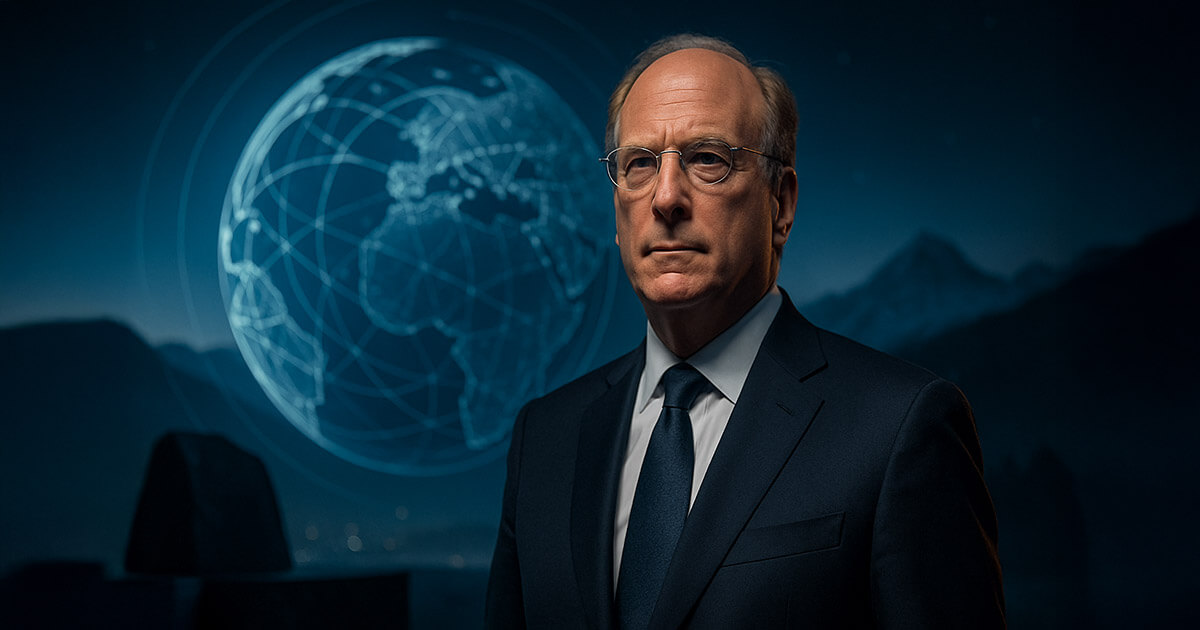

The World Economic Forum (WEF), a prominent international organization facilitating discussions between global leaders in policy and business, has named Larry Fink, CEO of BlackRock, as one of its interim co-chairs. This decision follows an extensive internal examination that exonerated WEF founder Klaus Schwab and paves the way for a temporary shift in leadership as the organization refines its governance approach.
BlackRock, managing trillions in assets, wields significant influence over global financial markets, environmental and social governance (ESG) policies, and the investment strategies of both governments and corporations. Fink’s temporary assignment represents a strategic move that could potentially hasten the broader integration of digital assets, such as Bitcoin, into global policy discussions and standard financial systems.
Larry Fink and a new era of financial influence
Fink’s involvement comes at a crucial juncture when matters of institutional reliability, sustainability, and international collaboration are exceedingly important. Under his direction, BlackRock has emerged as a leading force in ESG-focused investing, championing a more climate-resilient global economy—a concern that has increasingly permeated WEF dialogues both in Davos and in other global forums.
BlackRock has also played a significant role in the cryptocurrency landscape. The approval of its spot Bitcoin ETF in early 2024 dramatically accelerated Bitcoin adoption and legitimized its status as a recognized asset class for various investors, including pension funds, endowments, and individual investors worldwide.
With Fink assuming a leadership position at the WEF, the distinction between traditional finance and the digital asset realm becomes increasingly blurred. The Forum regularly influences worldwide discussions concerning regulation, economics, and technology. Now, Fink has substantial influence extending over both Wall Street and Davos.
Fink’s appointment may signal a more forward-thinking perspective on cryptocurrency within influential policy-making circles. This could potentially lead to increased integration of Bitcoin and blockchain technologies within global finance and among key global decision-makers.

Klaus Schwab cleared, eyes on WEF transformation
The internal assessment that triggered these changes addressed ongoing questions surrounding Klaus Schwab’s involvement and the organizational framework of the WEF. Schwab, the founder of the WEF in 1971, has been subject to criticism and, more recently, heightened scrutiny regarding governance practices.
Following Schwab’s clearance from any accusations of wrongdoing, the WEF announced its plan to appoint interim co-chairs to enhance transparency and incorporate fresh viewpoints into the leadership structure.
Therefore, Fink’s selection serves a two-fold purpose: to reassure stakeholders by placing a respected leader from the financial world in a position of stewardship and to emphasize the Forum’s dedication to institutional responsibility and evolution.
Fink will work alongside another interim co-chair, André Hoffmann, the vice chairman of Roche Holding AG, creating a joint leadership team that reflects the WEF’s revitalized focus on broad, multi-sector collaboration.
Given the presence of geopolitical stresses, economic uncertainties, and the increasingly rapid effects of climate change, the incoming interim leaders face a significant challenge: to restore trust, drive progress on critical global issues, and guide the Forum through its next stage.