
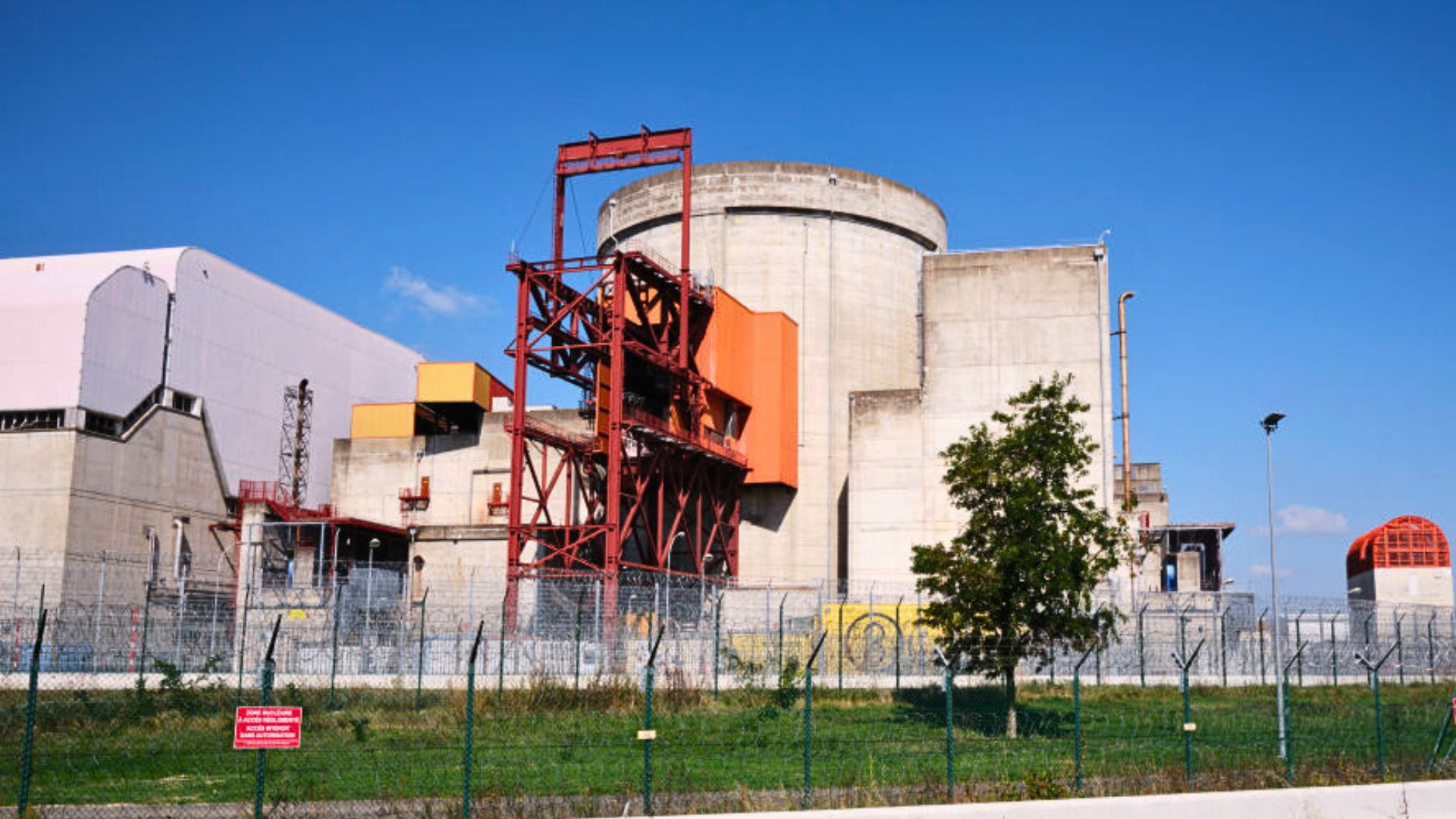
Legislators in France are considering new legislation that could see
Électricité de France (EDF), the national energy provider, utilize surplus
energy from its nuclear power plants for Bitcoin mining operations, as
reported by the French newspaper
Le Monde.
The proposed bill, still in its early stages, suggests installing Bitcoin
mining hardware directly at nuclear facilities. This would allow the
conversion of otherwise unused electricity into digital currencies.
France is the leading producer of nuclear energy within the European Union.
According to Eurostat, the country generated approximately
338,202 gigawatt-hours in 2023, accounting for over half of the EU’s total nuclear energy output.
However, Eurostat also indicates that a significant portion, exceeding two
thirds, of the heat generated during nuclear fission is lost before
reaching the power grid. Supporters of the bill argue that by using this
excess capacity to power energy-intensive Bitcoin mining
systems, the plants could generate value without increasing demand on France’s
overall energy infrastructure.
Combining Nuclear Energy with Bitcoin Mining
“This represents a secure and highly profitable opportunity,” stated
Aurélien Lopez-Liguori, a member of parliament and one of the key figures
behind the legislative proposal. This new initiative follows a prior
amendment that was rejected in June, which would have mandated a
government study on the role of crypto mining within the nation’s broader
energy mix.
CoinDesk
has reported similar projects in other locations. For example, Pakistan
has allocated 2,000 megawatts of unused coal-fired power plant capacity
for Bitcoin mining and AI data centers. Tether, a stablecoin issuer, is
also exploring mining operations powered by surplus renewable energy
supplied by Adecoagro, a South American agribusiness firm in which Tether
holds a substantial stake, according to
CoinDesk.
A Shift in Political Stance on Crypto
This push is originating from the right-wing Rassemblement National (RN)
party, which marks a notable change in direction considering party leader
Marine Le Pen’s earlier stance in 2016. At that time, she advocated for a
complete ban on
cryptocurrencies. Le Pen voiced concerns that replacing physical currency with digital
money would result in citizens losing control over their wealth, ultimately
benefiting “the global banking system,” as highlighted in a press release
referenced by
Cointelegraph.
Despite its past views, the RN has become a leading force in shaping
French
crypto legislation. This has attracted supporters from the crypto industry
who view the party as pro-business, according to
Le Monde. Meanwhile, left-leaning political groups maintain their
criticism of crypto mining, citing environmental concerns and its potential
for facilitating illicit financial activities.
Energy Consumption and Environmental Impact
These environmental concerns are primarily due to Bitcoin’s considerable
energy demands. Recent
studies estimate
the Bitcoin network’s annual energy consumption to range between 138 TWh
and 173 TWh by 2025. This level of consumption is comparable to the annual
energy usage of countries like Poland or Argentina, accounting for
approximately 0.5% to 0.7% of global electricity consumption.
On a per-transaction basis, a single on-chain Bitcoin transaction consumes
roughly 1,100 kWh to 1,335 kWh. This is equivalent to the energy used by
an average U.S. household over 39 to 45 days. Even conservative estimates
suggest that each transaction uses at least 707 kWh, equivalent to nearly
a month of energy consumption for a typical household.
This significant
energy
consumption is attributed to the “proof-of-work” mining process, in which
specialized computers compete to solve complex cryptographic problems. The
first computer to solve the puzzle successfully validates the next block of
transactions and receives a Bitcoin reward. However, all the participating
computers expend a comparable amount of electricity during the process.
Critics argue that this system creates a permanently high energy demand,
while advocates suggest that combining mining operations with low-carbon
baseload energy sources, such as nuclear power, could minimize emissions
and utilize otherwise wasted energy.
Lopez-Liguori and his colleagues have not yet announced a timeline for
introducing their bill in the National Assembly. It is also uncertain
whether EDF would be receptive to hosting mining equipment within its power
plants.
However, the initiative indicates a growing belief among some French
policymakers that nuclear energy, which provides 70% of the country’s
electricity, could unlock a new revenue stream within the digital asset
economy, even as the broader debate about Bitcoin’s energy usage continues
to intensify.