
12h15 ▪
3
min read ▪ by
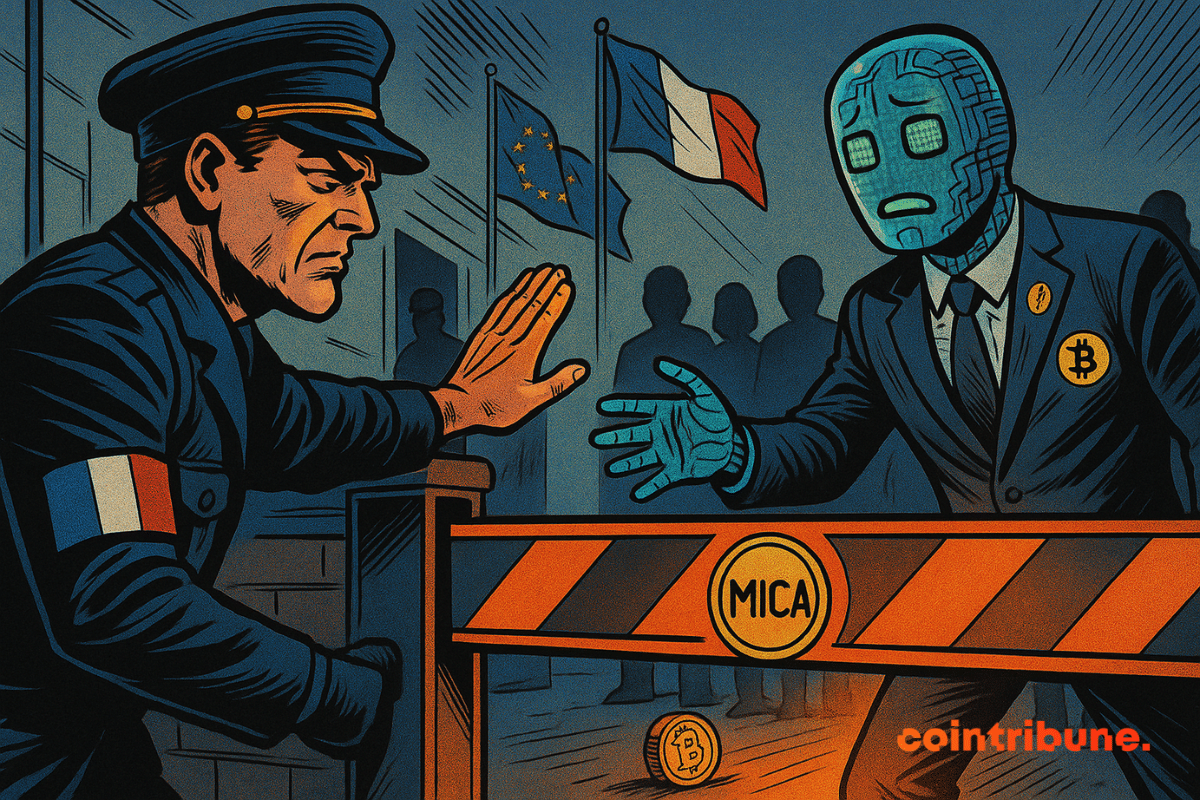
While the Markets in Crypto-Assets (MiCA) regulation aimed to unify cryptocurrency practices across Europe, France is expressing concerns about potential weaknesses. This has led to the possibility of France restricting access for certain international crypto firms. Continue reading for an in-depth look.
In brief
- France is considering denying MiCA authorization to crypto companies that are licensed in countries with less stringent regulatory environments.
- Paris is advocating for a centralized European oversight to ensure uniform crypto regulations across all EU member states.
France Considers Blocking MiCA Crypto Passport
The MiCA framework, implemented at the close of 2024, enables crypto exchanges licensed within one EU nation to operate throughout the entire bloc using a “European passport.” This mechanism, intended to streamline the process, could trigger a race to the bottom with the most relaxed regulatory standards.
Marie-Anne Barbat-Layani, who heads the Financial Markets Authority (AMF), has voiced concerns about this “regulatory arbitrage.” She believes certain crypto businesses may deliberately seek out less demanding regulatory environments to avoid France’s stricter requirements. Therefore, Paris is contemplating blocking select European passports. This measure is considered a last resort by the agency’s director.
Reportedly, several stakeholders are concerned about potentially weak oversight for crypto platforms that feature intricate and international operating structures. In the immediate future, France is seeking to bolster the authority of ESMA, the European Securities and Markets Authority, to prevent a dilution of continental-level regulation.
ESMA’s Potential Increased Role in Crypto Supervision
The AMF isn’t alone in raising the alarm. Joining forces with its counterparts in Italy (Consob) and Austria (FMA), it’s advocating for a transfer of responsibilities to ESMA. A shared policy document highlights significant inconsistencies in how national crypto regulators are applying the regulation. This undermines the cohesiveness of the MiCA initiative.
Specific instances demonstrate these discrepancies. For instance, Malta issued a license to a crypto exchange without thoroughly evaluating the associated risks. Luxembourg, meanwhile, has already authorized major crypto players like Coinbase and Gemini.
The three nations are also pushing for reinforcements to the MiCA structure:
- Greater oversight of activities conducted outside the EU.
- Enhanced cybersecurity requirements.
- Clearer guidelines for managing tokens.
If these adjustments are adopted, ESMA could become the key decision-maker in the European digital asset market.
Ultimately, the current debate surrounding MiCA may reshape the regulatory landscape in Europe. In the meantime, crypto platforms must navigate the uncertainties presented.
Maximize your Cointribune experience with our “Read to Earn” program! For every article you read, earn points and access exclusive rewards. Sign up now and start earning benefits.

My name is Ariela, and I am 31 years old. I have been working in the field of web writing for 7 years now. I only discovered trading and cryptocurrency a few years ago, but it is a universe that greatly interests me. The topics covered on the platform allow me to learn more. A singer in my spare time, I also cultivate a great passion for music and reading (and animals!)
DISCLAIMER
The views, thoughts, and opinions expressed in this article belong solely to the author, and should not be taken as investment advice. Do your own research before taking any investment decisions.