
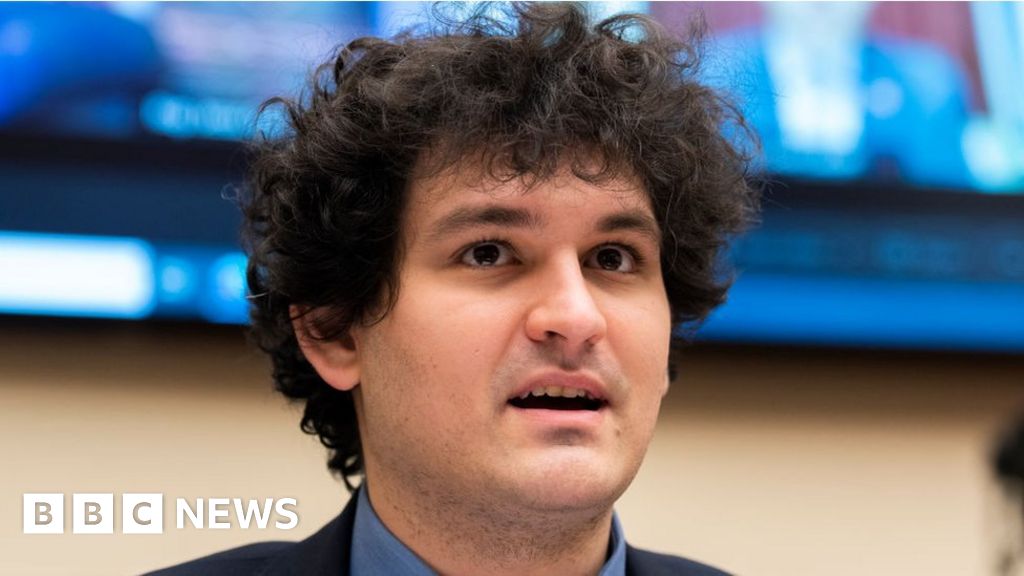
BBC News
Tom Williams
The cryptocurrency exchange FTX, experiencing significant challenges, has initiated bankruptcy proceedings in the United States, seeking legal safeguards while exploring avenues to reimburse its user base.
Furthermore, the company has announced that its former leader, Sam Bankman-Fried, has relinquished his position as CEO.
This marks a dramatic reversal of fortune for the 30-year-old, who previously presided over the world’s second-largest cryptocurrency trading platform.
Within a mere week, Bankman-Fried’s FTX empire has crumbled, severely undermining trust in the already volatile cryptocurrency sector.
In a Friday tweet, Mr. Bankman-Fried, previously known as the ‘King of Crypto’, expressed, “I’m truly sorry that we’ve reached this point. I hope there’s a path to recovery.”
He added, “I was taken aback by the rapid unfolding of events.”
Allow X content?
‘accept and continue’.
Prior to this crisis, Bankman-Fried was a prominent figure in the cryptocurrency world, often compared to legendary investor Warren Buffett, boasting a personal fortune estimated to exceed $15 billion (£12.8 billion) as recently as the start of the week.
However, rumors circulating earlier in the week concerning the financial instability of FTX and other entities under Bankman-Fried’s control triggered a surge of customer withdrawal requests from the FTX platform, a popular exchange for trading digital currencies.
Faced with a severe shortage of liquid assets, Bankman-Fried attempted to secure a bailout, but his efforts proved unsuccessful, leaving FTX struggling to raise billions in capital and many customers unable to retrieve their funds.
By declaring Chapter 11 bankruptcy, the company aims to maintain operational capacity while restructuring its debts under the guidance of the court.
FTX stated that its objective is to “initiate a structured process to assess and liquidate assets to benefit all stakeholders globally.”
“The FTX Group possesses valuable assets that can only be efficiently managed through an organized, collaborative approach,” explained John J Ray III, the newly appointed CEO. Ray, a legal professional with previous experience at a venture capital firm, has a track record of involvement in prominent bankruptcy cases.
In its filing, FTX estimated its assets and liabilities to be within the range of $10 billion to $50 billion, with over 100,000 creditors involved.
According to the statement shared by FTX on Twitter, the bankruptcy proceedings encompass FTX, Alameda Research (a trading company founded by Bankman-Fried), and approximately 130 affiliated entities.
These include FTX’s US operations, which Bankman-Fried had previously asserted were unaffected.
Bankman-Fried commented, “This situation doesn’t necessarily signify the end for these companies or their ability to deliver value and capital to their customers, and it can align with alternative strategies.”
“Ultimately, I remain optimistic that Mr. Ray and others can facilitate the best possible outcome.”
As it stands, Thomas Culham, a resident of Kingston, has been unable to withdraw the £2,000 he invested in FTX – a “significant setback” since his FTX holdings represented a “substantial portion” of his overall investment portfolio.

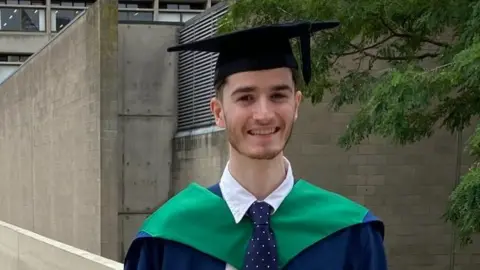
Thomas Culham
“It’s likely lost,” the 22-year-old lamented. “Perhaps, years down the line, some form of recovery may be possible, as they do possess assets that should be subject to liquidation.”
Pressure on other firms
Bankman-Fried was a very visible figure in the cryptocurrency sphere and wider, often talking about the industry to government regulators.
He was a major contributor to the Democratic Party in the recent US elections and had undertaken a major advertising campaign in the USA, getting celebrities such as Tom Brady and Gisele Bundchen to say that cryptocurrency was worth investing in.
But as his profile grew, questions were raised about the connections between his various business ventures and if there were conflicts of interest between FTX and Alameda.
The problems at his organizations have damaged the wider cryptocurrency market, with the value of currencies such as Bitcoin dropping 20% this week. The situation has also increased the pressure on other companies to prove they have the finances to avoid the same fate.
Other companies in the same sector had collapsed or were close to collapsing earlier in the year, after a big fall in value of digital assets. BlockFi, a crypto firm with connections to FTX, stopped clients making withdrawals on Thursday because of the problems.
“FTX going down is not good for anyone in the industry. Do not view it as a win for us. User confidence is severely shaken,” wrote Changpeng Zhao, the chief executive of FTX’s larger competitor, Binance, who had said that they might buy FTX earlier in the week but then decided not to.
Regulators have been warning people about the risks of investing in crypto for a long time and have been worrying about the threat of financial problems in the wider world as traditional financial companies increase how much they invest in the market, despite a lack of regulations.
FTX, which is being investigated by financial authorities, had the support of major investment groups like Blackrock, Softbank and the Ontario Teachers’ Pension Plan in Canada.
But Dan Ives, a Wedbush Securities analyst, stated that he didn’t think that FTX’s troubles would cause big problems in the stock market.
“It’s a black swan event. There’s really no bleed over into the overall market, there’s containment,” he said. “That’s extremely important and another positive signal in terms of the walls between systematic risk and not.”
Bankman-Fried has admitted the problems were his fault, but that will not be much comfort to the around 1.2 million FTX customers who could now lose the crypto that they saved.
Despite potentially losing his savings, Culham has said that what has happened this week won’t stop him investing in cryptocurrencies in the future.
“I think there’s a lot of opportunity,” he said, adding that he was not investing more than he could afford to lose, and was not putting his money into one type of crypto.
Additional reporting by Michael Race.