
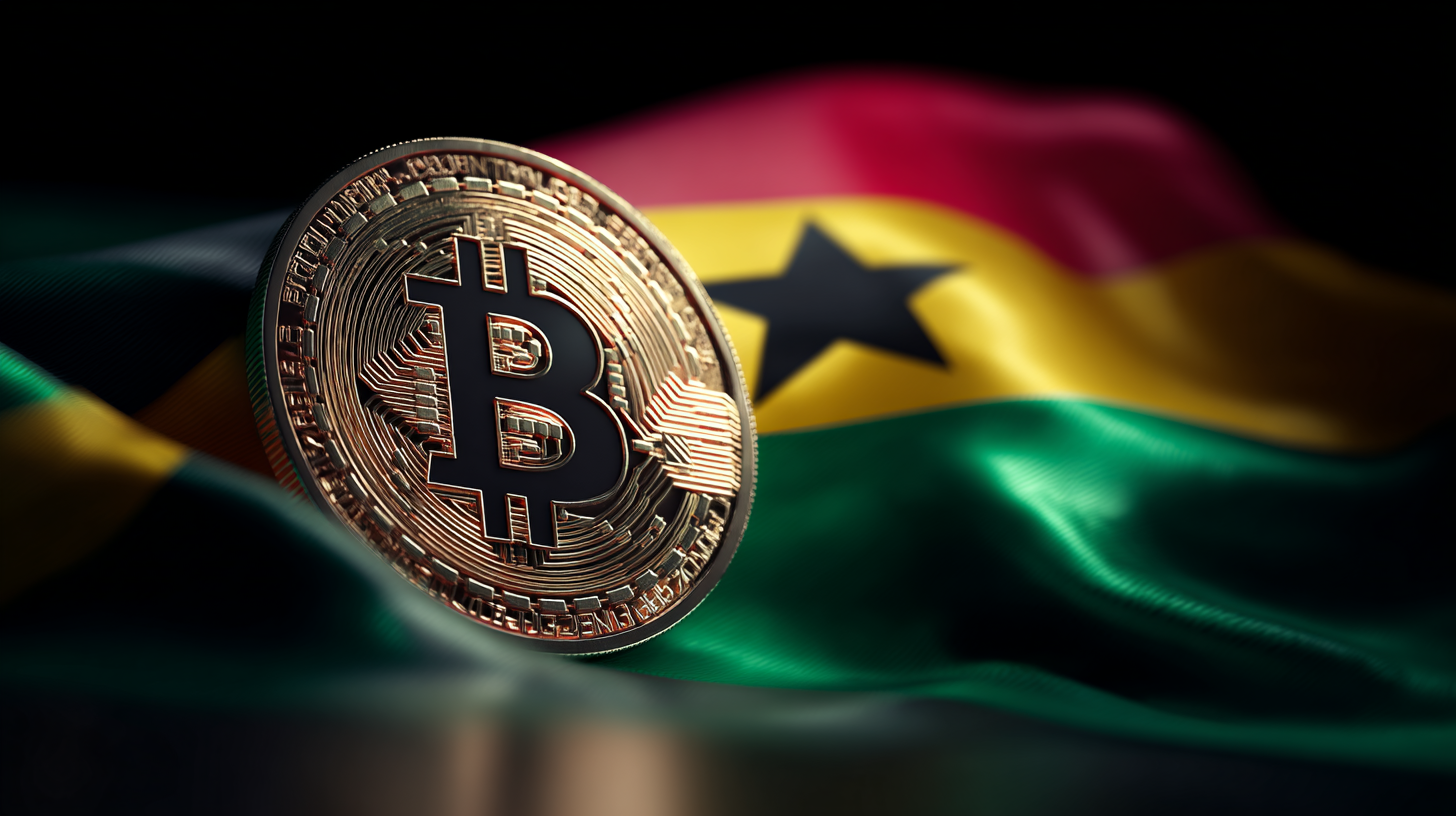
Ghana is moving towards formalizing its cryptocurrency market. The Bank of Ghana intends to introduce a licensing system for platforms dealing with Bitcoin and other cryptocurrencies. According to a statement made to Bloomberg by Governor Johnson Asiama, the proposed regulatory framework is expected to be submitted to parliament by September.
This initiative by Ghana’s central bank aims to provide a structured overview of Bitcoin and cryptocurrency activities. It is also designed to improve the accuracy of financial reporting and help stabilize the country’s currency, the cedi.
The cedi has experienced fluctuations, including a significant rebound of 48% following a previous 25% decline. These fluctuations have presented challenges in controlling inflation within the country.
“We acknowledge that we are behind in establishing clear rules,” Governor Asiama stated.
He further elaborated that many Ghanaians, both individuals and businesses, are actively using Bitcoin and crypto. However, these transactions are currently not officially recorded because of the absence of defined regulations, which “influences the local currency.”
Currently, Ghana faces an inflation rate of 13.7% as of June, along with a policy interest rate set at 28%. This combination has resulted in the highest real interest rate Ghana has seen in the past two decades.
Reports from Bloomberg indicate that about three million Ghanaian adults, representing 17% of the population, are involved with Bitcoin and other cryptocurrencies.
Between July of the previous year and June of this year, the total transaction volume of Bitcoin and crypto within Ghana reached $3 billion. In comparison, Nigeria saw $59 billion, while the entire sub-Saharan Africa region recorded $125 billion.
Del Titus Bawuah, CEO of Web3 Africa Group, commented, “For African nations, it is beneficial to incorporate cryptocurrency into their financial systems to ensure more effective supervision.”
“The data clearly shows widespread use of virtual currencies among businesses and individuals,” Bawuah added.
Share this article