
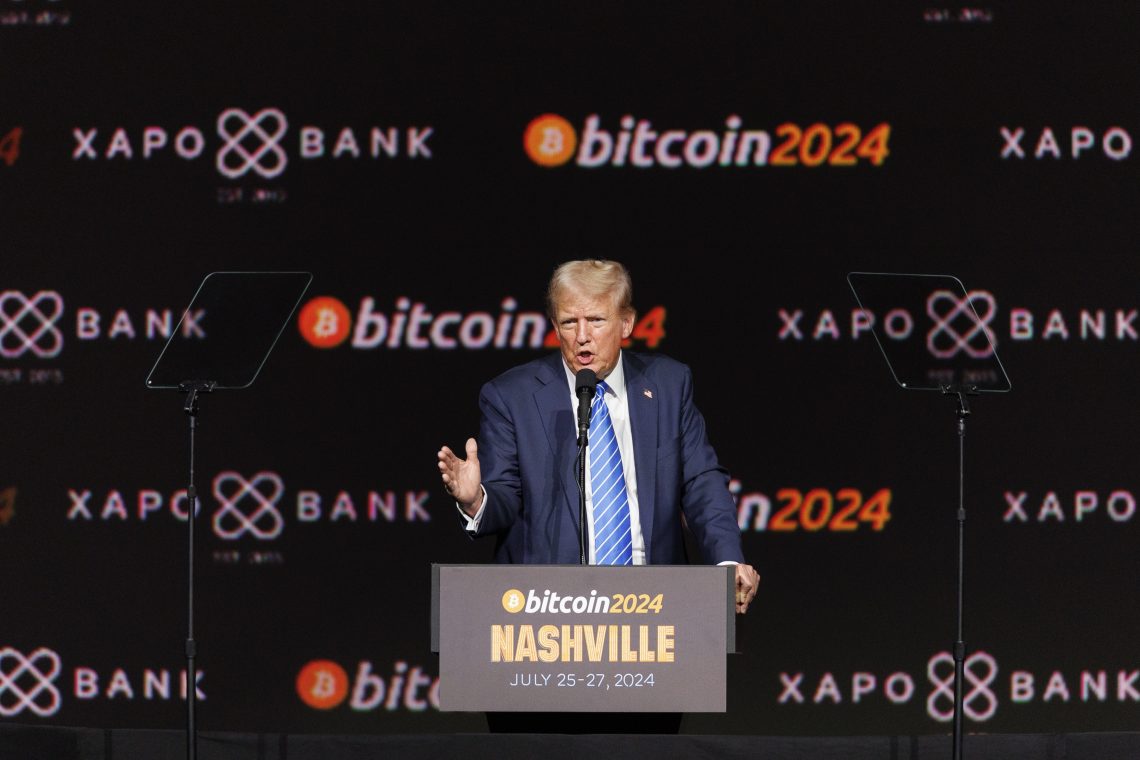
A wave of optimism surrounds the digital currency market, potentially spurred by supportive policies from President Trump, which could invigorate growth and innovation within the American crypto sector.
Key Points
- The Trump administration is leaning towards providing greater regulatory clarity for the digital asset space.
- Growing legal frameworks are coinciding with increased acceptance of digital assets by institutional investors.
- Global regulation of crypto is intensifying, highlighting the importance of the U.S. playing a leading role.
- For a deeper understanding, listen to our podcast driven by AI here.
Proponents of digital currencies are actively seeking to establish them as a central part of the global financial system. However, progress has been impeded by factors such as the collapse of crypto exchanges such as FTX and the downfall of algorithmic stablecoins like Terra Luna. The implementation of stricter regulatory measures globally has further added to these challenges.
Despite these hurdles, the cryptocurrency industry is seeing renewed optimism following recent election results in the United States. President Trump has expressed a commitment to positioning the U.S. as a dominant player in the digital currency realm. He has not only begun to action his campaign promises, but has also moved to install pro-crypto advocates in important positions across federal agencies. The question is, has the difficult period – often called the “crypto winter” – finally come to an end? Or will this new wave lead to a surge in risky behaviors?
The Crypto Market’s Current Revival
The Trump administration, combined with Republican control of both the House and Senate, has the potential to bring much-needed definition to the digital asset market’s framework. President Trump recently signed an executive order designed to solidify the U.S.’s leading position in digital finance technologies. This order mandates the establishment of a new position: the country’s first crypto and AI “Czar,” a role assumed by David Sacks. It also calls for a presidential working group composed of vital government agency stakeholders and private sector representatives. The group will be responsible for advising the President on shaping innovation-friendly policies to ensure continued U.S. leadership, boost economic competitiveness, and safeguard national security in the face of technological progress.
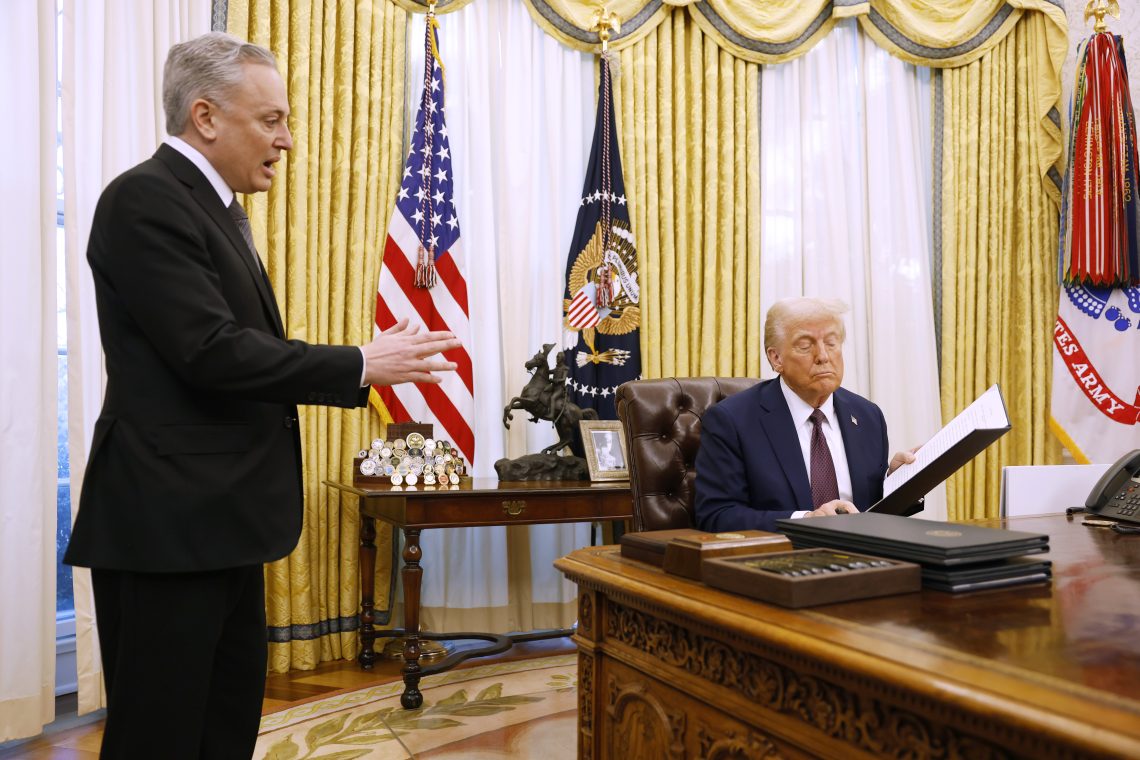
Mr. Sacks swiftly embarked on fulfilling his new role. On the same day that the bipartisan stablecoin bill known as the GENIUS Act was revealed, he held a joint press conference with leading members of Congress, indicating the start of a new chapter for the industry.
The cryptocurrency market has been receptive to these developments. Bitcoin prices reached record levels, exceeding $100,000 in December. The market capitalization of stablecoins (digital currencies connected to real-world assets like the dollar or gold) surpassed $200 billion by January, representing a more than 45% increase year-over-year.
Institutional adoption is also on the rise, driven by the potential for clearer regulations and legal frameworks. Several prominent Wall Street firms began testing digital versions of investment funds in the past year. This suggests that widespread acceptance and use of cryptocurrencies may be gaining momentum and popularity.
Global Acceptance of Cryptocurrencies
This growing trend is not solely contained within the United States. Europe has implemented new crypto asset regulations. Hong Kong is striving to establish itself as a regional hub for digital assets, introducing new rules for cryptocurrencies and stablecoins. Singapore attracts companies like Binance with its clear legal structure and tax benefits. Several other countries, including Brazil and the United Arab Emirates, which is quickly becoming a leading finance and tech center in the Middle East, are also entering the space.
The time when cryptocurrency could function outside of regulations is over. Although some existing regulations are unnecessarily complicated, countries are now in competition to attract cryptocurrency developers, investors, and businesses. However, without harmonized global rules for the cryptocurrency market, the emerging “internet of value” may become fragmented and siloed, similar to the differences between the internet, an intranet, or an extranet. U.S. leadership is crucial in ensuring this alignment.
Facts & Figures
What is the Internet of Value?
The concept of the Internet of Value involves the ability to transfer digital assets – money, stocks, intellectual property, data, etc. – quickly, securely, and easily over the internet. The intent is to enable cost-effective and instant peer-to-peer transactions, without relying on intermediaries for verification or completion. Technologies like blockchain and cryptocurrencies are vital in enabling digitization, tracking, and securing value transfers without requiring central authority.
However, broader economic policies in the United States could hinder its ability to lead amid increasing international tensions. Nations around the globe are experiencing the effects of the “America First” economic strategy, which has resulted in trade friction between the U.S. and multiple countries. In the meantime, America still has matters to address at the federal level, with conflicting state interests and regulations concerning cryptocurrencies.
Regulatory Fragmentation in the U.S.
The U.S. is navigating a regulatory tug-of-war regarding cryptocurrency policies. The fragmented regulatory environment of markets and banking oversight has led to agencies competing for control or withdrawing completely. The Securities and Exchange Commission, Commodity Futures Trading Commission, and state regulators often pursue conflicting goals, creating uncertainty for crypto firms and investors.
This fragmented system has real consequences. Banks that are receptive to serving the crypto industry face a double bind: competitive pressures force them to innovate, while compliance concerns necessitate caution. The unresolved tension between state and federal authority, especially regarding banking and payments, has historically impeded crucial stablecoin legislation more than any actual risks in the crypto market. National bank policies are evolving, but progress is slow due to a lack of clarity. Cryptocurrency has nevertheless flourished, not due to U.S. policies, but despite them. It attracts users by offering a free, private alternative for accessing money and financial services, unconstrained by bank holidays. The Trump administration and Congress could shift this dynamic.
Read more about digital assets
Economic and technological policies may be adapting too slowly to keep pace with rapid innovation. A good example is the disruptive impact of the relatively low-cost Chinese AI startup DeepSeek on U.S. tech giants. U.S. tech stocks lost almost $2 trillion in market value in January after DeepSeek’s newest AI model gained prominence in the Apple app store. A passive approach to similar disruptions in sectors like payments, capital markets, and even crypto markets is not a sound strategy for maintaining global leadership.
Many central banks globally are developing digital versions of their currencies. According to the Atlantic Council’s Geoeconomics Center, more than 134 central banks, accounting for 98% of global GDP, are involved in this effort. However, President Trump’s executive order on digital financial technology stated that Central Bank Digital Currencies (CBDCs) “threaten the stability of the financial system, individual privacy, and the sovereignty of the United States.” He asserted that the creation, distribution, and usage of CBDCs in the U.S. would be strictly forbidden, instead prioritizing the regulation of today’s generation of dollar-denominated stablecoins as the crucial priority for the U.S. to win the digital currency race.
Opposition to CBDCs
Political resistance to a U.S. CBDC marked the first crypto-related issue to provoke a strong political reaction leading up to the 2024 election. Even at the state level and in Congress, bills were introduced to ban a U.S. CBDC due to concerns about financial privacy violations and the more insidious long-term dangers of imposing morality or conducting a taxpayer-funded science experiment with money.
Facts & Figures
Why might those who favor cryptocurrencies be against CBDCs?
Those who support cryptocurrencies are concerned about the privacy implications of Central Bank Digital Currencies (CBDCs). Given that a CBDC would leave a digital record, it would lack the anonymity that cash or cryptocurrency offers. Embedded features in the currency could identify users, enabling governments to monitor every transaction, even small purchases like a cup of coffee. Most people expect some level of privacy in their financial dealings. Cryptocurrencies are built on decentralized networks, meaning no single entity controls or owns them, and they rely on a community of users to validate transactions. CBDCs, on the other hand, are issued and managed by central banks, making them fully centralized. Cryptocurrency advocates see this as a step backward, giving governments and banks more of the same power they already possess, just with a digital upgrade.
Even the long-awaited launch of the Fed’s domestic instant payment system, FedNow, had a tepid and often conspiratorial reception, contributing to slow adoption among banks. With the U.S. essentially withdrawing from public-sector digital money experiments, there is a growing need for digital dollars – previously called payment stablecoins in legislative suggestions – to be brought under U.S. regulatory control. The GENIUS Act, along with two other recently introduced bills, underscores the growing focus on stablecoin legislation in Washington, indicating a distinct shift in government policy priorities.
Businesses are increasingly seeing the value of stablecoins not only for crypto trading but also for everyday uses. A prime example is Nubank, a Brazilian fintech company that has made USDC (a stablecoin pegged to the dollar issued by Circle, the author’s employer) accessible to its 100 million customers. This presents USDC not just as a trading token, but as a dependable dollar-denominated store of value.
Scenarios
Likely: Increased regulations supporting dollar-backed stablecoins
Essentially, CBDCs represent domestic payment system innovations. However, even with meticulous planning, they tend to be primarily effective as localized solutions rather than universally adaptable forms of digital currency.
This limitation arises from their structure. CBDCs create a closed network – a “monetary intranet” – connected to a single nation’s economy. While they improve domestic efficiency and lower transaction costs, they lack the adaptability and interoperability needed for truly global digital currencies. On the other hand, cross-border settlement systems between banks can be regarded as an “extranet.” These systems facilitate payments across different jurisdictions, but still function within a restricted framework.
The current stablecoin landscape shows a more advanced development in digital money, emphasizing portability and universality. When combined with open blockchain technology and easily accessible open-source mobile wallets, stablecoins create what can be called the “internet of value” – a decentralized, borderless tool for value transfer that empowers users and promotes financial inclusion. Establishing regulations to support dollar-backed stablecoins could be an effective strategy for the U.S. to succeed in the digital currency market.
In the January executive order, President Trump indicated his administration’s support for the responsible growth and implementation of digital assets and blockchain technology across all sectors. He vowed to ensure individuals and private entities can access open public blockchain networks without persecution, create a supportive regulatory framework for developing technologies, and promote the growth of lawful dollar-backed stablecoins worldwide.
Also likely: BRICS central banks will continue improving payment systems to counter tariffs
Washington’s pro-crypto policy is reinforced by a growing determination to protect the dollar’s role as the world’s reserve currency. This includes the potential threat of tariffs against BRICS countries imposed by the U.S. if they pursue plans to de-dollarize. Against this backdrop, multiple central banks will continue enhancing their domestic payment system innovations under the banner of monetary and payment system sovereignty.
Contact us today for tailored geopolitical insights and industry-specific advisory services.

Sign up for our newsletter
Receive insights from our experts every week in your inbox.