

Ever notice how some couples combine their finances in a shared account?
Now, picture this: in that couple, one person habitually spends far more than they earn – lavish dinners out, the latest tech toys, the works.
Initially, the other partner covers the overspending. However, eventually, the deficit becomes so substantial that it poses a significant problem for both individuals.
That’s essentially the situation unfolding in Europe, according to Arthur Hayes, a prominent Bitcoin investor and former CEO of the cryptocurrency exchange BitMEX.
In this analogy, France is the partner overspending, and the European Central Bank (ECB) will ultimately have to foot the bill.
What makes this interesting: Hayes speculates this could lead to a surge in interest for Bitcoin 😏
|
|
In a recent analysis, Hayes highlighted the increasing national debt of the French government and the growing challenges in securing its financing.
Under typical circumstances, this would be solely a concern for France. However, given that France is a key member of the Eurozone, this situation has ramifications for the European Central Bank as well.
The ECB cannot afford a French economic collapse, as it could destabilize the entire Euro system.
Hayes suggests this leaves the ECB with little choice but to engage in quantitative easing. Essentially, they must print a significant quantity of new euros to address the financial gaps.
|
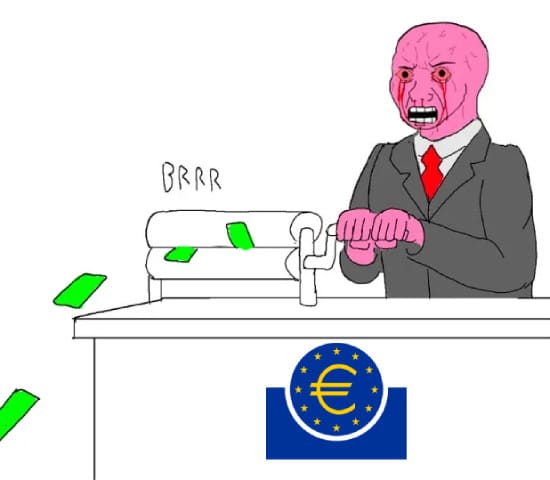
And this is where Bitcoin comes into the picture.
Hayes argues that as people become aware of the ECB’s efforts to inflate the euro’s supply, they will seek to transfer their assets into a medium that cannot be endlessly created.
His preferred choice is predictably Bitcoin, which has a fixed maximum supply of 21 million coins.
Indeed, similar patterns have been observed in countries such as Argentina and Turkey: as their domestic currencies depreciated, individuals opted to shift their savings into US dollars or cryptocurrencies as a means of protecting their buying power.
He suggests that a similar trend could potentially emerge in Europe. The key difference, however, lies in the scale: Europe represents one of the world’s largest economies.
If such a shift were to occur there, it would directly generate significant new demand for Bitcoin and could transform the market globally.
And that outcome… well, let’s just say it would be a welcome development 😏
|
Now you’re informed. But what about your friends – are they aware of this? Perhaps you could be the one to enlighten them… 😃🫵 Share this information and be the helpful friend everyone needs! |