
Warning: The following contains descriptions of mass violence, sexual assault, and religious intolerance.
Early in the game “Hell Is Us,” players encounter a settlement that vividly portrays the horrors of war crimes.
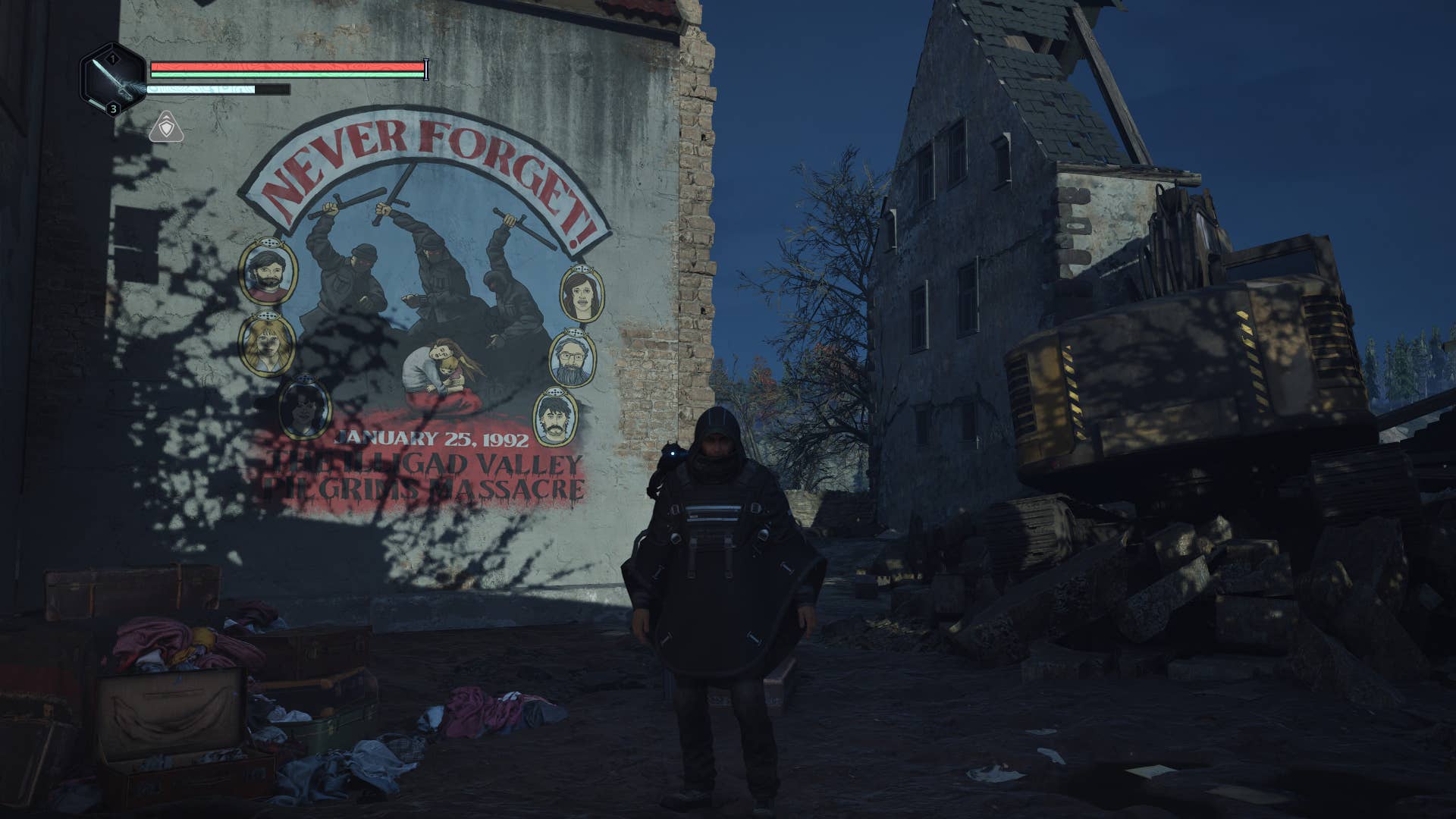
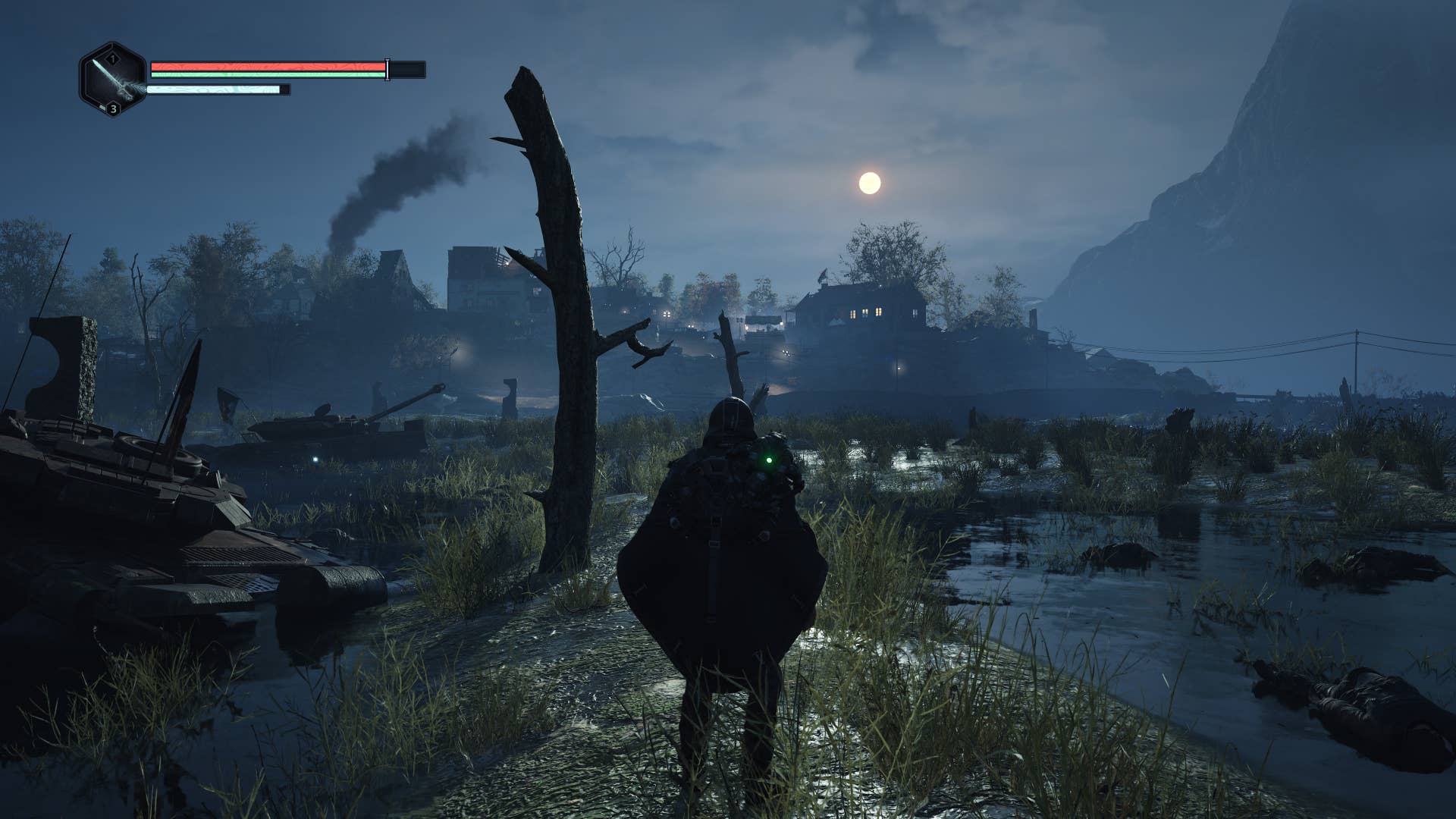
The journey to this village leads past a freshly uncovered mass grave. Mud-caked bodies are piled high, dwarfed by the arm of a nearby excavator. A grieving man clutches the bodies of his wife and child. Further along, a moonlit swamp reveals the wreckage of war: shattered tanks and the bodies of fallen soldiers litter the landscape. In the distance, the village sits atop a hill, seized and pillaged by the Sabinians. This group, along with the Palomists, are locked in a brutal conflict fueled by deep-seated religious differences. According to Rogue Factor, the game’s developers, the conflict draws parallels with real-world civil wars of the 1990s.
A conversation with the Sabinian captain reveals him as a coarse and somewhat exaggerated figure, a caricature of villainy befitting a game called “Hell Is Us.” He refers to the Palomists as “insects” deserving of extermination or confinement, justifying his own acts of cruelty by claiming the Palomists have committed far worse. Beside the captain’s observation point, a woman recounts her experience as a sex slave, punishment for her involvement in a Palomist mob. Strikingly, her house is unlocked, an unusual detail in a game where most doors are secured. To the left of the village entrance, members of a firing squad relax near a line of recently executed civilians.
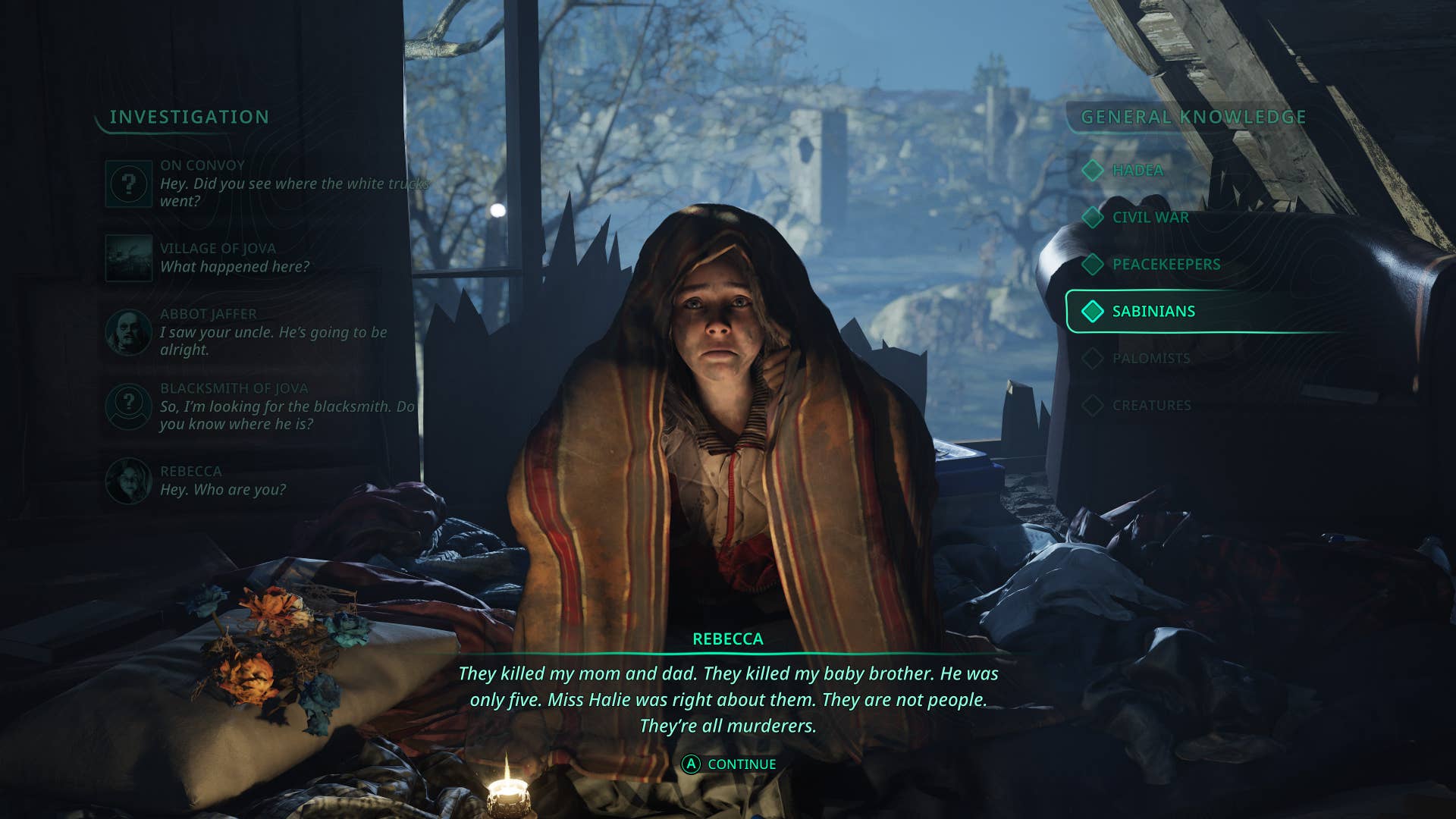
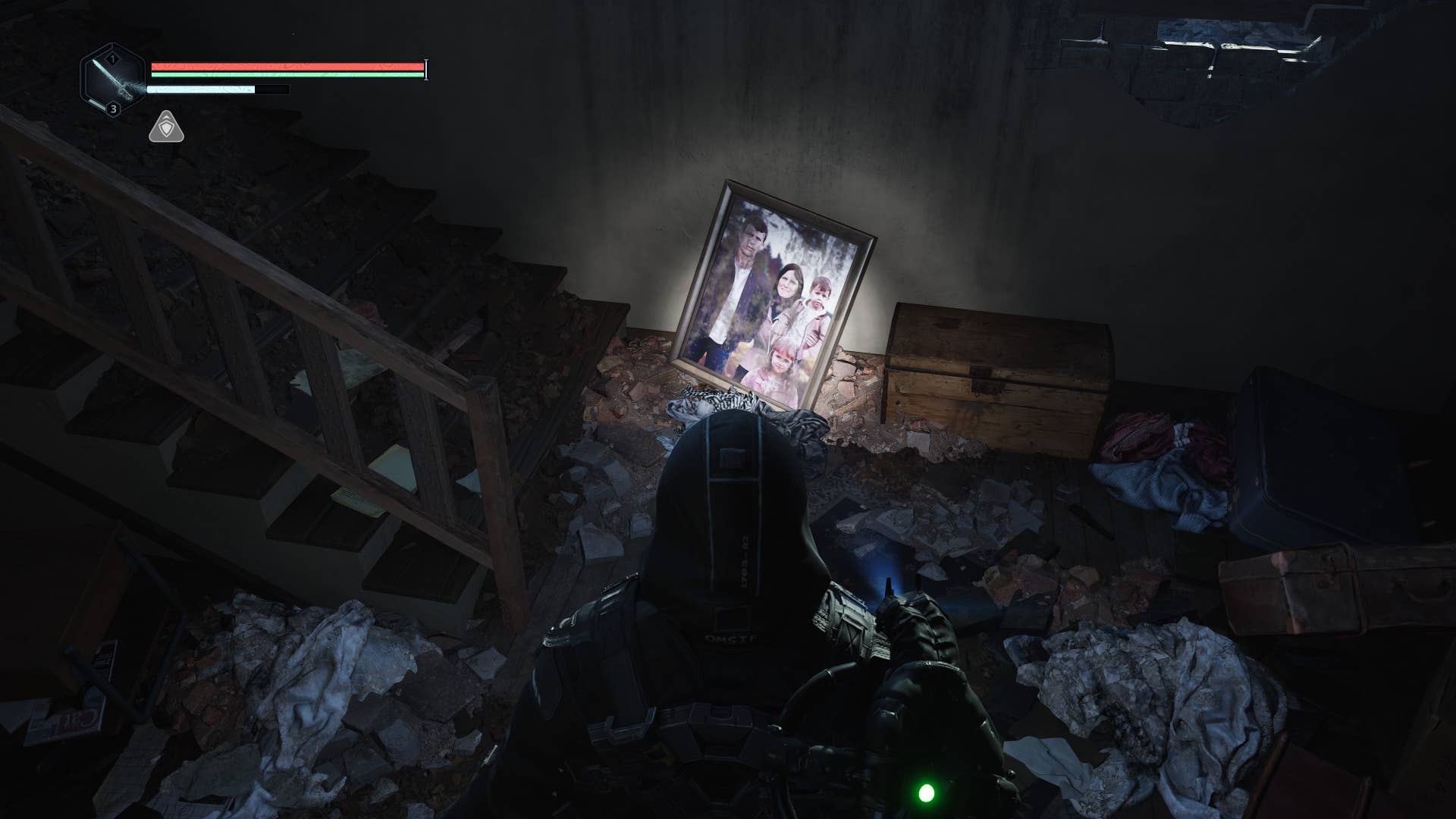
At the town’s edge, a Palomist abbot hangs, lamenting the cyclical nature of hatred and expressing sorrow that the world outside seems to mirror the darkness of Hadeans. He asks the player to check on a relative, a girl hiding in the attic of a bombed-out house. There, huddled under a blanket by candlelight, she describes the Sabinians as inhuman and wonders about her family’s fate in heaven, “a place that has no memories.”
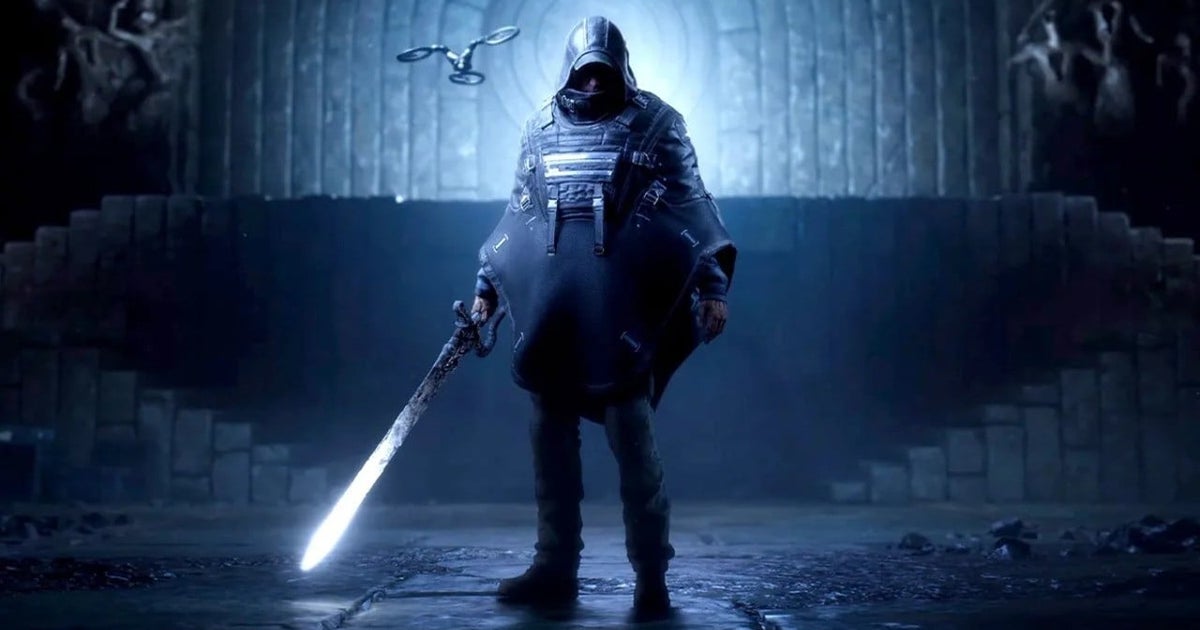
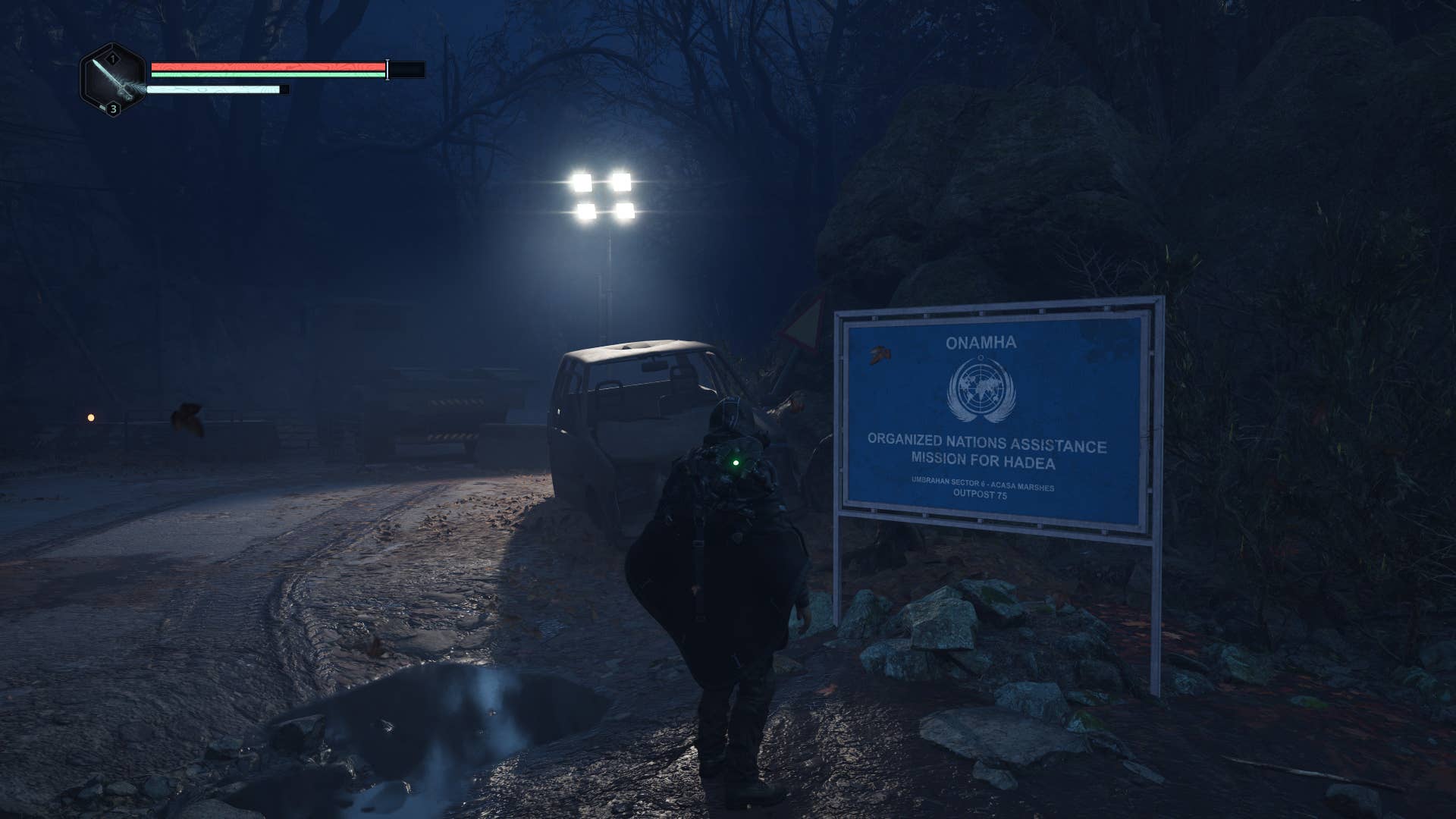
The player character is presented as a wanderer posing as an agent of the “Organized Nations” (ON), a fictional counterpart to a UN peacekeeper, complete with a similar logo. However, the player’s mission transcends simple peacekeeping. The ON peacekeepers, beyond their apparent political role, are investigating an outbreak of emaciated monsters. The player’s ON poncho grants access to conflict zones, enabling interaction. The Sabinian captain makes it clear he would eliminate the player character if he could. The protagonist resembles those found in FromSoftware games: a returning exile, both privileged and outcast, viewed with suspicion but possessing the unique ability to influence a violent, undead world.
The influence of FromSoftware is clear in “Hell Is Us.” Combat revolves around stamina and parrying, with a health regeneration system reminiscent of Nioh and Bloodborne. While the game lacks traditional bonfire checkpoints, using holographic save points instead, it draws inspiration from the Soulslike genre’s themes of purgatory, where death is not final.
Enemies respawn when the player leaves an area. The only way to permanently defeat them is to enter and dispel the dark domes that hold the fossilized trauma of the land’s inhabitants. The monsters are manifestations of the country’s past wounds. An early dungeon connects the supernatural to reality, leading players through an ancient, theocratic site where stone plaques detail the proper treatment of “sinners,” before emerging into a modern trench network. Symbols from the dungeon are repeated throughout the open world, appearing on murals and in puzzles.
After only a few hours with “Hell Is Us,” the reviewer expresses reservations about the game’s overt nihilism and mystical ideas about historical cycles, finding them somewhat simplistic. The game’s message is overly obvious. Additionally, the character is voiced by Elias “Adam Jensen” Toufexis, whose serious tone may be too on-the-nose for a game attempting to deliver a profound message. The portrayal of the village sometimes feels exploitative and sensational.
However, the reviewer is intrigued by the idea of a Soulslike game set in a recognizable, modern-day conflict, surprised that it hasn’t been explored more extensively. This concept raises questions about the potential of the Soulslike genre to critically examine history, particularly in an era of ongoing “forever wars.”
Examples of such conflicts include the decades-long Israeli occupation and siege of Gaza and the Somali Civil War, which has been raging since the 1980s. The reviewer recalls mass protests against the 2003 invasion of Iraq, a war that officially ended in 2011 but arguably continues in a “low intensity” form, with diminished Western troop presence and conflicts involving local militias and neighboring countries.
While FromSoftware’s games often draw inspiration from medieval settings, their themes of hatred, decline, and unending conflict resonate with modern conflicts. The reviewer wonders how Soulslike mechanics, such as bonfires, recoverable XP, and boss encounters, could be applied to explore complex tragedies like the war in Somalia.
The reviewer admits this might be a misguided idea. Based on initial impressions, “Hell Is Us” demonstrates how this concept could be poorly executed. Soulslike games often feature fantastical and exaggerated elements, which may not be appropriate for portraying real-world atrocities. However, Rogue Factor should be acknowledged for venturing into territory that even FromSoftware has avoided.