
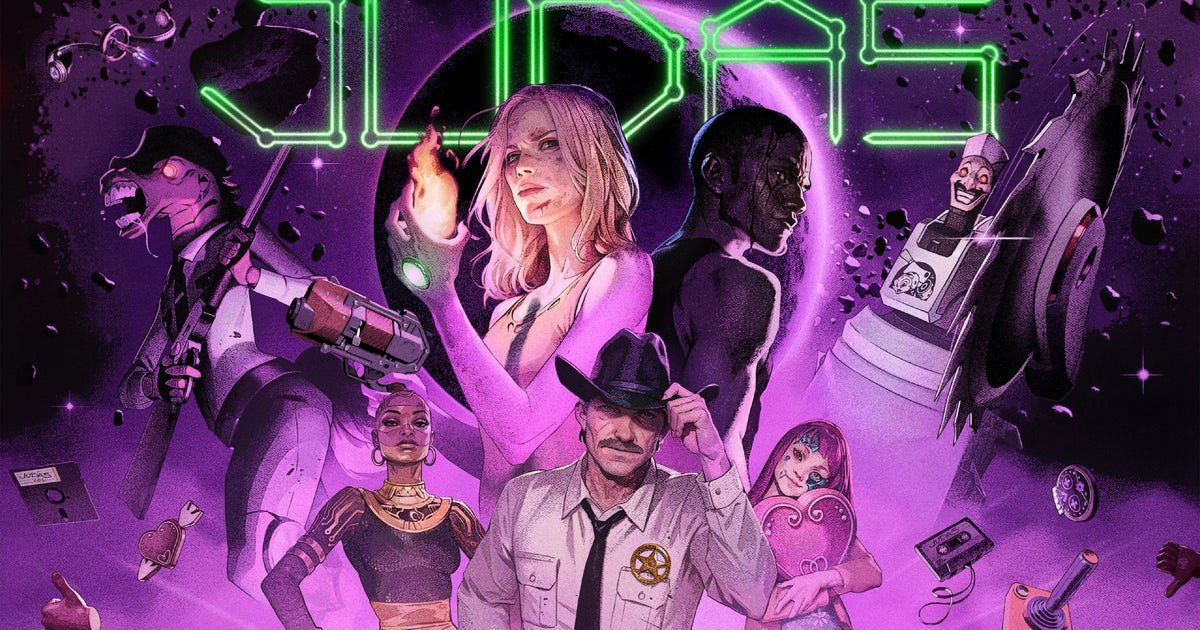
Ever had a close friend turn into someone who actively works against you? Well, in Ken Levine’s Judas, that’s a core gameplay element. Your choices will determine which of your allies becomes your primary adversary.
This “villainy system” is the focus of the first developer diary from Levine and the team at Ghost Story Games. Since its 2022 unveiling, we’ve had glimpses of this open-world, BioShock-esque game, including its peculiar unique environmental designs and a distinct visual style. This dev log suggests more frequent updates may be on the horizon.
Previously, we learned about the “big three,” essential characters you’ll encounter on the colossal spaceship, Mayflower. The developer update highlights that the game incorporates features inspired by the Nemesis system from Middle-earth: Shadow of Mordor.
Instead of a predetermined antagonist, much like Frank Fontaine from BioShock, you’ll start as allies with the “big three.” Your in-game decisions and actions will influence their opinions of you. Consequently, one of them may ultimately become your opponent and the game’s main villain. In Levine’s words:
In Judas, you’re going to get to know these characters intimately. We want losing one of them to feel like losing a friend. We want to play with that dynamic, and we want that choice to be super hard. The Big 3 are all going to be competing for your favor and attention. They can bribe you, save you in battle, talk shit about the other characters, and share with you their darkest secrets. But eventually, you’ve got to decide who you trust and who you don’t.
Levine further explains that the trio will evaluate your gameplay, including “how you approach combat, hacking, and crafting.” The character who evolves into the villain will acquire “a new set of abilities to undermine your progress,” with an example being Tom, a character who can turn previously allied sheriff bots against the player.
The concept sounds intriguing, but it raises concerns. Players striving to maintain positive relationships with all three characters might find the betrayal jarring, or feel forced into triggering a villain arc. Furthermore, the villain’s motivations and personality, shaped by player actions, might lack the depth of a character designed as an antagonist from the beginning. Prioritizing reactivity could potentially compromise the narrative’s richness.
It will be interesting to see how Judas addresses these challenges. As of this dev log, a release date is still unconfirmed; Levine states the team prefers to avoid announcing dates they may later have to revise. In the meantime, there is key artwork by Drew Struzan to enjoy.