
Large-scale investments by institutions are undoubtedly propelling Bitcoin’s
price surge, leading many to consider it a premier digital asset to
acquire. A significant development is that publicly traded companies now
hold over one million BTC. This milestone is viewed as a major step in
Bitcoin’s mainstream acceptance, especially given that these corporations
were once hesitant to engage with the cryptocurrency.
With institutions managing a collective one million BTC, they control
approximately 5% of Bitcoin’s total supply.
This raises questions about the impact on individual investors. Is such
extensive accumulation by large entities beneficial for the broader market?
MicroStrategy: The Leading Institutional Bitcoin Holder
MicroStrategy, formerly known as Strategy, is the top institutional owner
of Bitcoin, possessing 636,505 BTC. Following a recent purchase of over 4,000 BTC on September 2nd,
MicroStrategy’s year-to-date (YTD) yield on Bitcoin stands at 25.7%.
MARA Holdings ranks second, holding over 52,000 BTC and having recently
acquired 702 BTC. Other significant institutional investors include Jack
Mallers, with over 43,000 BTC, and Bitcoin Standard Treasury Company,
possessing over 30,000 BTC.
Bullish is another entity demonstrating confidence in Bitcoin, reflected in
its holding of 24,000 BTC. MetaPlanet also holds a substantial amount,
exceeding 20,000 BTC.
Bitcoin Miners Face Challenges Amidst Institutional Dominance
While institutional investment has driven Bitcoin’s price increases, miners
have not experienced the same degree of profitability. Data from CoinMetrics
indicates that transaction fees have declined significantly, substantially
reducing miner revenue.
The challenge stems from the fact that Bitcoin mining profitability largely
depends on price appreciation, creating considerable financial strain for
miners.
Consequently, miners are scaling back operations. According to
Coinlaw, the average cost to mine a single Bitcoin is $17,000, posing a
significant obstacle for smaller mining operations.
This situation has fostered a unique environment. Smaller miners and retail
investors are finding Bitcoin increasingly expensive, while institutional
investors are aggressively pursuing a short squeeze, potentially leading to
a decrease in Bitcoin’s decentralization.
If these large corporations adopt a bearish outlook, the market could face
increased volatility and a sharp decline in Bitcoin’s price. Furthermore,
regulatory bodies and policymakers are closely monitoring the substantial
corporate ownership of Bitcoin, with potential measures to mitigate the
associated systemic risk. This could hinder adoption and weaken the primary
factor currently driving Bitcoin’s price upward.
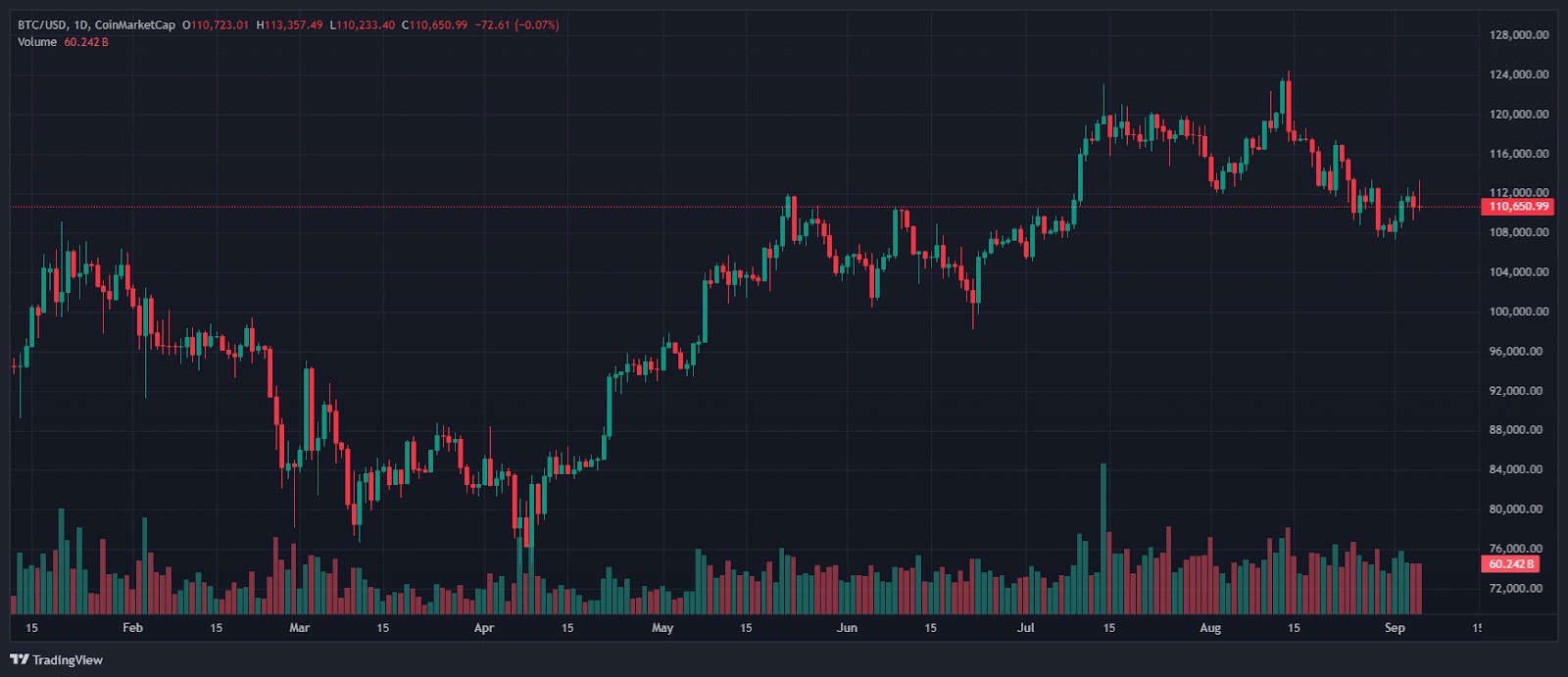
Whether Bitcoin remains the best cryptocurrency investment depends on the
prevailing market dynamics. Currently, institutional investors convey a
long-term commitment to Bitcoin, potentially until it reaches $1 million,
fostering bullish sentiment. However, individual investors no longer
dominate the Bitcoin narrative, diminishing the community’s influence.
At the time of this report, Bitcoin is trading around $110,000, with a
market capitalization exceeding $2.2 trillion.
Analysts hold mixed views on Bitcoin. Crypto Birb recently suggested that
the Bitcoin bull run may conclude within the next 50 days.
Bull run ends in 50 days.
Cycle Peak Countdown says BTC is 95% done (1,017 days in) as we bleed
in typical Q3 shakeout.Use this alpha playbook and retire rich.
(Thread)🧵 pic.twitter.com/rtCwKyJJec
— CRYPTO₿IRB (@crypto_birb)
September 4, 2025
Top Cryptocurrency Alternatives to Bitcoin
Considering that Bitcoin may not be the optimal choice for all investors,
emerging crypto Initial Coin Offerings (ICOs) or recently listed tokens
present potential alternatives.
Pepenode
Institutional-driven short squeezes in Bitcoin have marginalized traditional
miners; however, innovation keeps the mining spirit alive.
Pepenode is a project that redefines mining using a gamified, meme-coin-inspired
approach instead of traditional hardware-intensive methods.

Pepenode introduces a “Mine-to-Earn” ecosystem where users acquire
Pepenodes and build virtual mining rigs. Presale investors benefit from
exclusive upgrades to access more efficient rigs, boosting their mining
potential.
Unlike Bitcoin mining’s high costs and complexity, which is further
challenged by halving, Pepenode simplifies the experience with a
Pepe-inspired visual theme that resonates with the meme coin community.
The presale is further enhanced by off-chain mining mechanisms, which will
transition to on-chain mining after the Token Generation Event (TGE),
ensuring the continuity of virtual rigs built during the presale.
Additionally, Pepenode offers staking rewards that are over 2000% APY at
the time of writing, providing extra motivation for early participation.
Bitcoin Hyper
With over one million BTC held by institutions, retail investors are
vulnerable to market downturns. This fuels demand for Bitcoin-themed assets
accessible to the public. Bitcoin Hyper is a prime example.

Bitcoin Hyper focuses on expanding Bitcoin’s utility beyond speculation,
offering scalability, interoperability, and enhanced security. It aims to
create a functional and rewarding Bitcoin-equivalent ecosystem accessible to
individual investors.
With meme-driven branding and Pepe-inspired visuals, Bitcoin Hyper aims to
gain short-term viral attention, while transforming Bitcoin into a versatile
asset for the long term.
Bitcoin Hyper’s presale has already collected over $14 million, showing
strong investor trust in this intersection of meme culture and real utility.
Analysts have praised the project, with 99Bitcoins calling it a top crypto
buy. The combination of accessibility, humor, and innovation position
Bitcoin Hyper as a potentially strong alternative to BTC with a low market
cap.
Maxi Doge
Unlike Bitcoin, which is undergoing centralization because of significant
institutional investment, Dogecoin has stayed decentralized. Even though
Dogecoin still has worth, it hasn’t grown significantly in recent years,
leaving room for new, innovative alternatives.

Maxi Doge is a meme coin that builds on Dogecoin’s legacy, incorporating a new
narrative for short-term traders.
Maxi Doge depicts a buff, gym-like Doge, equating physical strength with
financial strength, symbolizing being “loaded” on crypto. The project’s
GenZ-style humor and crossover memes like “Darth Fader” fit well with
today’s culture, attracting retail traders looking for high-risk
investments.
Maxi Doge is developing leverage trading perks, aiming to offer users
amplified trading potential. This strategy makes it one of the few meme
coins openly embracing market volatility.
The project has raised over $1.8 million in its presale, showcasing
significant early support. Maxi Doge thrives on humor, community, and
relatability, positioning itself as a pure meme coin that lacks deep
utility, but this could sustain its momentum.
Conclusion
The considerable institutional uptake of Bitcoin has positively impacted its
price; however, for miners and individual investors, the impact has not been
entirely positive. Investors seeking alternative cryptocurrency options may
find value in early-stage crypto ICOs or smaller-cap assets, which offer
greater growth potential.


Nikolay is a crypto enthusiast, with a keen interest in emerging
technologies and investment strategies. He holds active positions across
various crypto exchanges, regularly analyzing and investing in promising
new projects and meme cryptos. Nikolay is known for his ability to take
calculated risks and extract value from unconventional investments, with
his highest return being 13X with the $PEPE token.
His investment philosophy includes a strategic approach focused on
long-term growth, supported by in-depth research of market trends and
innovations in crypto and blockchain technologies. Niki actively
monitors global market changes and has a deep understanding of
cryptocurrency mechanisms and their potential for development.