
Following the Bitcoin halving event of 2024, a new era has begun for Bitcoin mining. The block rewards have decreased from 6.25 BTC to 3.125 BTC, which is pushing Bitcoin miners to re-evaluate their approaches. To maintain profitability, they’re concentrating on enhancing efficiency, lowering energy expenses, and modernizing their equipment. Cointelegraph Research, utilizing expert insights from Uminers, provides an in-depth examination of this transition in its latest report. The analysis delves into advancements in ASIC efficiency, corporate financial results, worldwide expansion strategies, and the development of new income streams. As miners adapt, Bitcoin is progressing into a phase potentially marked by significant institutional support and adoption by sovereign entities, which could reshape its function within the global financial ecosystem.
Miner Response to Increasing Hashrate and Declining Profits
Despite the halving’s negative effect on finances, Bitcoin’s network hashrate continues its upward climb. By May 1, 2025, the network’s total computing capabilities reached 831 EH/s. Earlier in the month, the hashrate reached a peak of 921 EH/s, a 77% increase from its 2024 low of 519 EH/s. This swift rebound emphasizes the industry’s continuous push for efficiency, with larger mining enterprises reinvesting in energy optimization and upgrades of their equipment to maintain profit margins.
The competition in mining is mainly about energy efficiency. As energy costs increase, the newest ASIC models made by
Bitmain,
MicroBT, and
Canaan
are further improving the amount of energy needed for each hash. Bitmain’s Antminer S21+ offers 216 TH/s at 16.5 J/TH, while MicroBT’s WhatsMiner M66S+ raises the performance of immersion-cooled systems to 17 J/TH. Semiconductor giants like TSMC and Samsung are spearheading the next wave of progress, and their 3-nm chips are already being used and 2-nm technology is in development.
Profitability Post-Halving: A Global Move Toward Affordable Energy
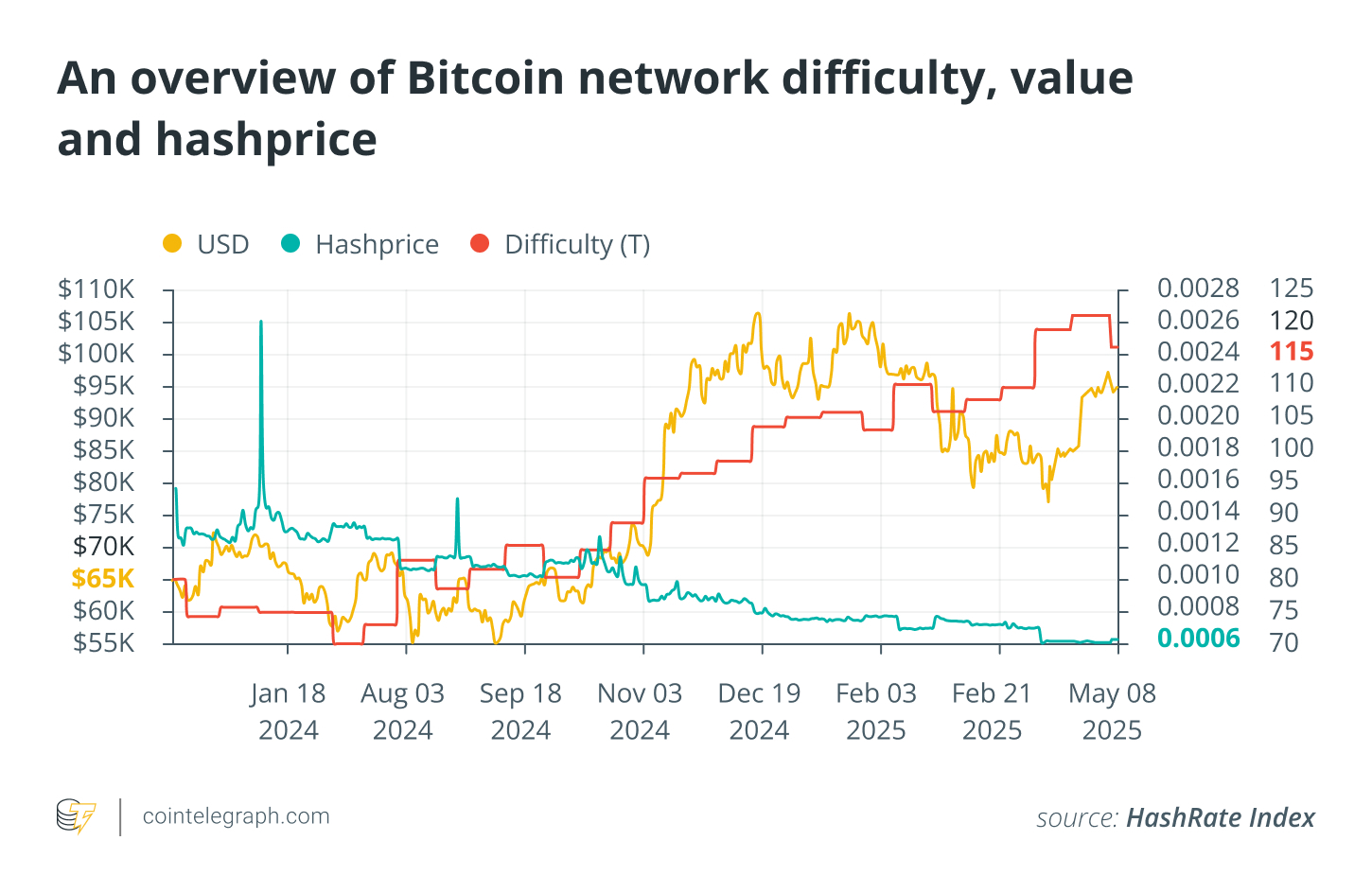
Since the halving, generating a profit from Bitcoin mining has become significantly more difficult. The hashprice (the daily revenue for each terahash per second) decreased from $0.12 in April 2024 to about $0.049 by April 2025. At the same time, network difficulty increased to a record high of 123T, making it harder for miners to make profits. Mining operations must maximize the value they get from each unit of power used to remain competitive. This situation has intensified the need for reliable, affordable power, which is pushing mining firms to expand into areas where energy costs are still low.
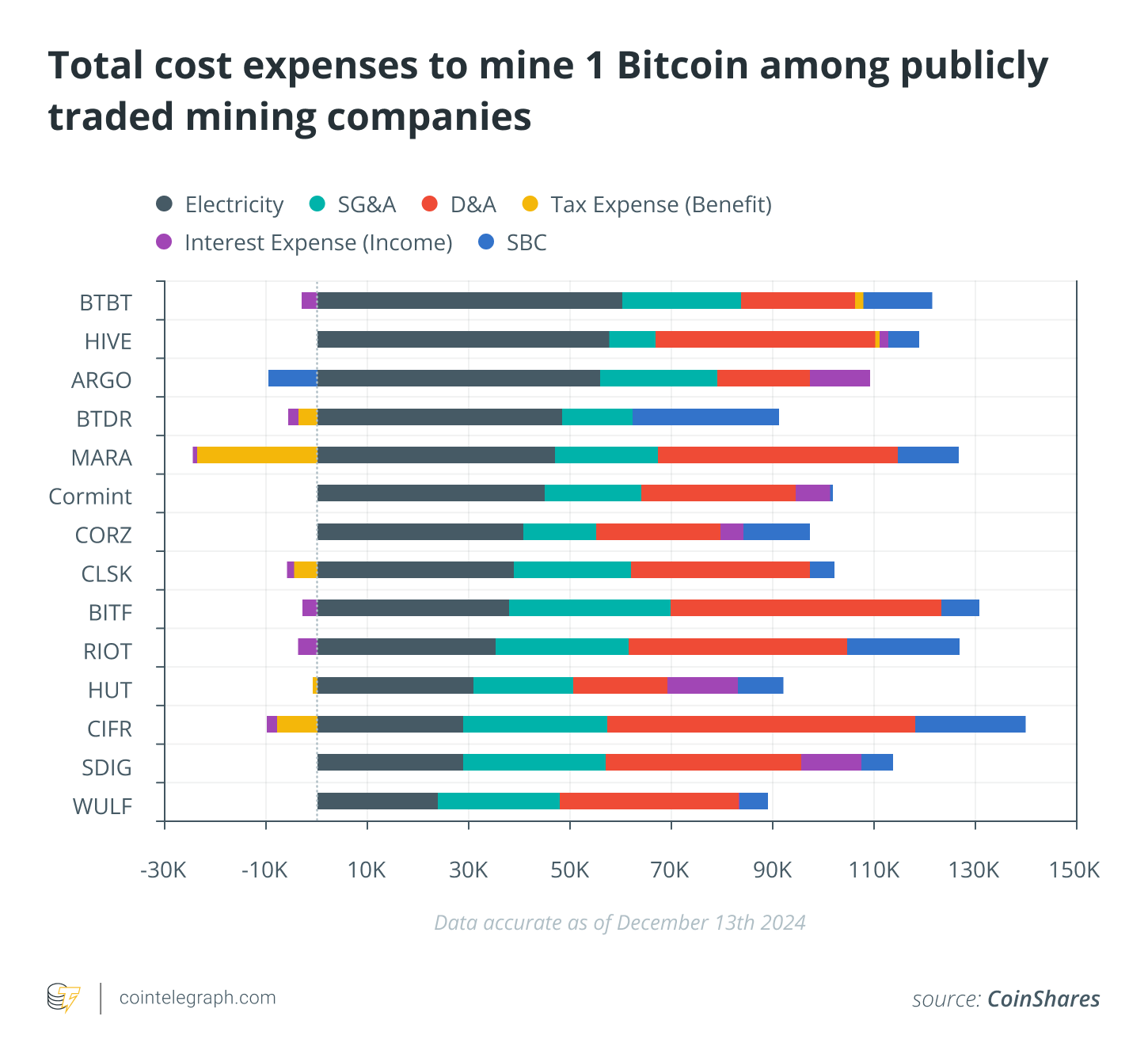
The cost of electricity is a major factor in determining mining profitability. Miners in Oman who have licenses receive government-backed subsidies, which gives them access to electricity at $0.05 to $0.07 per kWh. Mining projects in the United Arab Emirates that are partially government-owned benefit from rates that are even cheaper, ranging from $0.035 to $0.045 per kWh. These incentives have made the area a popular location for large-scale institutional mining. Meanwhile, in the US, where industrial electricity costs frequently go above $0.1 per kWh, miners are facing smaller profit margins, which is pushing them to move to locations that are more cost-effective. Africa, the Middle East, and Central Asia have emerged as major areas in this rivalry, and they offer the energy arbitrage opportunities that miners require to survive.
The Future of Bitcoin Mining?
The 2024 halving has highlighted a critical point: efficiency is not just beneficial, it’s vital. The industry is moving toward operations that are more streamlined and efficient, in which only the most energy-efficient miners can succeed. Future developments in AI computing, global regulatory shifts, and ongoing improvements in hardware will influence the sector over the next 12–18 months.
Cointelegraph Research’s Bitcoin mining report: Post-halving insights and trends gives a data-driven analysis of the key factors influencing strategic decision-making, investments in infrastructure, and mining profitability.
This content is provided for informational purposes only and does not constitute financial advice. Any investment decisions should be based on your own due diligence and risk assessment.
The views and opinions expressed in this article are those of the author(s) and do not necessarily reflect the official policy or position of Cointelegraph. This content is intended for general knowledge and should not be considered legal or investment advice.
Cointelegraph neither endorses any products or services mentioned in this article nor accepts any liability for decisions made based on its content. Readers are strongly advised to conduct thorough research and seek professional advice before making any financial commitments.