
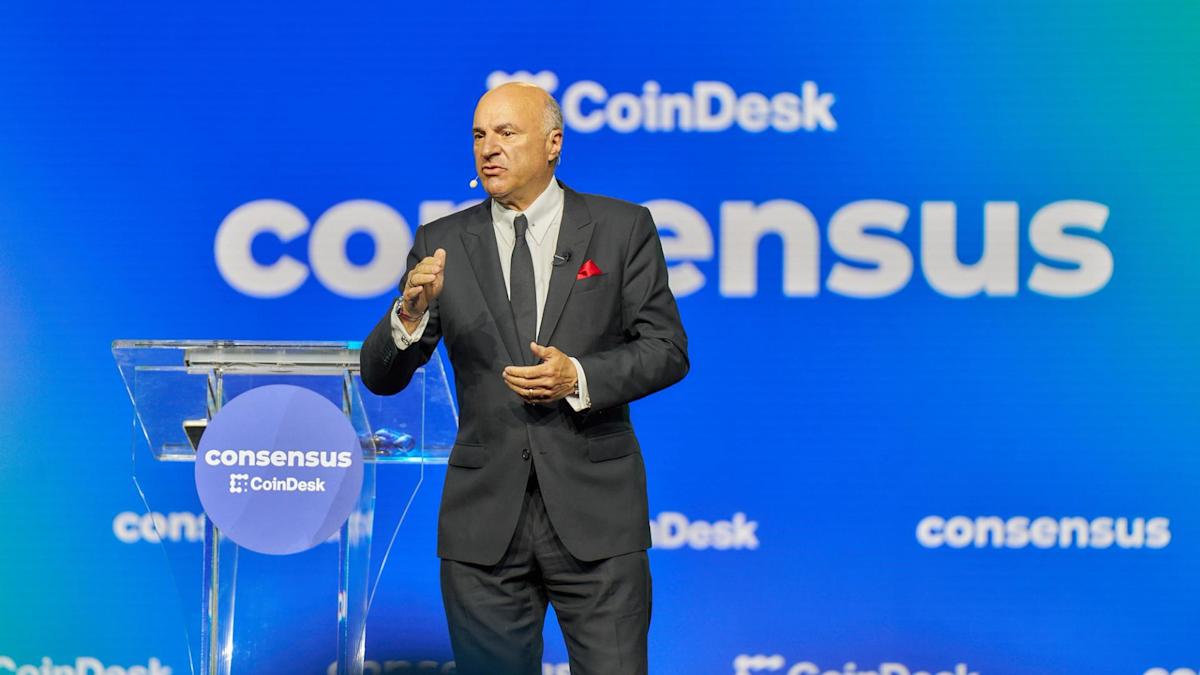
According to entrepreneur Kevin O’Leary, North America is drawing valuable insights from the bitcoin (BTC) mining sector regarding the establishment of extensive infrastructure near sources of renewable energy, a key aspect in the burgeoning field of artificial intelligence.
In a recent interview, O’Leary, known for his role on “Shark Tank,” emphasized the crucial role of power. He stated, “Power is the defining factor, irrespective of whether you’re dealing with an AI data center or a bitcoin mining operation. Increasingly, we observe these ventures merging elements of both.”
O’Leary noted that the converging requirements of bitcoin mining and AI data centers are gaining attention from policymakers in Washington, D.C., and are attracting substantial investment from institutional players seeking prime opportunities.
He illustrated this point with the example of New York State, which, despite its significant hydroelectric power resources near Niagara Falls, initially lacked suitable policies. O’Leary believes New York is now “aiming to revitalize its involvement” in both bitcoin mining and AI-related industries.
“Certain states, including New York, are recognizing the potential for high-paying jobs at the forefront of the AI and crypto sectors,” O’Leary explained. “They may feel they’ve missed out on early opportunities.”
O’Leary, a supporter of Bitzero, a company specializing in green energy bitcoin mining and data centers with operations in North America, Norway and Finland, pointed to states like West Virginia, North Dakota, Mississippi, and Texas as more appealing options currently. He also mentioned, “Alberta, Canada, provides a compelling case with its ample supply of affordable, underutilized natural gas.”
Recent events, such as the halving of bitcoin mining rewards, have prompted miners to explore AI and cloud computing to diversify their revenue streams, especially given the intensely competitive market. Companies like Core Scientific (CORZ) have spearheaded the integration of mining and AI, and others such as Hive Digital (HIVE) and Hut 8 (HUT) are reallocating significant portions of their data centers to AI applications.
Merging bitcoin mining with AI-powered data center hosting presents a convenient approach for diversification, given that miners already possess the infrastructure to manage the substantial energy requirements of AI’s burgeoning data center needs. (According to the International Energy Agency, a single ChatGPT query consumes 2.9 watt-hours of electricity, whereas a Google search uses only 0.3 watt-hours.)
Typically, large-scale bitcoin mining operations are strategically located near plentiful energy sources and established industrial-grade power connectivity infrastructure. This makes upgrading these facilities with graphics processing units (GPUs) for AI applications an appealing prospect, although AI data centers do necessitate even more robust infrastructure.