
Stay informed on Texas affairs! Subscribe to The Brief, your daily dose of essential news from The Texas Tribune.
HOOD COUNTY – For Danny Lakey and his wife, evenings spent relaxing on their front porch rocking chairs, admiring the sunset over their neighbor’s grazing cattle, were a cherished ritual.
This peaceful rural lifestyle was their dream when they purchased their log cabin nestled in the Hood County woodlands, southwest of Fort Worth, back in 2021. Danny Lakey fondly calls their property their “personal Cracker Barrel,” joking that they have more cows and horses for neighbors than humans.
However, their tranquil outdoor haven was disrupted in 2023 when a loud cryptocurrency mining operation set up shop approximately half a mile away. Now, like other residents in the area, they spend little time outdoors due to what many describe as an incessant “roar.”
Some liken it to an aircraft perpetually circling overhead, while others compare it to a lawnmower that never stops. A local official described the experience as “sleeping with a leaf blower under your pillow.” Regardless of the comparison, one thing is clear: the noise is constant.
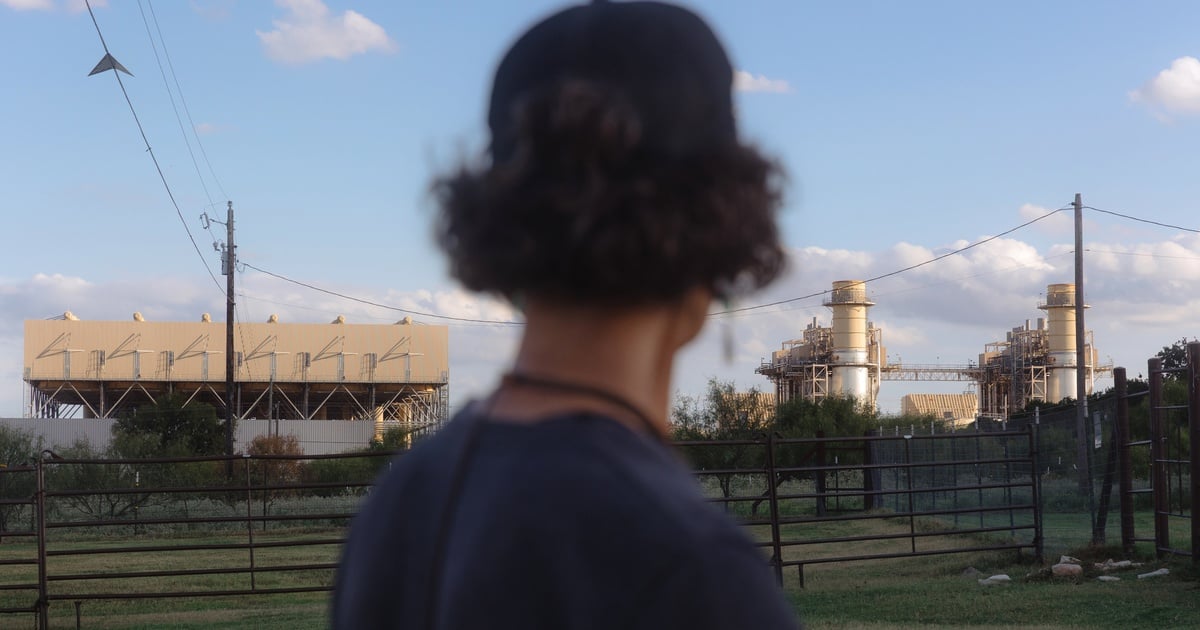
The sound is generated by thousands of fans functioning in unison, which are used to dissipate heat from roughly 60,000 computers as they rapidly solve complex algorithms day and night to mine Bitcoin, a widely utilized cryptocurrency. Constructed in 2022, the facility comprises a sprawling array of computers housed in shipping containers similar in size to mobile homes, located less than 100 yards away from where dozens of families reside.
Residents report repeatedly requesting that MARA Holdings, also known as Marathon, the Florida-based company that operates the facility, take action to mitigate the noise. In response, the company constructed a 2,000-foot-long, 24-foot-tall sound barrier last year, and replaced certain fans with an immersion cooling system.
Despite these efforts, neighbors say the noise has barely been reduced. Using decibel meters, residents have measured the sound level at just below the statewide noise limit of 85 decibels – equivalent to a running food blender or garbage disposal.
Now, the community has devised an innovative plan to reduce the racket: forming their own municipality. Spearheaded by Lakey, a petition drive gathered sufficient signatures to put the issue of incorporation on the ballot. This November, residents will vote on whether to establish the City of Mitchell Bend, taking its name from the two-lane Mitchell Bend Highway that connects the neighborhood.
If approved by the roughly 250 registered voters, Mitchell Bend will encompass two square miles, house roughly 600 residents, and feature a single stop sign.
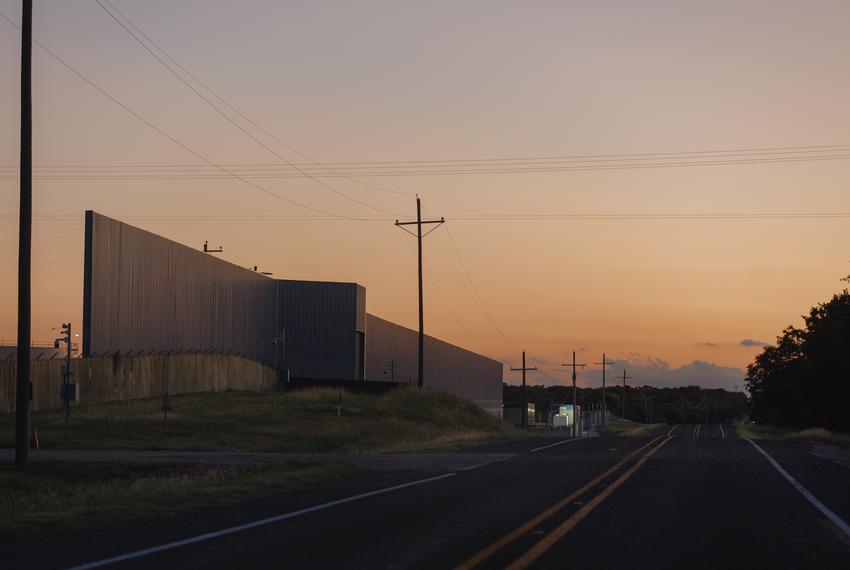
Mitchell Bend Highway runs next to a 24-foot tall soundproofing wall that separates the Marathon cryptocurrency facility’s computers from neighboring resident’s homes and land in Hood County on Sept. 24, 2025.
Credit:
Shelby Tauber for The Texas Tribune
Incorporation would empower the community to enact a local noise ordinance, with the hope of forcing the $5 billion Bitcoin mining firm to quiet down. Residents initially asked the county commissioners to establish a noise limit, but counties in Texas lack this power – it rests solely with the state and incorporated municipalities.
This conflict is increasingly common throughout Texas as crypto-mining operations and data centers relocate to rural areas, lured by state leaders, affordable land, minimal regulation, and enticing tax incentives. Unlike many other states, Texas does not tax crypto companies’ earnings. Additionally, Texas offers relatively inexpensive electricity.
Marathon, which maintains at least three other crypto-mining sites in Texas, has fiercely defended its presence in Hood County. In August, the company sent a letter to the county judge requesting the invalidation of the ballot measure, claiming to have discovered that some individuals who signed the petition reside outside the proposed city’s boundaries.
In a written statement to The Texas Tribune, Marathon stated they are “aware that a few residents are attempting to create a new town in what appears to be an attempt to negatively impact its Granbury facility,” referring to the nearby county seat.
The company emphasized the economic advantages they bring to the region, noting that “MARA has a track record of adding jobs and tax revenues to the communities in which we operate and has invested more than $1.2 billion in our Texas sites, contributing millions in local tax revenues and supporting local schools and nonprofits. We are committed to maintaining our health and safety standards at the Granbury data center and being good neighbors.”
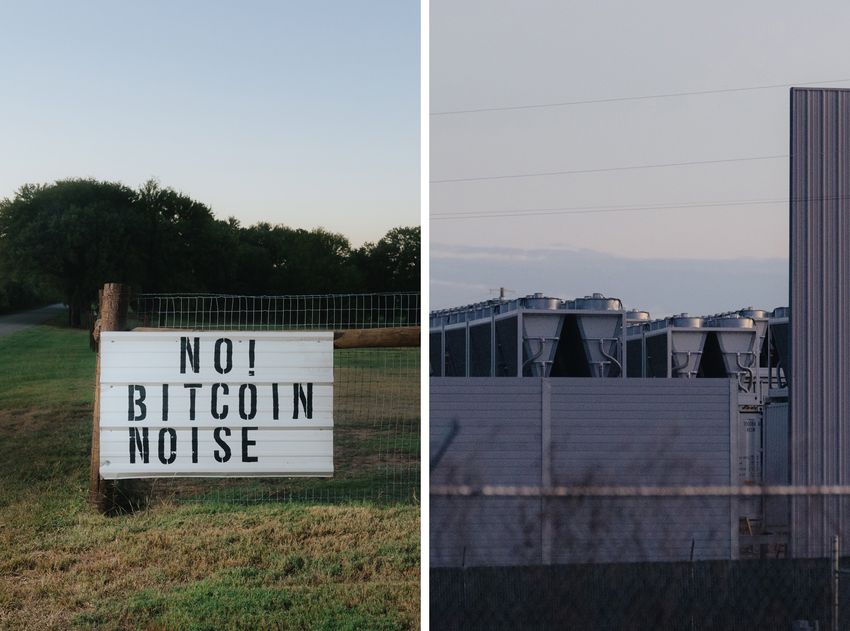
Left: Cheryl Shadden has signs placed around her property protesting the noise generated from Marathon’s cryptocurrency facility in Hood County. Right: Residents say the 24-foot-tall soundproofing wall has done little to reduce “the roar,” the hum generated by fans cooling the cryptomining computers.
Credit:
Shelby Tauber for The Texas Tribune
The dispute with Marathon has created a divide among residents regarding incorporation, as many moved to the countryside to escape both the clamor of urban life and strict city ordinances.
“We are conservative and value our freedom,” Lakey said, describing the GOP-leaning community. “The primary opposition to incorporation stems from concerns that a new city will impose numerous regulations. They’re very Texan, meaning: don’t dictate how I use my land.”
Lakey and others assert that they are pursuing this path because the noise is not merely a nuisance but is also robbing them of sleep and leading to various health issues, including hearing loss, vertigo, migraines, and elevated blood pressure.
“We’re fed up with billion-dollar corporations coming in and