

Cloud Mining vs. Staking: Understanding the Fundamental Differences
As we move into 2025, the phrases “cloud mining” and “crypto staking” frequently come up in conversations about generating passive cryptocurrency income. However, these two methods represent distinct approaches to earning digital assets.
Cloud mining entails leasing computing resources from remote data centers to mine Bitcoin, whereas staking involves holding and validating transactions on proof-of-stake (PoS) blockchain networks. Reputable platforms such as ECOS and MiningToken offer cloud mining returns that average around 5% to 10% APR in 2025. However, be wary of riskier ventures, particularly those tied to XRP, which still advertise improbable annual percentage rates (APRs) of 100% to 800%.
Staking tends to be more consistent. For example, Ethereum staking yields approximately 3% APY, Solana averages 6% to 8%, and liquid staking protocols such as Marinade can provide returns of 10% to 12%.
This analysis explores the differences between cloud mining and staking in 2025, evaluating various crypto income strategies, their actual profitability, and identifying where investors can strike a balance between returns and risk.
Cloud Mining: A Closer Look at How It Works in 2025
Cloud mining allows users to participate in Bitcoin or Ethereum mining without the need to purchase or maintain specialized hardware (ASICs).
Instead, users enter into contracts with data centers, effectively renting computational power to mine on their behalf. In exchange, they receive daily payouts (after deducting service and maintenance fees) based on the amount of BTC or ETH their allotted hash rate produces.
In 2025, key players in the cloud mining market include platforms like MiningToken, ECOS, NiceHash, and IQ Mining:
- MiningToken focuses on Swiss legal compliance, AI-driven hash rate allocation, and the use of renewable energy. They provide contracts with varying lengths, even as short as a single day.
- ECOS, based in Armenia’s Free Economic Zone, integrates mining with digital wallets, ROI (Return on Investment) calculators, and payouts from introductory contracts with a low entry barrier, starting at $50.
- NiceHash acts as an open marketplace for computational power, allowing users to buy or sell computing capabilities with dynamically adjusted pricing. However, it does impose fees of approximately 3%.
Typical Bitcoin cloud mining contracts can generate returns in the 5%-10% APR range. However, the cloud mining landscape also contains numerous dubious schemes. XRP-related offers may promote annual returns as high as 100%-800%, often resembling Ponzi schemes.
While advancements in ASIC technology and the utilization of renewable energy sources have improved profit margins and sustainability, potential centralization and environmental consequences remain critical considerations when comparing staking and mining.
Interesting Fact: Many Bitcoin mining operations in Iceland utilize naturally cold Arctic air for cooling, which significantly reduces the need for costly air conditioning systems and lowers operational expenses.
Crypto Staking in 2025: How It Functions
By 2025, proof-of-stake (PoS) consensus mechanisms have become a popular crypto income option for investors seeking opportunities for passive earnings.
Staking involves locking up crypto assets to help safeguard a blockchain network and earning rewards as a result. While some users choose to run their own validator nodes, the majority delegate their tokens to established validators and receive staking payouts minus a small commission.
Traditionally, staked tokens were locked up for extended periods. However, liquid staking platforms such as Lido and Marinade now issue derivative tokens (e.g., stETH, mSOL), which allow users to maintain liquidity while still collecting yields.
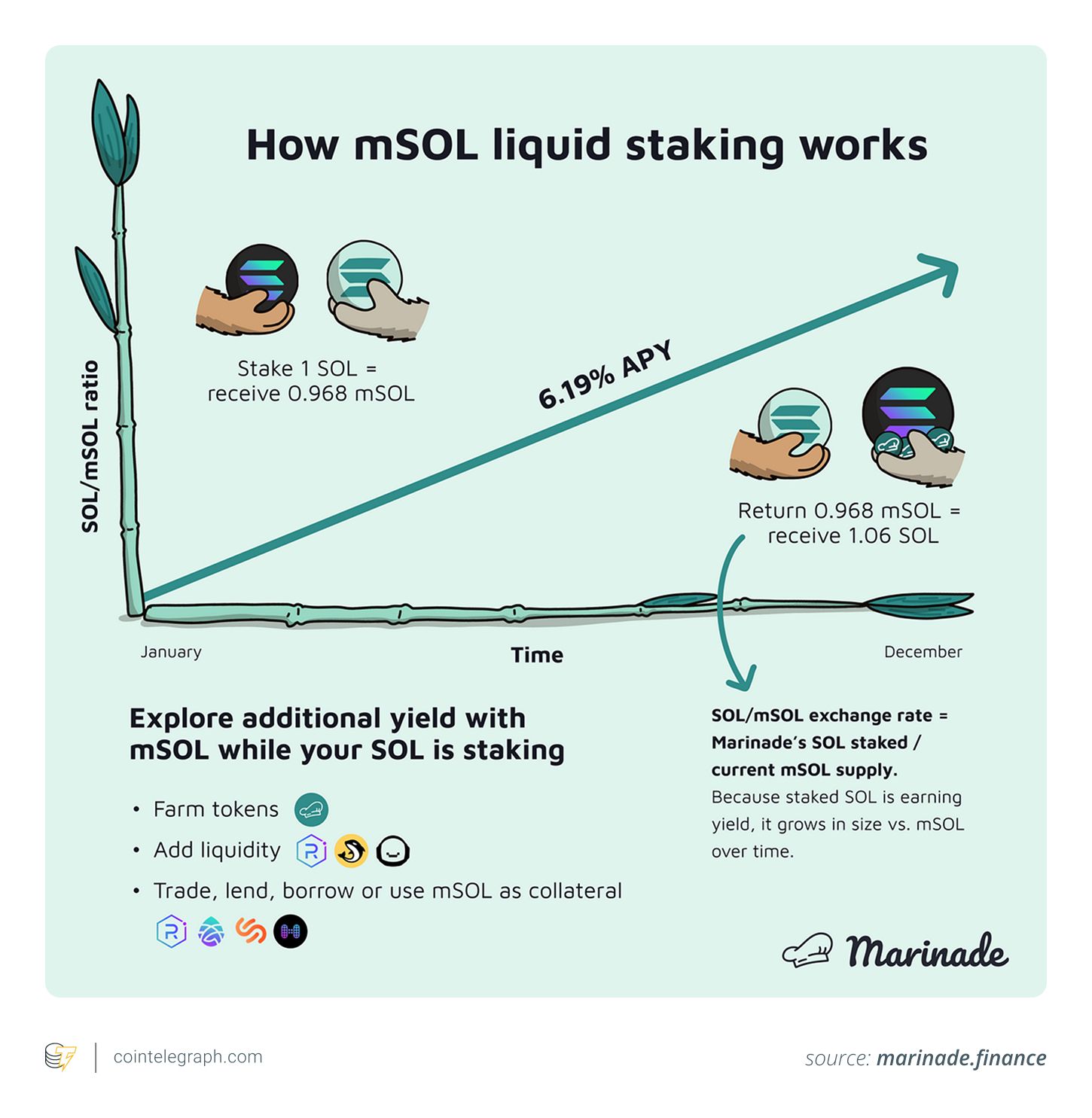
As of July 29, 2025, the profitability of crypto staking varies. Ethereum staking offers about 3% APY, Solana yields approximately 6% to 7%, and Cardano stakers typically receive between 4% and 6%. Cosmos validators can earn up to 18% (about 6% net through exchanges), while NEAR provides 9% to 11%.
In contrast to the occasionally unpredictable returns of cloud mining, staking payouts are generally more consistent. Although risks such as validator downtime, slashing penalties, and token price fluctuations remain, the industry has matured significantly.
For institutional investors, advanced staking-as-a-service providers now offer regulated infrastructure, including custody, audits, and insurance, making proof-of-stake (PoS) a viable option when considering the pros and cons of staking versus mining.
Fun Fact: Smaller proof-of-stake (PoS) networks like Injective, SEI, and SUI offer double-digit staking rewards but come with increased volatility and lower liquidity compared to larger blockchains.
Profitability Matrix: Comparing Cloud Mining and Staking in 2025
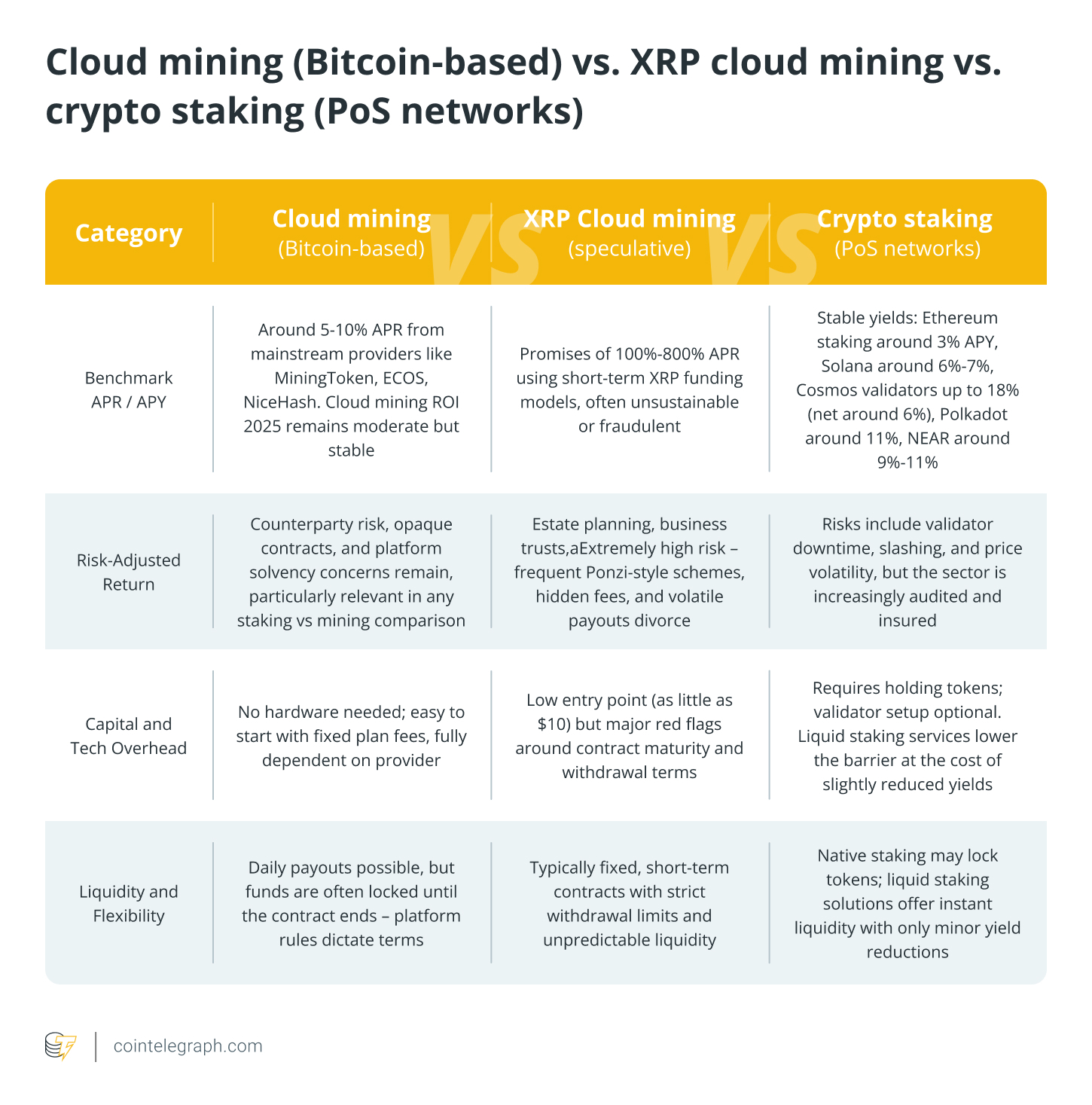
Cloud mining offers returns in the 5%-10% APR range with relatively low upfront costs, but it involves platform risk and limited liquidity. XRP cloud mining is especially risky, with unsustainable promises of 100%-800% APR. Staking yields range from 3% to 11% APY, depending on the network, with moderate risks involved. Liquid staking increases flexibility but may slightly reduce yields.
Passive Crypto Income in 2025: Identifying the Right Investor Profile
When determining whether cloud mining or staking is the better choice in 2025, the ideal path depends on your individual investor profile.
Beginner and Low-Tech Users
In 2025, individuals new to the crypto space who are seeking passive income with minimal setup often lean toward cloud mining. Platforms such as MiningToken and ECOS manage all technical aspects (no hardware or node management required) and provide cloud mining earnings of approximately 5% to 10% APR.
However, exercising caution is paramount. XRP-related contracts promoting returns of 100% to 800% are notorious for their potential to be scams. Staking through exchanges or liquid staking platforms offers another simple entry point, with Ethereum staking yielding around 3% and Solana yielding around 7%.
High-Risk, High-Yield Seekers
Aggressive investors may pursue speculative returns through XRP cloud mining, but these opportunities often lack transparency. Safer, higher-yield options are available in staking. Delegating to Cosmos, Polkadot, or NEAR validators can yield between 15% and 20% for those willing to manage more complex setups.
Institutional and Compliance-Focused Investors
Cloud mining struggles with standardized audits and custody frameworks. Comparisons of proof-of-stake (PoS) versus mining reveal that staking has advanced in this area. Vendors now offer KYT/KYB (Know Your Transaction/Know Your Business) checks, insured custody, and reporting that meets regulatory standards.
Sustainability-Oriented Investors
Cloud mining relies on energy-intensive Bitcoin mining, whereas staking’s proof-of-stake model is far more environmentally friendly, making it the clear choice for ESG (Environmental, Social, and Governance)-focused crypto investing.
Staking vs. Mining: Additional Factors to Consider
What other factors should you evaluate before selecting staking or cloud mining?
Tax Implications
Rewards from both staking and crypto mining are subject to taxation as ordinary income when received, and subsequent sales may trigger capital gains taxes. In the UK, HMRC (Her Majesty’s Revenue and Customs) is increasingly cross-referencing exchange data and cloud mining ROI figures to identify instances of underreporting, meaning mistakes can result in penalties.
Market Volatility
All payouts are in cryptocurrencies. Significant market swings, especially in speculative XRP mining ventures, can erase fiat currency gains overnight.
Liquidity
Cloud mining often provides daily payouts but locks up the initial investment until the contracts expire. Staking can involve unbonding delays, but liquid staking tokens provide faster exits at the cost of slightly reduced yields.
Helpful Tip: On Cosmos-based blockchains, delegators can redelegate their tokens without undergoing unbonding periods. This allows them to switch validators without interrupting staking rewards, reducing the risk of downtime.
Platform Reliability
Look for transparent providers with clear service level agreements (SLAs) and uptime data. Staking platforms are increasingly publishing these metrics, while reliable cloud mining operations remain scarce.
Ultimately, the decision between staking Ethereum and mining Bitcoin, or any staking-versus-mining comparison, hinges on your personal objectives. Your risk tolerance, sustainability concerns, and trust in providers will shape your chosen path to earning crypto in 2025.