
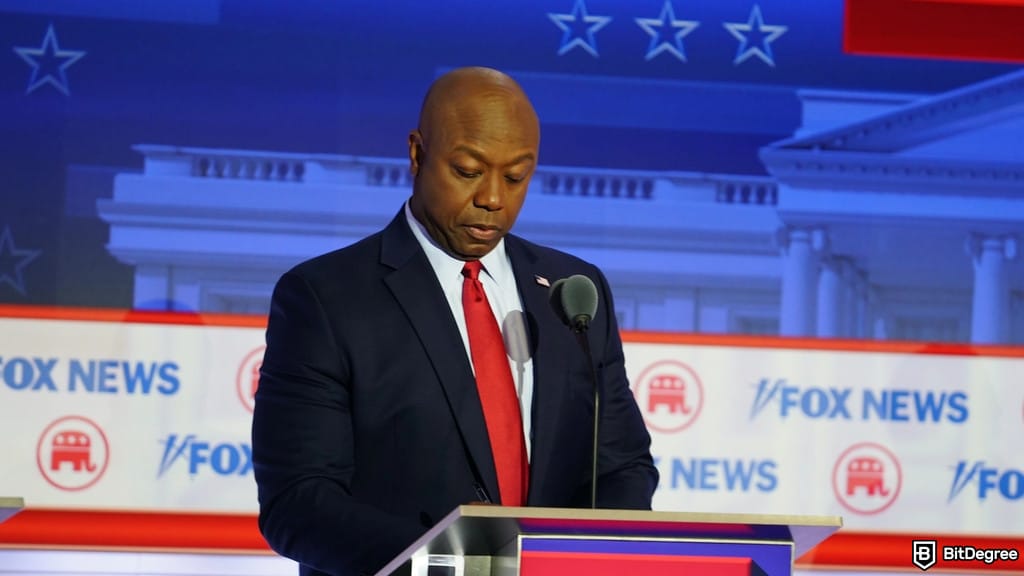
A united group of legislators in the United States, with Senator Tim Scott from South Carolina at the forefront, has proposed legislation to modernize specific sections of the Bank Secrecy Act (BSA).
The BSA
mandates that banking institutions, credit organizations, and other financial services firms share details of particular transactions to aid law enforcement in detecting illicit activities, such as money laundering and the financial support of terrorist groups.
However, the minimum amounts that trigger these reporting requirements have remained unchanged for over half a century, despite economic shifts and inflationary pressures.
Did you know?
Subscribe – We publish new crypto explainer videos every week!
What is a Crypto Airdrop & How to Get FREE Coins? (Animated)

The proposed update, officially known as the
STREAMLINE Act
, seeks to adjust these reporting thresholds. For instance, reports for cash transactions would only be necessary for amounts exceeding $30,000, a significant increase from the existing $10,000 limit.
As it stands, financial organizations must report every cash transaction (deposits or withdrawals) above $10,000, and are also required to raise a flag for smaller amounts if anything seems suspicious. This rule has resulted in a considerable amount of administrative work, often for everyday, standard transactions.
Supporters of the act contend that the current thresholds are no longer practical. Senator Pete Ricketts, an advocate for the proposed changes, stated that the existing figures no longer reflect the current economic climate and need to be adjusted. He also noted that these amendments would ease the burden of reporting for financial institutions.
Moreover, digital currency exchanges with headquarters in the US, including Coinbase
$524.11M
, are also subject to these regulations. Should the bill be enacted, these platforms would also see corresponding adjustments in their transaction reporting procedures.
Brad Garlinghouse, Chief Executive Officer of Ripple, recently expressed the necessity for fair regulation between conventional banking and cryptocurrency firms. For details,
read the complete story
.