
Australian game developer dweedes, known for his quirky and unconventional approach, has cultivated a reputation for playful rebellion throughout his career. His website, WET GAMIN, serves as a repository for experimental indie games created over the past decade, showcasing a distinctive, homespun aesthetic. Now, as he navigates the commercial landscape by developing and selling games on Steam under his studio, Nonsense Machine, dweedes is striving to elevate his artistic and business ambitions while remaining true to his independent spirit.
“Releasing games for free alleviates some of the pressure,” he explained during a Discord conversation. “There’s no need for marketing or extensive development time. It’s all about getting the concept out there for people to enjoy. There aren’t any strict quality expectations, which makes it fun to experiment and freely explore different ideas.”
This laid-back approach has suited dweedes well, as his creative strength lies in his unconventional and whimsical sense of humor. Among the various lighthearted projects he has created are a Justin Bieber karaoke simulator, a maze-like public restroom that challenges players to strategically relieve their bladders, and, a personal favorite, A True Western Romance, a unique blend of poetry and Wild West exploration that features a hilariously absurd conversation with a senile, potato-faced cactus. In Braid 2, an unofficial sequel to a groundbreaking indie game, players control a skateboard-riding character who takes down monsters with bullets while listening to a decidedly loose rendition of Eminem’s “Lose Yourself,” likely improvised by dweedes himself.
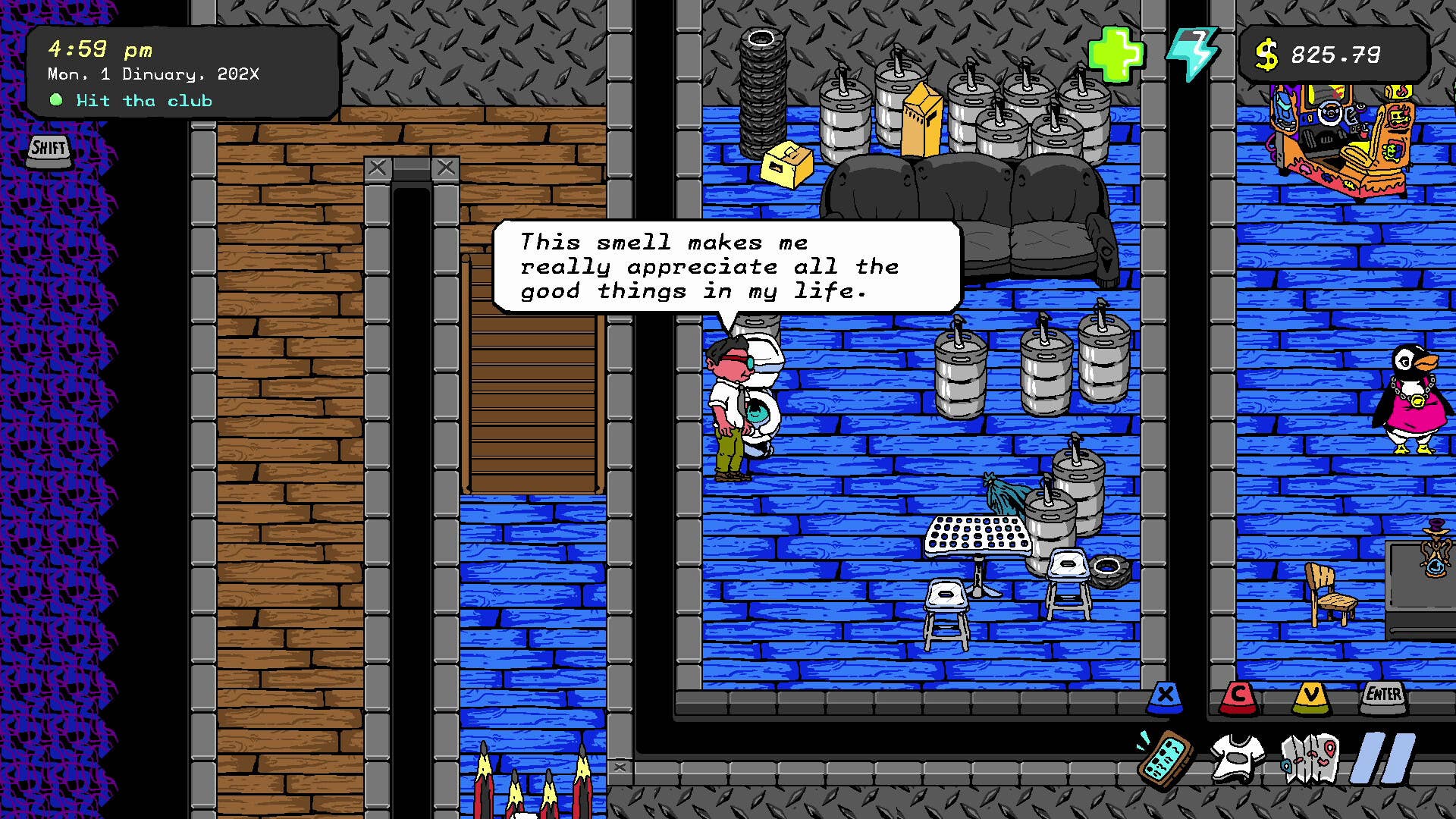
With his racing life simulator, Dryft City Kyngs, dweedes has embarked on his most ambitious commercial endeavor to date. Supported by grants from Screen Australia and VicScreen, and with the assistance of two newly recruited artists and a narrative designer, the game is set in Greater Dryft City, a brightly colored, futuristic version of Melbourne. The game’s locations are loosely based on actual places, such as Melbourne’s numerous Timezone arcades and the penguin colony at Phillip Island. The game features Australian slang and phrases, adding a touch of local authenticity.
Initially, the sprites and top-down sandbox in Dryft City Kyngs may evoke memories of the early Grand Theft Auto games, with their biting satire and challenging gameplay. However, the game quickly reveals its more relaxed nature. Unlike Rockstar’s worlds, Greater Dryft City is a seemingly utopian place, where there are no police officers, residents willingly share their contact information, and the city council readily accommodates even the most outlandish requests. Even medical bills can be endlessly deferred. The protagonist is an idealist who has left a stable job to pursue their passion: *the Dryft*.
The protagonist mirrors the hopeful, entrepreneurial spirit often associated with game developers. The rise of the term “indie” in marketing has perpetuated the idea that transitioning from small, free projects to commercial ventures is an unavoidable rite of passage. According to this narrative, amateur developers hone their skills through hobbyist projects, gradually increasing their ambition to create their “real game” – a profitable one.
While dweedes refers to Dryft City Kyngs as a “proper game,” his use of the term does not carry the judgmental undertones it often implies. For him, both amateur experiments and commercial projects have their own unique benefits. “Free games are about doing whatever I want without limitations or deadlines; it’s all just pure fun. You can improvise as you go, and there’s no need to be super organized,” he explains. “The Nonsense Machine projects are about trying to do a good job and make a business out of it, which is incredibly difficult. However, even with just a few extra people, Dryft City Kyngs could never have achieved its final look if I’d been working alone. Collaborating with talented individuals is an awesome experience.”
THE SOUL OF TOO BIRDS GAME, another collaborative creation from Nonsense Machine offered for free, originated when local rapper Realname approached dweedes with the concept of a video game to complement the identity of his industrial hip-hop group, Too Birds.
I met Realname at a bar in Melbourne’s inner north, catching him before he departed for a solo performance. When asked about his fascination with video games, he replied, “Even in their most basic form, whether it’s Pong, a Metal Gear Solid title, or Call of Duty, video games are art due to their digital creation. Every frame can be viewed as a unique and otherworldly masterpiece. Even the worst games possess a certain visual appeal, even when they’re clunky.”
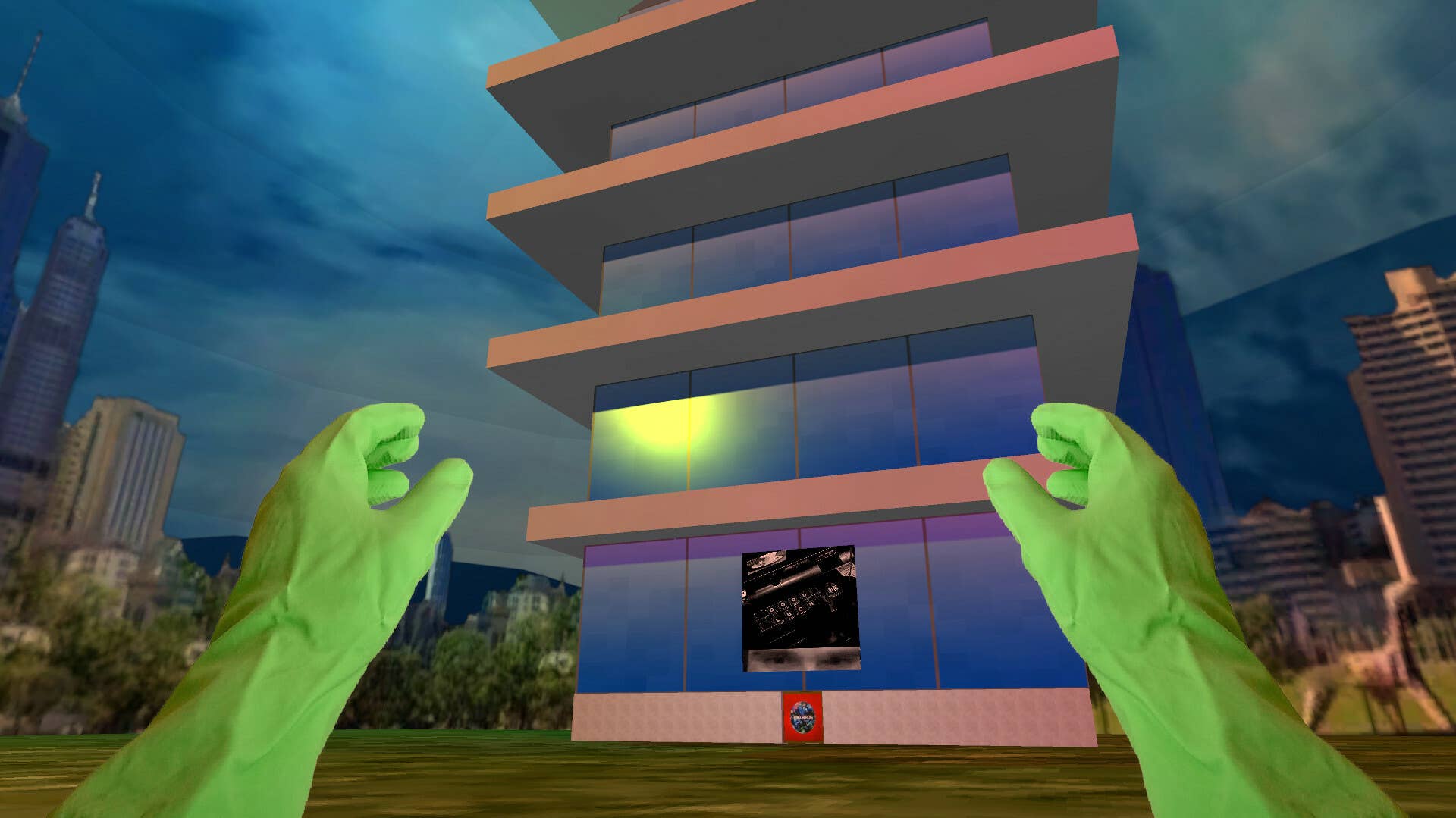
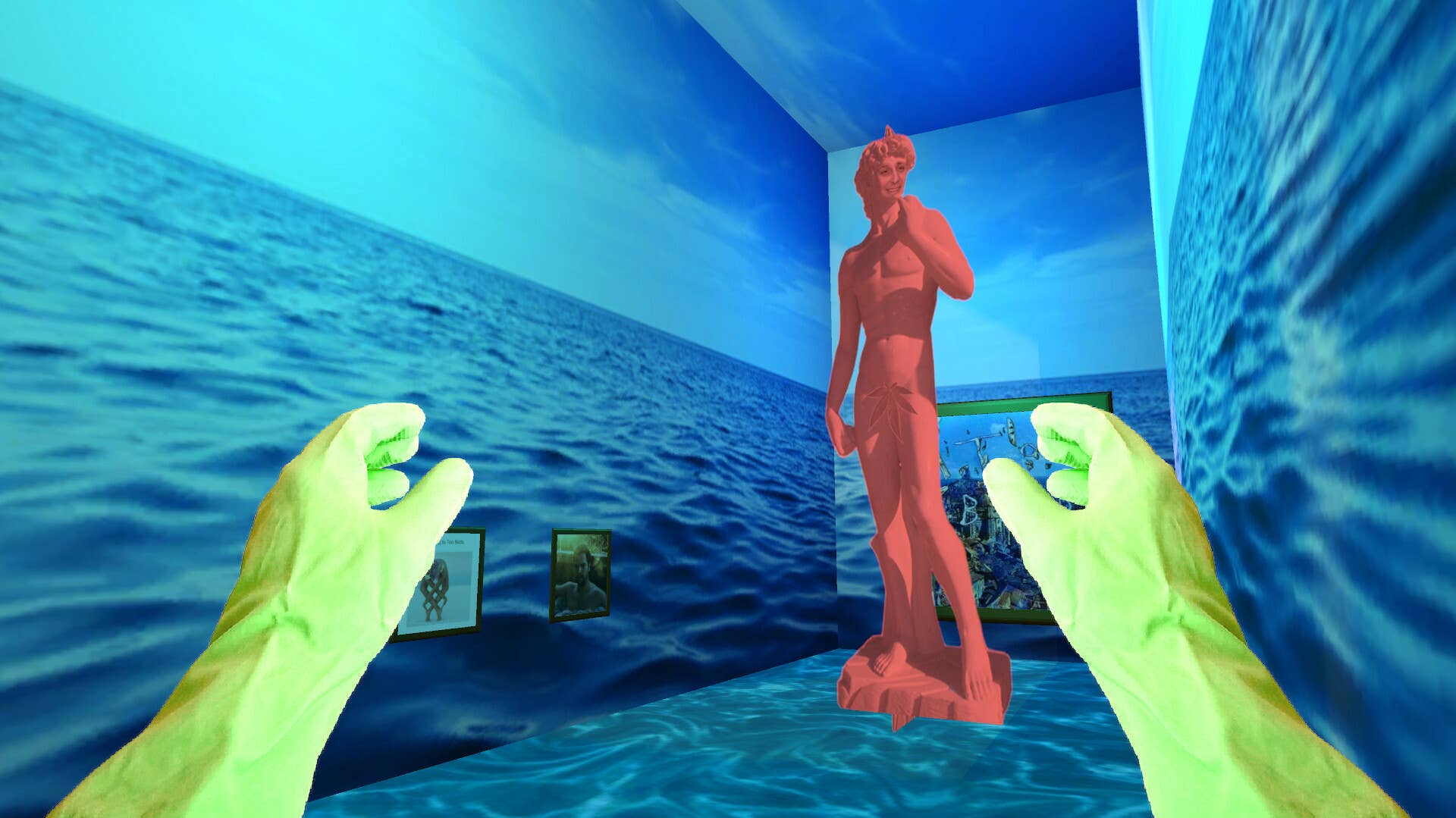
Staying true to this sentiment, THE SOUL OF TOO BIRDS GAME embraces its inherent “gameyness,” inviting players to navigate a labyrinthine structure akin to an art gallery, wielding green, kitchen-glove-clad arms to smash artworks with explosive force. As Too Birds’ music pulsates, players ascend through the building’s various levels, encountering a carpeted office, an indoor field of corn and marijuana, and eventually discovering blow-up doll aliens who have arrived in pods on the top balcony. The game’s crude 3D models and gaudy, repetitive textures evoke the spirit of underground FPS games, like Cruelty Squad, with a gleeful irony born from the group’s communication style.
“From our first meeting, we approached the creative process with a degree of seriousness and invested our hearts into it,” he explained. “However, when it came to presenting our work, our constant sarcasm and attempts to outwit each other made communicating our music to the internet, or the world, seem less important.”
Realname’s gaming habits also reflect this irreverent attitude. “I’ve probably spent more time playing GTA Online than anything else in my life. I would go on there and troll, genuinely trying to be the most toxic person I could. I’ve stopped because I need healthier ways to express my anger.” Realname’s tone contained a hint of remorse, but he couldn’t hide the excitement in his voice. “I discovered a glitch that allowed me to clip into a specific area and kill anyone. I would hop on, and ruin people’s nights. I’d spread negativity for hours. People would talk trash, but I’d outsmart them, you know? They could never catch me!”
When I first saw Too Birds perform live at Miscellania, a beloved music venue in Melbourne, I was struck by the contrasting styles of its two MCs. Realname’s performance conveyed a provocative energy, with a twang that bounced between densely packed associations in short bursts. In contrast, Teether sat back with a deep, weary delivery. In his verse for the track Too Birds, Teether paints a picture of reality blurred with the virtual world:
“Sloshed cunts reverted caveman
I’m talking ooga-booga
If Tony Hawk had seen our wasteland
He’d skate it like it’s wooden
I saw the glow, I was elated
Tasted like some sugar
Hands afloat, I feel like Rayman
Leaping over skewers”
The group’s sound, which fans have compared to the noise rap group Death Grips, features producer Mr. Society’s digital effects and aggressive production. In THE SOUL OF TOO BIRDS GAME, this harshness is echoed in the artworks found throughout its environments. Created by Realname using outdated phone apps, these images combine grotesque imagery with self-referential memes, blurring the lines between surreal mystery and unsettling abjection.
“It has a very simulated look,” Realname observed. “The nonsensical blend of images and sounds in our art are an accurate reflection of the world we live in. Reality is crazy. It would break a person’s brain if they haven’t experienced it.”
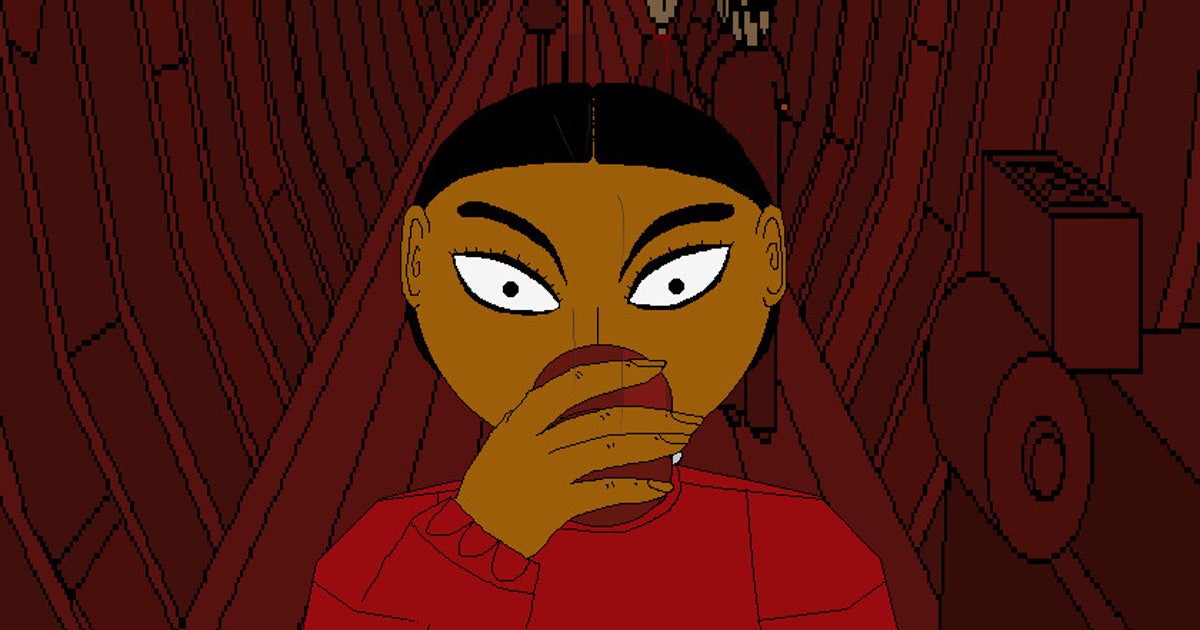
Cape Hideous, the newest release from Nonsense Machine, comes from Jake Clover. Players navigate a pirate ship as a pirate in a red dress using arrow keys.
After playing an early version, dweedes suggested Clover sell it, and offering to provide sound and music. Dweedes’ track Voyage sets the tone for the game.
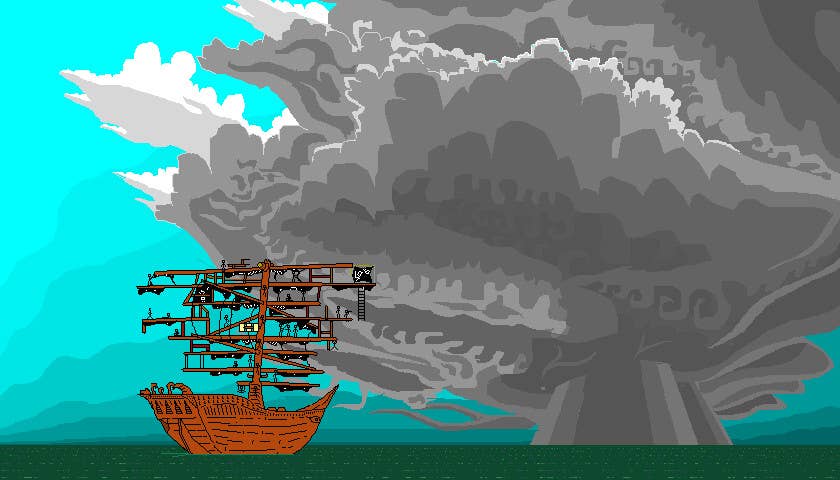
Clover initially wanted Cape Hideous to be similar to Dino Hunta. But overtime, it changed. “At first I wanted to add speech bubbles and make a quick comedy game, then I slowly started taking more care with the animations and designs,” Clover explains. “Soon I decided to take the project a bit more seriously. It’s the longest project I’ve ever worked on.”
The game’s aesthetic reflects the change in direction. Absurd gags mix with understated wonder. Animations vary, adding to the game’s personality.
Clover trusts that the player will notice and appreciate it. He pays close attention to detail, creating a strange and occult world.
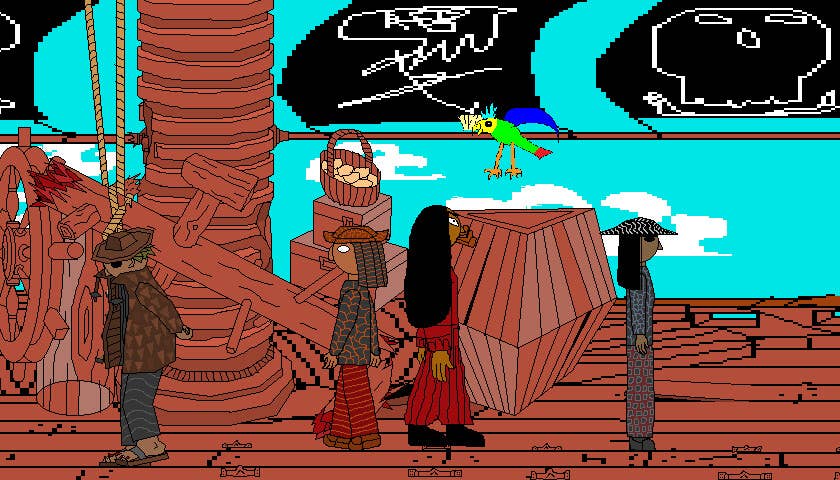
I ask Clover about his tendency to withhold information from the player. “The sense of mystery is important to me because I want to create the sense of a bigger world through a project that’s quite small. I want my games to feel like looking through a window to a small part of a different world,” he writes. “Another idea is that I want the world to feel alien and unfamiliar, almost as if it was made for a non-existent audience, as if the game exists for reasons other than just to be played by someone.”
Clover cites Shaun Tan as an influence on his drawings and storytelling. Reading the introduction to his book The Bird King and Other Sketches, I’m struck by how aptly Tan’s description of his aims fits Clover’s own:
“Images are not preconceived and then drawn, they are conceived as they are drawn. Indeed, drawing is its own form of thinking, in the same way birdsong is ‘thought about’ within a bird’s throat… One of the joys of drawing is that meaning can be constantly postponed, and there is no real pressure to ‘say’ anything special when working privately in a sketchbook. Nevertheless, interesting or profound ideas can emerge of their own accord, not so much in the form of a ‘message’, but rather as a strangely articulated question.”
Amongst the Nonsense Machine slate, dweedes holds Cape Hideous in special esteem: “It’s the closest to what I would consider ‘art’ from all the games we’ve published. Thankfully looking at the reviews and responses, many people agree.” But if Clover has reached for something ‘artful’, it goes hand-in-hand with an attitude shared by its stablemates: a refusal to be clamped by the aspiring superego, and a determination to grow by no rules but one’s own.
</div>