
We’ve all been there: diving deep into a role-playing game, only to realize a couple of hours in that the elven druid life just isn’t for you. Turns out, communing with nature isn’t so great when the starting dungeon is devoid of greenery, rendering your plant-based abilities useless. And your bestial companion? A grumpy squirrel. Suddenly, the rogue’s path, with its hidden passages and tempting lockboxes, looks far more appealing. The shadowy corners and precarious chandeliers overlooking secret crawlspaces whisper promises of a better, sneakier existence. The floral wizard dream is dead.
So, you begrudgingly reroll, trading leaves for daggers and becoming a dashing rogue. But fate, it seems, has a cruel sense of humor. Three hours later, you find yourself in a sun-drenched meadow, facing hordes of spiders with exceptional peripheral vision. Stealth is useless. The rogue fantasy crumbles.
Playing with a group allows you to explore various character options, but for solo players, this can lead to an odd sense of envy. Your friend Johnny, the Battlemage, effortlessly clears waves of enemies with his enchanted sword, while you, the lowly squirrel conjurer, offer minor support from the back lines. Resentment builds. You consider restarting, stealing Johnny’s build, and eliminating him before he even joins the party.
Some might argue that the vast array of class choices in many RPGs can be a double-edged sword. With a dozen classes to choose from, you’re likely to spend most of your playtime regretting your initial decision, forever wondering “what if?”
Execution is key, of course. While some RPGs cleverly incorporate class-specific solutions into every scenario, others offer generic approaches that feel repetitive and uninspired. The Outer Worlds comes to mind, where quest solutions often feel predictable, like ticking off a checklist rather than truly role-playing.
This brings us to why The Necromancer’s Tale is so compelling. After previously praising its character creation, it’s worth noting that, like The Bard’s Tale, it fully embraces the concept of a single-class experience.
Set in a fictional town near Venice during the time of Isaac Newton, you play a necromancer operating from a large manor. While your starting stats may influence your style – a burly dockworker necromancer, a scholarly academic, a crypt-delving detective, or a drunken mystic – your core purpose remains the same: mastering the art of raising the dead.
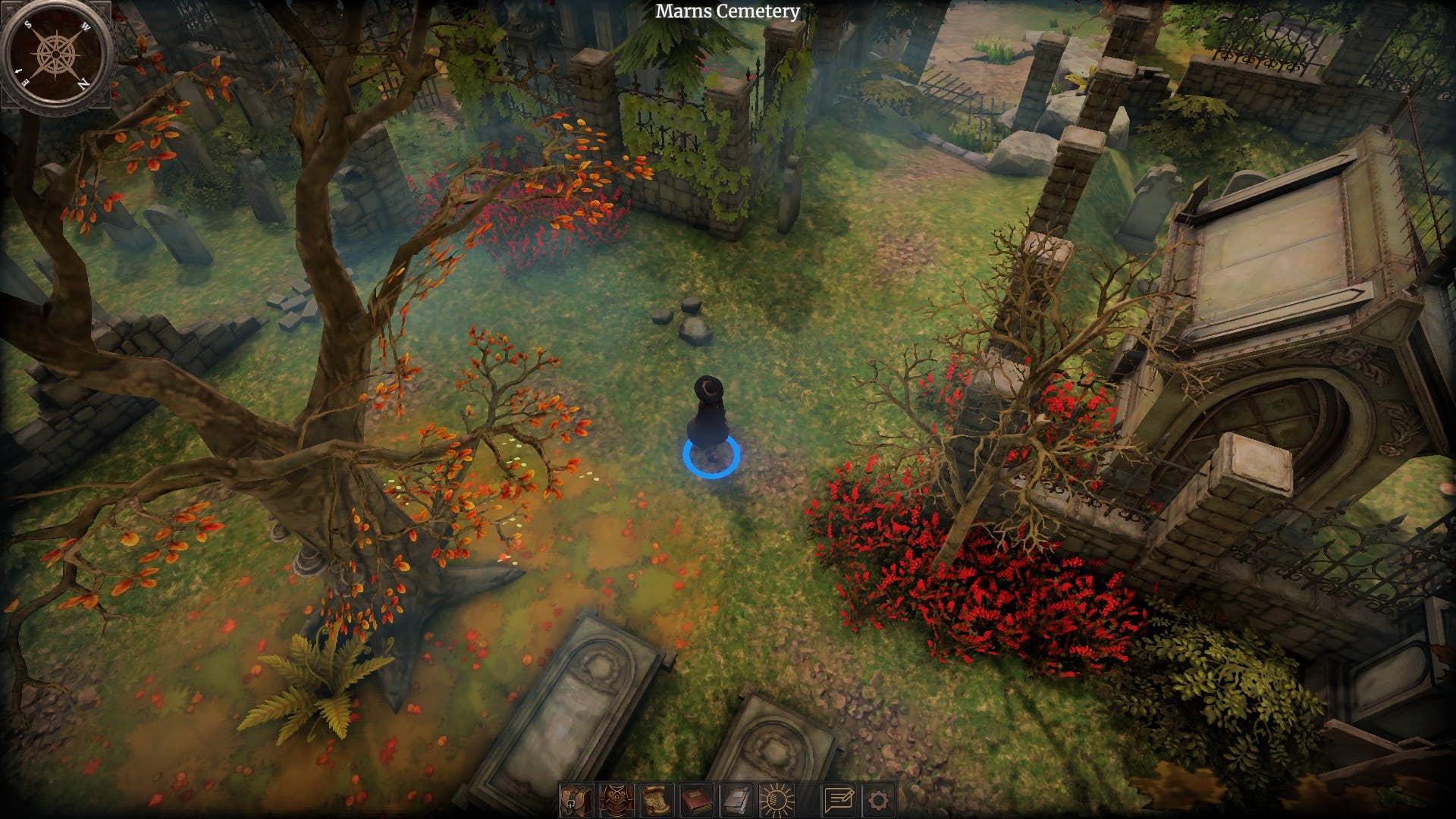
Your journey begins with investigating the suspicious death of your father. Discovering his involvement in the dark arts and his powerful rivals, you delve into his notes, learning curses to protect yourself and your family. As you become further entangled in the underworld, you embrace your destiny as a necromancer.
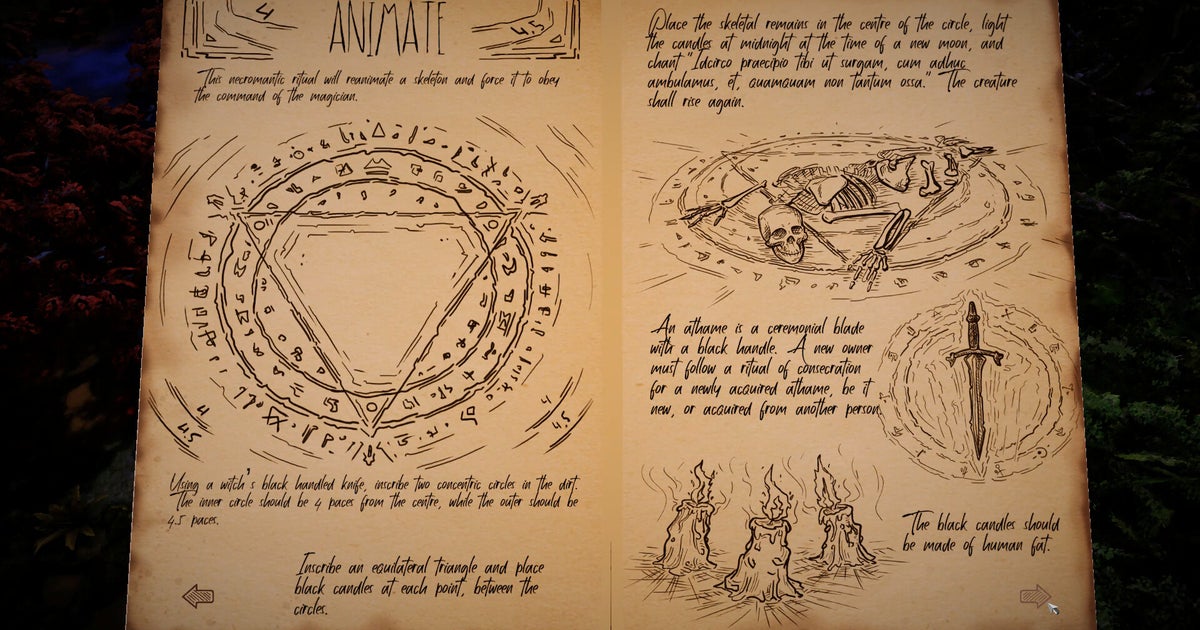
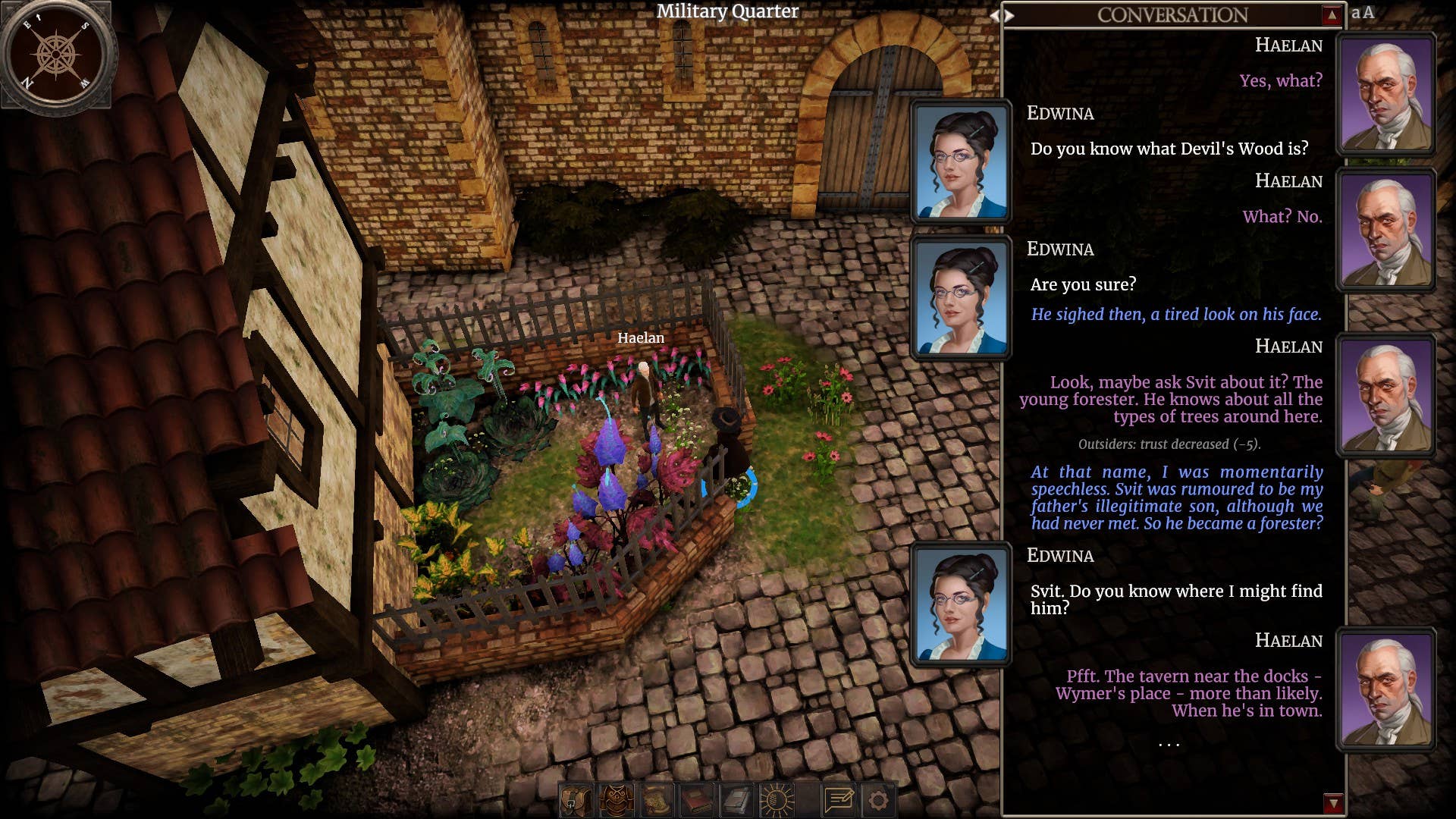
Each chapter often revolves around mastering a specific necromantic ritual, requiring you to decipher your father’s cryptic spellbook and gather ingredients like grave soil and deadly nightshade. Interacting with townsfolk becomes crucial, seeking clues about rare mushrooms or the location of a cursed tree. But discretion is paramount, as revealing your true nature could lead to a torch-wielding mob at your doorstep. Your actions influence your standing with various factions, such as the Children and the Gentry, impacting your overall safety.
Amidst the grand scheme, you must also navigate your relationships with childhood friends, colleagues, and the downtrodden. Will you test that new potion on yourself, an animal, or an unsuspecting patron at the local pub? Where will you source the necessary body parts for your next seance?
The plot thickens with each decision. The writing excels at developing a diverse cast of characters, from soldiers and shopkeepers to alchemists and priests. While the world itself may feel somewhat static, with its invisible walls and limited fast travel, the witty dialogue and branching storylines compensate. And while the turn-based combat may be unremarkable, it doesn’t detract from the overall experience.
Ultimately, The Necromancer’s Tale succeeds because of its singular focus on necromancy. By eliminating the “fear of missing out” associated with multi-class RPGs, it allows both developers and players to fully immerse themselves in the role. The limitations of being a necromancer become a unique advantage. Secrecy is paramount; you can’t simply ask around the tavern for help looting a newly discovered tomb.
But these constraints don’t lead to regret. There’s no longing for the life of a fighter. Instead, you focus on scheming in the shadows, patiently weaving your plans. You don’t envy other party members and their flashy abilities, partly because many of your allies are undead, and partly because your role is to orchestrate events from behind the scenes.
More fantasy games should explore the limitations of other familiar RPG classes, crafting stories that highlight their unique challenges. For example, an RPG focused on a cleric, where pacifism or limited combat skills are central to the experience.
I once suggested a similar idea to Larian’s Swen Vincke at Digital Dragons in 2024, suggesting they consider smaller, more specialized RPGs after the success of Baldur’s Gate 3. He reacted as if I’d asked him to commit a terrible act. Perhaps you feel the same way, which I think is foolish. Give us a Healer’s Tale next, Psychic Software!