

After spending just under an hour exploring the upcoming release,
Pokemon Legends: Z-A, it’s evident that this installment promises a fresh and captivating experience within the Pokemon universe. It feels like a significant step forward since, well, the previous groundbreaking title,
Pokemon Legends: Arceus, launched in 2022 by
Game Freak and
The Pokemon Company. Z-A appears to solidify the Legends series as a distinct and innovative branch of the core Pokemon games, embracing a bolder approach to game design. While this ambition may lead to mixed results, the potential is certainly exciting.
Upon the debut of Legends: Arceus, the team at VG247 shared a collective enthusiasm for the series’ future direction. Our initial vision for the “Legends” concept revolved around historical settings, imagining
Pokemon tales rooted in bygone eras: Galar mirroring Victorian England, Unova’s Poke-New York during the vibrant 1920s, or Kalos navigating a reimagined, Pokemon-infused French Revolution.
While we eventually received a Pokemon interpretation of France, it wasn’t set during the revolution. Z-A returns to a contemporary Pokemon setting, but with a unique twist. The entire game unfolds within a sprawling metropolis, capitalizing on Lumiose City’s (the Pokemon world’s equivalent of Paris) urban landscape. This provides a network of diverse environments, from grand buildings to hidden alleyways and charming parks, creating a novel Pokemon world to explore. Echoing the spirit of Legends: Arceus, yet offering a contrasting experience, Z-A favors density over the open fields of its predecessor. While stealth mechanics remain, players will find themselves concealing behind urban structures like buildings and vehicles.
Beyond the structural differences in the world design, the most impactful change lies in the combat system. For the first time in a major Pokemon release, Z-A introduces real-time battles. Though still firmly rooted in the RPG genre, battles now possess an added layer of action and dynamism.
The traditional “PP” system, which limited move usage, has been replaced with cooldown timers. Furthermore, positioning within battles is now crucial. Attacks will miss if a Pokemon isn’t strategically placed, turning the city’s narrow streets into tactical battlegrounds. A parked taxi isn’t just scenery; it’s a potential shield for trainers and Pokemon alike.
The gameplay experience feels somewhat more segmented. Lumiose City, being a civilized environment, restricts battles to designated “Wild Zones.” These areas are where wild Pokemon roam freely, allowing players to engage in battles and capture opportunities.
As night descends, trainers can venture into “Battle Zones” for combat encounters. This is where the Z-A Royale tournament unfolds, challenging the player to climb the ranks from Z to A. Traditional Gym challenges are replaced with “promotion matches.” By earning points through victories in Battle Zones, players obtain tickets to challenge specific opponents, earning the chance to rise through the ranks.
This structural shift is intriguing and potentially rewarding. While such strict segmentation carries the risk of feeling restrictive, the hands-on experience suggests a cohesive and engaging system, with delightful moments awaiting within each zone.
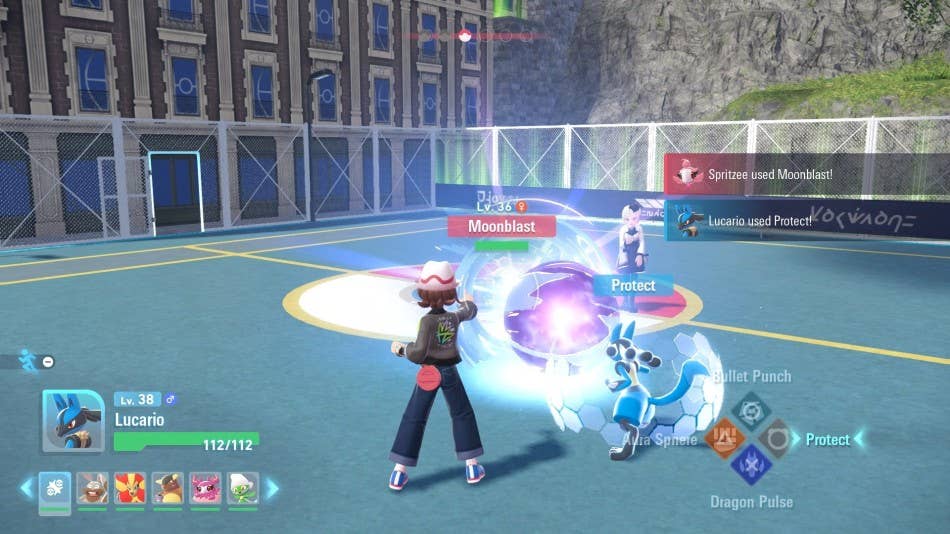
I particularly enjoyed the sense of danger within the Wild Zone I explored. While most Pokemon were easily battled and captured – capture is generally forgiving, even granting a chance to catch defeated Pokemon – stumbling upon a high-level “Alpha” Pikachu on a rooftop was a different story. Its glowing red eyes and feral nature immediately conveyed a heightened threat.
My attempt to battle this Alpha Pikachu quickly turned sour. My frantic notes, now cleaned up for a general audience, tell the tale: “Terrifying level 40 Pikachu. Strategic type matchups offer a sliver of hope, but it’s incredibly difficult. It followed me off the rooftop!”
This moment, fleeing a rooftop only to be pursued by a powerful Pikachu, encapsulated the unique thrill of Z-A. However, as with most Pokemon games, this excitement comes with caveats.
The environment design, while shining in the Battle Zones with their tactical urban layouts, presents a mixed bag. Pokemon initially introduced line-of-sight combat, where encountering a trainer triggered a battle. Z-A takes this concept to its logical conclusion in a seamless action RPG. Combining the stealth elements of the previous game with an urban labyrinth allows for strategic maneuvers like hiding behind vehicles, waiting for a trainer to turn their back to initiate a sneak attack. Missions in Battle Zones encourage this tactical approach. This integration of real-time stealth enhances the organic feel of using classic Pokemon skills to unlock new areas.
However, the environment can also be frustrating during battles. I witnessed a powerful Pokemon, following my command to attack, instead position itself behind a parked car and waste its key attack. This highlights the game’s duality: the brilliance of stealth mechanics contrasted with combat frustrations. The world can feel static at times, yet also provide explorative joy when discovering distant collectibles from a rooftop vantage point.
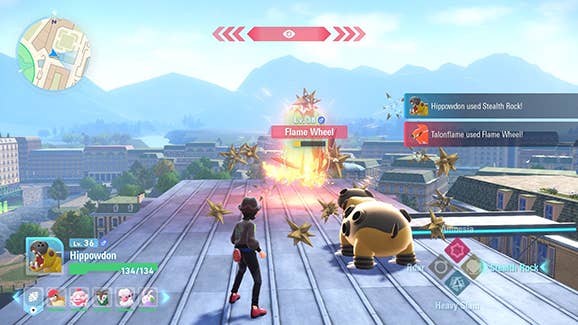
Ultimately, Z-A feels authentically Pokemon. The series has always been a blend of fascinating contradictions, boons and trade-offs. Legends: Z-A appears poised to strike that same balance: brilliant at times, frustrating at others, but consistently engaging.
It’s crucial to remember that these impressions are based on a brief hands-on session. The full game experience will be significantly longer. Therefore, definitive judgment is premature. However, based on what I’ve seen, the developers are taking bold risks, yet with measured restraint. The outcome appears likely to resemble Legends: Arceus more than anything else – which, in my opinion, was the best Pokemon game in the last two decades. Consequently, I eagerly anticipate its release next month, when I can fully evaluate the complete package.