
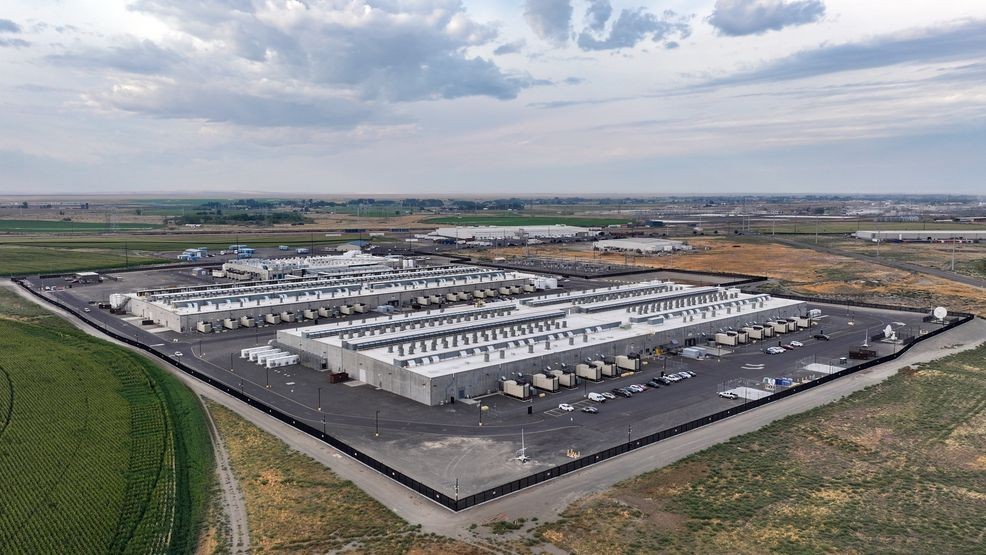
(TNND) — The relentless energy consumption by large tech corporations and the burgeoning cryptocurrency mining industry presents a significant challenge for the United States in the near future.
The rapid growth of energy-intensive technologies, including cryptocurrency mining and the widespread implementation of advanced artificial intelligence, is exerting considerable pressure on the nation’s existing power infrastructure. Recent analyses suggest that this strain will intensify in the coming years, potentially exposing residential areas to significant electrical surges, which could ignite fires.
Across the country, energy demand is experiencing a surge, largely fueled by the proliferation of expansive data centers.
According to figures released by the International Energy Agency, the approximately 2,700 data centers in the U.S. consumed over 4% of the country’s total electricity supply just two years prior. Reports project this number will increase to 6% by 2026.
As improvements in appliance efficiency lead to relatively stable demand in other sectors, data centers are projected to account for a larger proportion of U.S. electricity consumption in the years ahead.
These massive facilities are connecting to the power grid at the same time manufacturers are planning to build new factories at a rate unseen in recent decades. The Electric Power Research Institute indicates that numerous companies announced plans to construct more than 155 factories during the first half of the current presidential administration.
The impact of this increased energy demand is more pronounced in certain regions.
According to a report in The Washington Post from early last year, Arizona’s primary utility provider estimates that data centers will represent over half of its future energy requirements. Internal planning documents revealed that the electricity supply produced by Arizona Public Service as of 2023 will be insufficient to satisfy demand within the next six years.
Georgia is also experiencing unprecedented demand for industrial power.
New electricity consumption projections for the next ten years in Georgia are reportedly 17 times greater than recent levels, as reported by The Washington Post.
“When you analyze the numbers, they are truly astonishing,” stated Jason Shaw, Chairman of the Georgia Public Service Commission, to The Washington Post. “It prompts you to question how we arrived at this point. Why were the forecasts so inaccurate? This situation presents a challenge unlike any we have encountered before.”
The geographic location of these data centers can also create difficulties for smaller, surrounding communities.
A Bloomberg analysis indicates that data centers are disrupting power distribution to millions of American homes, a problem characterized as “bad harmonics.” This phenomenon can damage household appliances, create electrical arcing, and increase the risk of residential fires.
According to Bloomberg’s findings, over 75% of instances of severe power distortion occur within 50 miles of substantial data center operations.
The analysis reveals that this trend affects both rural and densely populated urban areas.
Bloomberg’s data showed that the most severe distortions were found within 20 miles of significant data center activity for over half of the households tracked. According to U.S. Census Bureau data, more than 3.7 million Americans reside in these most impacted zones.
Bob Marshall, CEO of Whisker Labs Inc., a company that monitors power surges using roughly 1 million residential sensors nationwide, noted that “Harmonics are a reliable early indicator of stress and potential issues within the grid.” Approximately 90% of homes in the U.S. are located within half a mile of a Whisker Labs sensor.
Concerns regarding fire hazards have recently intensified, particularly in light of the California wildfires that have consumed vast stretches of land and destroyed countless structures.
Investigators are still investigating the underlying causes of the Southern California wildfires. Common causes include intentional arson and damaged utility lines.
In addition to data centers, the dramatic increase in cryptocurrency mining is also placing significant demand on the power grid.
Mining digital currencies requires massive computing power, with specialized computers operating continuously to solve intricate cryptographic problems.
Electricity consumption related to these activities in the U.S. has grown exponentially in recent years. Preliminary estimates from the Energy Information Administration suggest that annual electricity use from cryptocurrency mining now represents between 0.6% and 2.3% of total U.S. electricity consumption.
The sheer energy intensity of cryptocurrency mining is remarkable.
According to the University of Cambridge’s Bitcoin Electricity Consumption Index, worldwide Bitcoin mining consumed 121.13 terawatt-hours of electricity in 2023. For comparison, the Netherlands, a nation of over 17 million people, consumed 121.6 terawatt-hours in 2022, as reported by the IEA.