
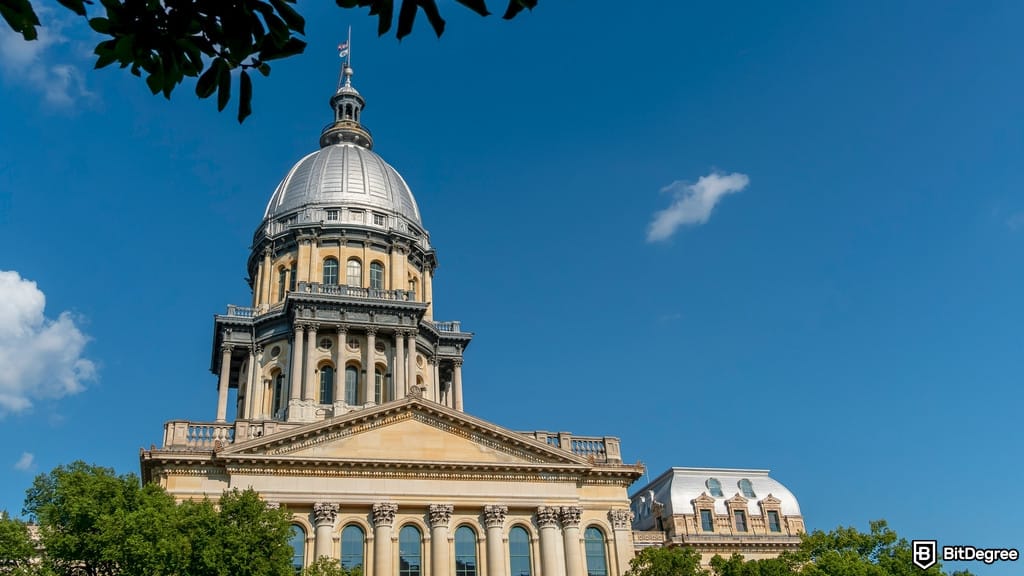
Illinois has enacted significant new legislation designed to provide greater oversight of businesses operating within the digital asset space. Governor JB Pritzker formalized these changes by signing two bills into law and used the opportunity to contrast his administration’s approach with what he characterized as inadequate federal cryptocurrency policies under former President Donald Trump.
Governor Pritzker stated that while national policy may have been swayed by industry insiders, Illinois is prioritizing the implementation of robust consumer safeguards for its residents.
The Governor emphasized that the state is dedicated to protecting individuals from potential risks inherent in the evolving digital asset market.
Did you know?
Subscribe – We publish new crypto explainer videos every week!
What is Tezos? XTZ Cryptocurrency Easily Explained (ANIMATED)

The first piece of legislation, formally known as the Digital Assets and Consumer Protection Act (SB 1797), empowers state regulatory bodies to oversee the operations of cryptocurrency exchanges and other entities involved in digital asset transactions.
This law mandates that such businesses maintain adequate financial resources, bolster their cybersecurity defenses, and establish mechanisms to prevent fraudulent activities. Companies are further obligated to provide transparent and accessible information to their clientele, adhering to service benchmarks comparable to those expected in traditional financial sectors.
Pritzker asserted that Illinois is taking action in response to a perceived weakening of federal safeguards combined with the ongoing proliferation of fraudulent schemes. He emphasized that this new law explicitly prohibits the exploitation of residents or the endangerment of their financial well-being.
In addition to the above legislation, the Governor also gave his approval to the Digital Asset Kiosk Act (SB 2319), which specifically targets the operation of cryptocurrency ATMs and kiosks.
Under this law, operators are required to register with state authorities, cap transaction fees at 18%, and impose a daily transaction limit of $2,500 for new users. Furthermore, kiosk operators are liable for providing refunds to individuals who fall victim to fraud perpetrated through the use of their machines.
Representative Edgar Gonzalez Jr., a supporter of the bill, commented that residents should expect appropriate and dependable protections, regardless of the particular financial service they utilize.
Recently, a coalition of fintech and cryptocurrency firms has appealed to President Trump to discontinue the practice of banks charging fees for accessing customer account data. Want to know more? Read the full story.