
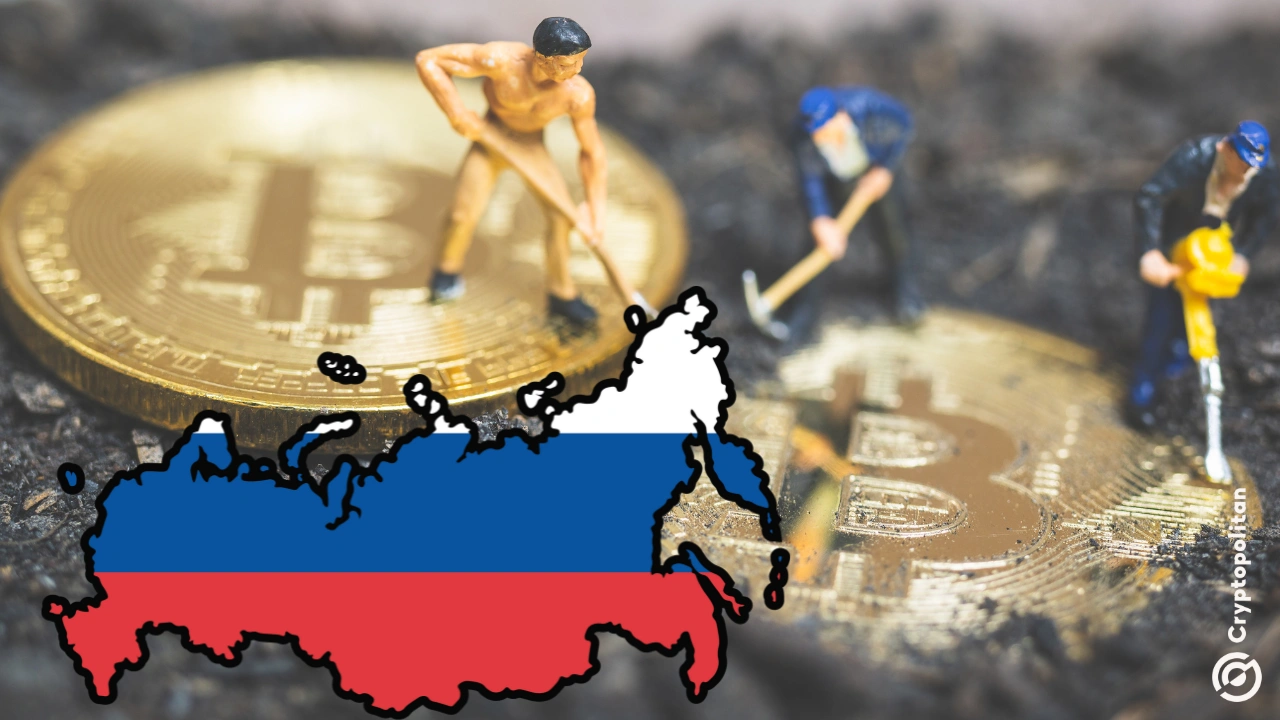
A Russian government official has indicated that there are currently no plans to impose additional limitations on cryptocurrency mining within the country, citing an absence of power shortages.
The vast nation, rich in energy resources and a prominent location for cryptocurrency mining, has previously implemented restrictions or outright bans on the creation of digital currencies in specific regions facing electricity deficits.
Russia Holds Back on Expanding Crypto Mining Restrictions
According to Andrei Maksimov, Director of the Electric Power Development Department at Russia’s Ministry of Energy, there is no apparent reason to introduce further restrictions on crypto mining. The statement was made to the TASS news agency.
Maksimov stated that the national government has not received any new proposals from regional authorities requesting such measures. He emphasized that the country’s energy infrastructure is currently capable of handling the existing demand.
As quoted by RBC, a leading Russian business publication, the high-ranking Ministry of Energy representative elaborated:
“We haven’t received any such requests from regional governors. Everything is stable. Where there are no shortages, there’s no justification for restrictions. Our energy system is generally operating effectively.”
This statement offers encouraging news for cryptocurrency mining companies in Russia, which have faced uncertainty due to the potential need to relocate in order to avoid areas with unfavorable regulations.
The Russian crypto mining sector has experienced growth, especially since being officially recognized as an industrial activity and legalized last year.
However, the concentration of miners in particular regions with lower electricity costs has led to difficulties in providing sufficient energy to other consumers.
This situation prompted regional officials to seek approval from Moscow for partial or complete prohibitions on mining operations. Initial seasonal limitations have, in some cases, been extended to year-round bans.
Crypto Mining Limitations Still Active in Several Regions
Earlier this year, cryptocurrency mining was banned in several regions facing energy shortages until the spring of 2031. These regions include Russian republics in the North Caucasus, as well as occupied areas within the Ukrainian oblasts of Donetsk, Luhansk, Zaporizhzhia, and Kherson.
Limitations in the Republic of Buryatia and Zabaykalsky Krai are only enforced during the colder winter months, when energy demand for heating is elevated.
A similar system in the southern part of Irkutsk Oblast was made permanent at the request of the regional governor.
The governments of the republics of Buryatia, Khakassia, Karelia, along with the Zabaykalsky Krai and Penza Oblast, have requested similar measures.
In June, a federal government commission declined to ban mining activities in Khakassia, citing inadequate power deficit forecasts and the potential for reduced distribution and tax revenue.
During the meeting in Moscow, Karelia and Penza withdrew their requests, while decisions regarding Buryatia and Zabaykalsky Krai were postponed.
Ministry Seeks Alternative Crypto Mining Solutions
Yevgeny Grabchak, Deputy Minister of Energy, has stated that the department favors a more targeted strategy to potentially avoid banning cryptocurrency mining in certain areas.
The ministry anticipates that modifications to existing mining regulations will be adopted by the end of the year, offering alternative solutions to the current restrictive actions.
In July, Russia’s Deputy Prime Minister Alexander Novak instructed the energy ministry to finalize proposals to establish a new category of electricity consumers with lower priority for crypto miners.
This change would allow Russian authorities to disconnect Bitcoin mining operations from the power grid during peak consumption periods.
While acknowledging Russia’s competitive advantages in the digital currency mining sector, Russian President Vladimir Putin justified the restrictions implemented in specific regions, stating during an economic forum in July:
“We were pleased to have surplus electricity in some regions. But they began mining there, and we were forced to make certain decisions.”
His aide, Nikolai Patrushev, also addressed the issue, citing the electricity deficit in the Far Eastern Siberian Federal District, which reached 1.2 GW, as an example.
Stay informed with our crypto newsletter. Subscribe here.