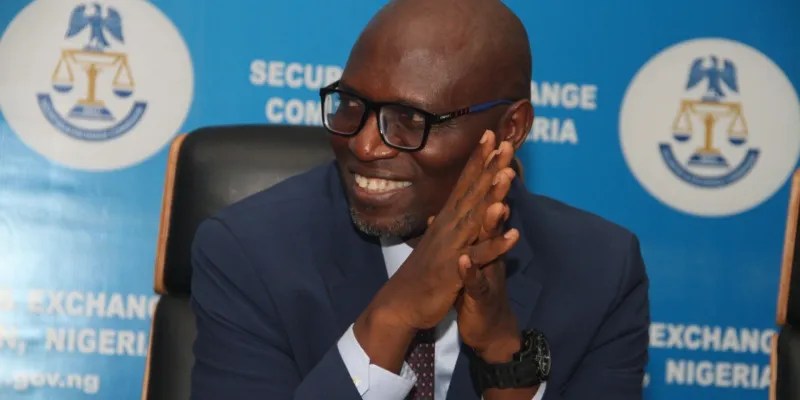
The Securities and Exchange Commission of Nigeria (SEC) is reinforcing its dedication to employing blockchain analysis to combat illegal activities associated with digital currencies.
In a collaborative effort with Chainalysis, a global analytics provider, SEC Nigeria presented a webinar entitled “Combating Scams with Blockchain Intelligence.” During the event, Director-General Dr. Emomotimi Agama highlighted the critical importance of transparency in overseeing the cryptocurrency sector.
The webinar underscores the joint effort between SEC Nigeria and Chainalysis to implement data-driven and technologically advanced regulatory oversight of cryptocurrencies.
Agama emphasized the necessity of tracking down illegal activity by dissecting wallet groupings, monitoring how funds move, and documenting all Bitcoin and Ethereum transactions as a key component of a data-informed enforcement strategy.
“At the SEC, we need to explore data intelligence with considerable depth,” he stated.
“We must delve into the technological principles that lead us toward transaction transparency. This involves permanently recording every Bitcoin and Ethereum transaction, identifying wallets connected to the same individual or entity by analyzing fund flows, and leveraging data from various informational sources.”
Addressing the growing risks, Agama posed the question:
“Considering the increasing prevalence of fraudulent activities in cryptocurrency transactions, what does the future hold if we remain passive and fail to act?
If we lack coordination, fail to collaborate, and focus on minor disagreements, we risk enabling a dangerous future.”
Agama voiced concerns regarding the escalating sophistication of fraudulent schemes, including deceptive DeFi platforms, misleading NFT initiatives, imitation phishing exchanges, and romance scams orchestrated through social media platforms like X, Telegram, WhatsApp, and various dating applications. These illicit activities undermine investor trust and threaten the soundness of Nigeria’s digital marketplaces.
Supporting these observations, the Chainalysis 2025 Crypto Crime Report indicated that illicit cryptocurrency addresses received $178 billion over the last five years, with $40.9 billion occurring in 2024 alone. Stablecoins were responsible for 63% of these illicit transactions. Notably, private key breaches were behind 43.8% of stolen funds, and hackers linked to North Korea accounted for $1.34 billion, approximately 61% of total losses.
STABLECOINS | 63% of Illicit Crypto Funds Flowed Through Stablecoins in 2024, Says @chainalysis
Since 2021, there has been a steady diversification away from $BTC, with stablecoins now occupying the majority of all illicit transaction volume (63%).https://t.co/4FDiJyCxva pic.twitter.com/Jk6M6fHQcb
— BitKE (@BitcoinKE) January 16, 2025
Coinciding with the webinar, Nigeria put into law the Investment and Securities Act (ISA) 2025, effective from April 2025. This law clarified the regulatory landscape for digital asset activities and strengthened regulatory control over the crypto sector, reinforcing the SEC’s monitoring capabilities while fostering innovation.
🇳🇬 LATEST |
Nigeria legalizes crypto & criminalizes Ponzi schemes 🚨
After ~$4.9B lost to scams like #CBEX, the new law:
✅ Regulates VASPs under SEC
✅ Bans Ponzi schemes (10 yrs jail)
✅ Boosts investor protectionCrypto gets clarity in #Naijahttps://t.co/OAwiRK0La9 pic.twitter.com/CqEdhD9THD
— BitKE (@BitcoinKE) June 16, 2025
Agama believes the clear regulatory stance brings benefits to both investors and service providers.
For investors:
- Enhanced protection
- Reduced exposure to scams
- Increased confidence in Nigeria’s digital asset market
For crypto service providers and exchanges:
- More stringent compliance requirements
- Mandatory reporting of suspicious transactions
- Integration of blockchain analytics in everyday tasks
See also

🇳🇬REGULATION | The Nigeria Ministry of Foreign Affairs Laments Rising Cases of Crypto Scams Led By Foreign Nationals, Terming it Cyber Slavery
The foreign suspects train their Nigerian accomplices in executing scams.https://t.co/UnCJd0xPNH @officialEFCC @NigeriaMFA pic.twitter.com/QiPpUfdugV
— BitKE (@BitcoinKE) April 29, 2025
Agama called for cohesive action among regulators, industry participants, and tech providers to proactively counter crypto fraud by using blockchain’s intrinsic traceability to preserve market integrity and protect investors.
“Considering all available tools, we must collectively confront the challenges ahead.
Our collective responsibility is to stop this problem from its inception.”
REGULATION | Over $2 Billion in Suspicious Crypto Transactions Shake West Africa – SEC Nigeria Calls for Regional Regulatory Cooperation
“The Naira’s depreciation, Ghana’s Cedi weakness, and persistent forex shortages have fueled this shift.” – Dr Agamahttps://t.co/yn24lhmtLX pic.twitter.com/a7lKnTeE8H
— BitKE (@BitcoinKE) August 12, 2025
Stay informed with BitKE for comprehensive insights into the regulatory landscape of cryptocurrency in Africa.
Join our WhatsApp channel here.
Follow us on X for the latest posts and updates
___________________________________________
Related