
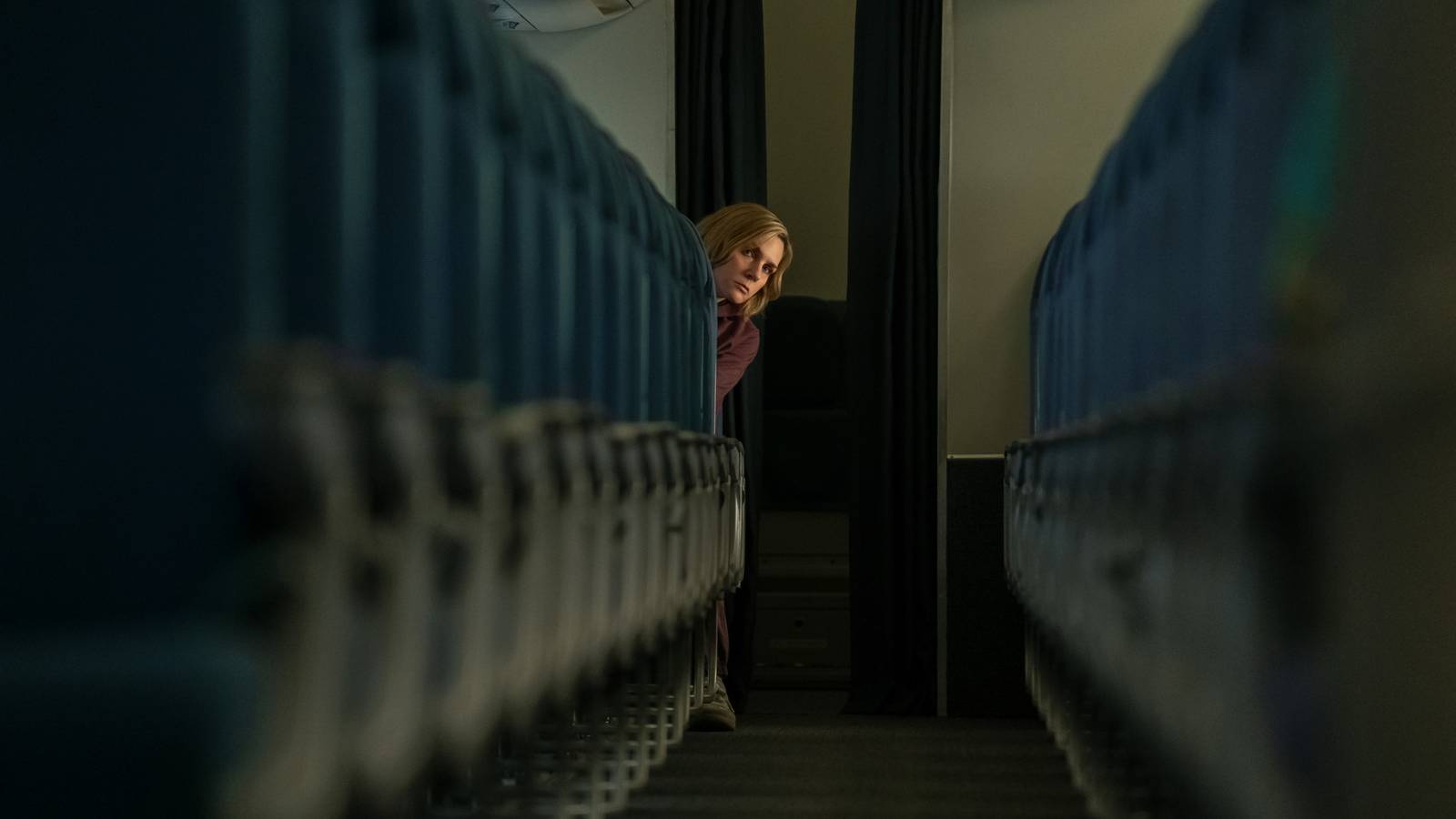
The suspense is building for Pluribus, the forthcoming science fiction creation of Vince Gilligan, potentially the most eagerly-awaited series this year. In equal measure, it is shrouded in mystery. The Apple TV+ project from the mind behind Breaking Bad features Rhea Seehorn—renowned as Kim Wexler in the celebrated spin-off, Better Call Saul—portraying Carol, a character navigating a world significantly altered from what it once was.
This isn’t a tease; that is genuinely the most I am permitted to disclose about the story. The official summary for Pluribus maintains the enigma: “The unhappiest individual alive is tasked with protecting the globe from joy.” Trailers released offer glimpses of a woman tasting doughnuts and Seehorn’s central figure, appearing bothered while walking outdoors, her clothing marked with possible blood stains.
For Seehorn, maintaining the required secrecy surrounding Pluribus has presented difficulties.
“My family is completely in the dark,” she admitted in a Zoom conversation with Polygon. “Even my fiancé doesn’t know a thing!”
As part of our autumn preview, Polygon engaged with Seehorn to discuss the show’s elusive genre, its return to filming in Albuquerque, and the distinctions between Carol and Kim Wexler. This conversation contains no spoilers. However, attentive observers may glean subtle hints about Vince Gilligan’s new venture.
The following conversation has been carefully edited for the purposes of brevity and lucidity.
Polygon: Having previewed the initial episodes, my anticipation is high. However, this interview presents a challenge, given the strict secrecy Apple requires.
Rhea Seehorn: I can hardly express the extent of the secrecy I’m bound by.
“It goes beyond genre-bending; it defies genre altogether.”
It sounds intense. All I’m authorized to reveal about Pluribus is that “the world has undergone a significant change.” How would you characterize the series without revealing critical details?
That’s the difficult part! I’m eager to discuss it with viewers. One of the most remarkable aspects of the series is its complete disregard for genre conventions. It is the kind of show that sparks thought-provoking discussions. The series makes one ponder, “What are your thoughts? What would be your stance if you were in this scenario?”
Furthermore, I mention to individuals that it is incredibly funny. It is quite a journey and the audience has a active participation. Just when you assume you’ve grasped the essence of the show, it takes another turn. Would you agree?
I concur, and I’m already speculating on what might unfold in the fourth episode. Each episode feels like a distinct program. In a positive way.
And yet they are interwoven. Vince encourages you to experience the narrative as it unfolds, challenging our expectations about the story’s trajectory and our reactions in specific circumstances. This heightens the suspense, as you’re constantly wondering, “What’s next?” There is a central mystery.
The absurdity also makes the show humorous in its portrayal of humanity, particularly when people are removed from their familiar circumstances. It prompts complex philosophical inquiries that the cast and I actively engaged with.
That was an excellent overview. You successfully avoided any spoilers.
And yet it is not a logline. Vince has already released two loglines — they’re both publicly available. One poses the question: “What if the unhappiest person on Earth needed to save the world from happiness?”. The other is: “What if you wanted to save the world, and the world was like: Ehhh?”
“What if you wanted to save the world, and the world was like: Ehhh.”
Let’s shift gears. Vince Gilligan has stated that he conceived Pluribus specifically for you. How did this idea come to your attention, and what was that initial conversation like?
It was quite some time ago, possibly during the initial phase of Better Call Saul, or perhaps even before. He initially spoke about some intriguing points and elements he was exploring. However, he later suggested that they did not lend themselves to a cohesive narrative.
Later on, he mentioned that observing my work throughout the course of Saul had triggered something. He decided that the character should be shaped by Rhea, feeling it would somehow allow the concept to solidify.
As Saul approached its conclusion, he approached me, saying, “I’ve written something for you, if you’re interested.” It was classic Vince. I obviously accepted after I had finished crying. However, he said, “I’m not ready to share it yet.” I assured him it was fine, expressing my eagerness.
“It was a completely unfamiliar setting with an unpredictable quality that defied easy description.”
That’s wonderful. Did you contribute any input on your character and her reactions to the events within the series?
It wouldn’t occur to me to dictate to anybody on how they should be writing. There is a group of exceptionally talented writers on the show.
That being said, during Better Call Saul, there was a clear narrative structure. We had Breaking Bad as a reference point. But this presented an altogether unfamiliar setting, possessing a very unpredictable quality that defies easy definition and is equally difficult to interpret. Collaborating with Vince on matters like what this world is, and what is the tone was very enriching. When does it evoke comedy, and when is it absolutely crushing? On some occasions, we’d explore a scene with different approaches and eventually, together, we began to understand Carol’s identity in various moments. At times that required exploring a given scene from different perspectives.
I didn’t contribute to the script writing directly. Vince always values my input whenever I have concerns about a particular line or element, knowing the degree of dedication I invest to thoroughly examine and optimize every aspect of the script. Should I express any reservations, there’s typically a reason for it. Nevertheless, we explored numerous approaches to interpretation. Ultimately, his vision for the story is more extensive than mine. Consequently, if he indicates that a specific outcome is not yet suitable for Carol, I fully support his decision.
For the most part, I get the scripts on a per-episode basis. Similar to the viewers, I was often taken by surprise.
How do you view the comparisons and contrasts between Carol and your character Kim Wexler in Better Call Saul?
For the most part, the characters are really different. Carol does not possess a poker face. She is unable to mask her emotions, typically expressing feelings through a constant scowl. Kim Wexler showed remarkable self-control regarding the amount of information she revealed about her thoughts. Carol can keep a secret. I’d say that’s a similarity. Both operate using a personal set of rules and moral guidelines that are exceptionally difficult to change. They earnestly want to align themselves with their moral compass, regardless of whether others disagree.
“Carol epitomizes the reluctant hero.”
I think Kim would be embarrassed to acknowledge her aspiration to serve as a hero. However, she still wants to fill that role when people need her. In contrast, Carol epitomizes the reluctant hero. At every turn, until all options are exhausted, she yearns to be the follower. She wants someone to lead and provide instruction. However, no one ever will!
Indeed, that’s a detail that I hadn’t identified. She actively seeks out someone to direct her actions. Yet, they both possess a fierce sense of independence, wouldn’t you say? Carol states, “I’m independent.” Unless it’s not true.
Well, the line is delivered with comedic effect.
You’re bringing up another valuable perspective. I find them both to be socially reserved. Kim showed her true self only around Jimmy, and Carol only around her partner. When she doesn’t have a social buffer, she is very much at a loss socially. She doesn’t seem to know how to operate in the world without some form of protective mechanism.
You’ve spent a considerable number of years filming in Albuquerque.
[Laughs] Indeed.
Albuquerque felt akin to a character within Breaking Bad and Better Call Saul. How does it factor in as a setting for Pluribus?
Vince is better positioned to address that aspect, and this isn’t a way to avoid answering. The area feels suitable for the narrative. While watching the show, did it throw you off? Or did you quickly move past it?
I wasn’t bothered. My thought was simply, Okay, Vince Gilligan created another show set in Albuquerque.
Correct. He appreciates shooting there. He has an unyielding loyalty to his production team. He has allegiance to Albuquerque and is drawn to setting stories there.
I believe it enhances Carol’s narrative. There’s something about the Albuquerque setting that enables it to shift between an inviting, romantic location and a lonesome, mysterious one. The show leverages these contrasts.
This marks your first major involvement in a science fiction endeavor. Are you a fan of the genre? Are there any particular sci-fi television shows, films, or books that you appreciate?
Absolutely. When Vince informed me about the science fiction component and that it was predominantly psychological sci-fi (hopefully I’m using the terms accurately), I was truly thrilled. I particularly appreciate Black Mirror, Silo, and Severance. I also enjoyed the original Twilight Zone episodes, watching them repeatedly during Nick at Nite’s broadcasts. I even had the opportunity to participate in the new rendition with Jordan Peele.
I greatly value the devoted following surrounding psychological sci-fi creations. Furthermore, I was an enthusiastic fan of The X-Files. During our Comic Con title reveal, I met a new audience, keen to see Vince return to his X-Files roots. It was a delightful encounter. I am eager to experience that aspect.
The premiere of Pluribus will be on November 9, exclusively on Apple TV Plus.