

The global regulatory landscape for stablecoins is a patchwork of differing approaches, sparking concerns about their long-term sustainability and potentially creating hurdles for new entrants into the market.
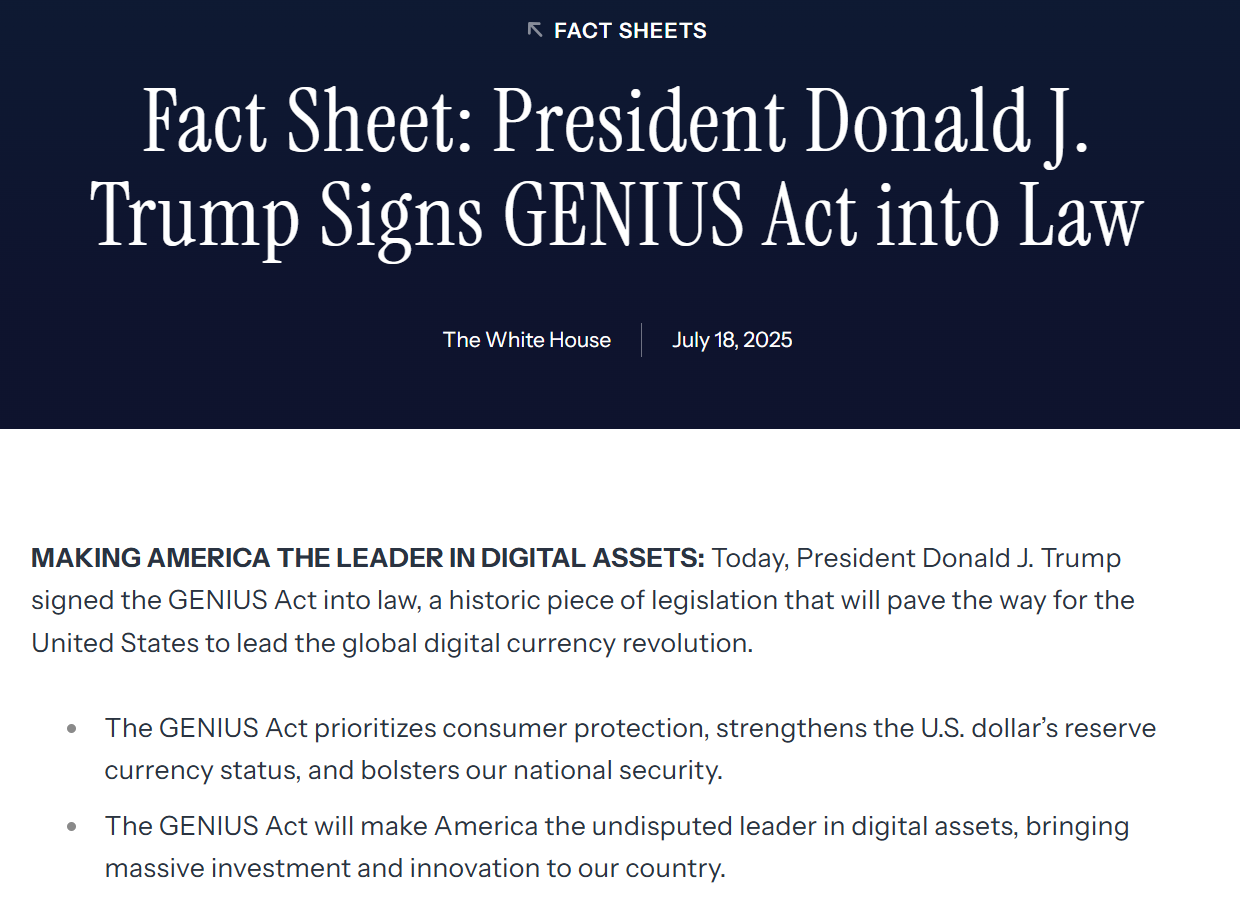
The regulatory framework in Europe, known as Markets in Crypto-Assets (MiCA), stands in contrast to the proposed GENIUS Act in the United States. Furthermore, these differ from the stablecoin regulations recently finalized in Hong Kong just two weeks prior.
While these regulatory initiatives establish well-defined guidelines for stablecoins, including reserve requirements, licensing protocols, and permitting procedures, providing clarity and fostering a more conducive environment, the distinctions between them are causing unease.
Krishna Subramanyan, CEO of Bruc Bond, a firm specializing in banking relations, suggests that these varying regulatory models could lead to stablecoins becoming “jurisdiction-bound,” limiting their utility and trustworthiness outside of specific geographical regions.
Diverging Stablecoin Regulations Impact Market
MiCA, the GENIUS Act, and Hong Kong’s Stablecoin Ordinance each represent distinct regulatory approaches to stablecoins.
Udaibir Saran Das, a member of the Bretton Woods Committee and visiting professor at the National Council of Economic Research, outlined these differences to Cointelegraph. Essentially:
These contrasting regulatory frameworks mean that “issuers face the challenge of constructing separate compliance systems for each jurisdiction, potentially involving separate legal entities, audits, and governance models, resulting in increased costs and operational complexities,” Das elaborated.
“Operational challenges stem from different reserve requirements, custody arrangements, and Know Your Customer (KYC) requirements in Hong Kong, compelling wallet providers to overhaul their infrastructure. These frameworks are competing for approaches to monetary oversight,” he added.
Establishing and maintaining multiple legal entities and adhering to various reporting requirements can be expensive, potentially burdening smaller stablecoin companies, particularly those operating across multiple regions. This could result in smaller entities being priced out of the market or acquired by larger firms.
Subramanyan argues that this “compliance asymmetry” could lead to market concentration and stifle innovation. “Over time, regulatory fragmentation will not only escalate costs but will also determine which players can scale and which cannot,” she stated.
Das emphasized that without mutual recognition of stablecoin regulations, the operational complexity of meeting diverse requirements, including multiple licensing processes, parallel audits, and fragmented technology, will favor large, well-capitalized stablecoin issuers.
“This consolidation pressure might be by design,” he speculated.
Global Regulators: Harmonizing Stablecoin Laws?
Much of the discussion around cryptocurrency regulations, including those for stablecoins, market frameworks, and Bitcoin (BTC) reserves, is focused on fostering competitiveness within specific jurisdictions or countries.
Related: UK crypto prospects face challenges, but show ‘encouraging signs’
As nations vie for prominence in the cryptocurrency industry, Subramanyan suggests that “competitive fragmentation will likely remain in the near term. Jurisdictions are using stablecoin regulation as a tool for economic diplomacy, aiming to attract capital, talent, and technological leadership.”
She notes that regions like Hong Kong, the UAE, and Singapore are adopting comparative stablecoin frameworks that encourage adoption, while also implementing licensing requirements specific to their jurisdictions, “providing necessary initial protections for their citizens.”
These dynamics could shift as stablecoin adoption expands, as predicted by prominent cryptocurrency executives like Ripple CEO Brad Garlinghouse. Subramanyan believes that as stablecoins become increasingly integrated into payment systems, credit markets, and capital flows, “risk will drive convergence.”
“The central question is not whether coordination is politically appealing; it is whether financial stability can be preserved without it.”
She continued, “Pressure to align will intensify as cross-border transaction volumes increase and regulatory gaps begin to create tangible economic consequences.”
Coordination on these issues is challenging, but achievable. Subramanyan suggests that harmonizing stablecoin regulations across different nations “requires operational frameworks for collaboration.”
Major banks and financial bodies, like the Financial Stability Board, the Bank of International Settlements, and the G20, “are well-positioned to establish baseline standards for reserves, disclosures, and risk mitigation.”
Das advocates for the creation of supervisory colleges for cross-border stablecoins, incorporating shared Anti-Money Laundering (AML) protocols, which is considered “complex but essential.”
“Without coordination, regulatory arbitrage will become the prevailing business strategy,” he warned.
Which Regulatory Model Will Emerge?
Assuming regulation is both necessary and feasible, the question remains: which regulatory approach will serve as a blueprint for future regulation and cooperation?
Das believes that GENIUS, while not overriding existing laws, “will influence global standards due to its market influence.” The act’s supervisory model, where the comptroller oversees non-bank stablecoin issuers and existing regulators supervise banks issuing stablecoins, offers a template that other countries can potentially emulate.
Subramanyan adds that “GENIUS is likely to shape regulatory thinking through its structured approach to reserves, redemption rights, and issuer accountability. In doing so, it will contribute to establishing global expectations and informing cross-border compatibility decisions.”
Banks and payment systems are also inclined to adopt the highest standards for cross-border operations, suggesting that Hong Kong’s “conservative approach could establish global norms, even if it issues a limited number of licenses,” according to Das.
While a consensus among major financial centers on stablecoin regulations is possible, it is unlikely to materialize quickly. In the meantime, smaller players may face pressure as stablecoin issuers consolidate in response to new regulations.
Magazine: Ethereum treasury companies look to spark ‘DeFi Summer 2.0’