

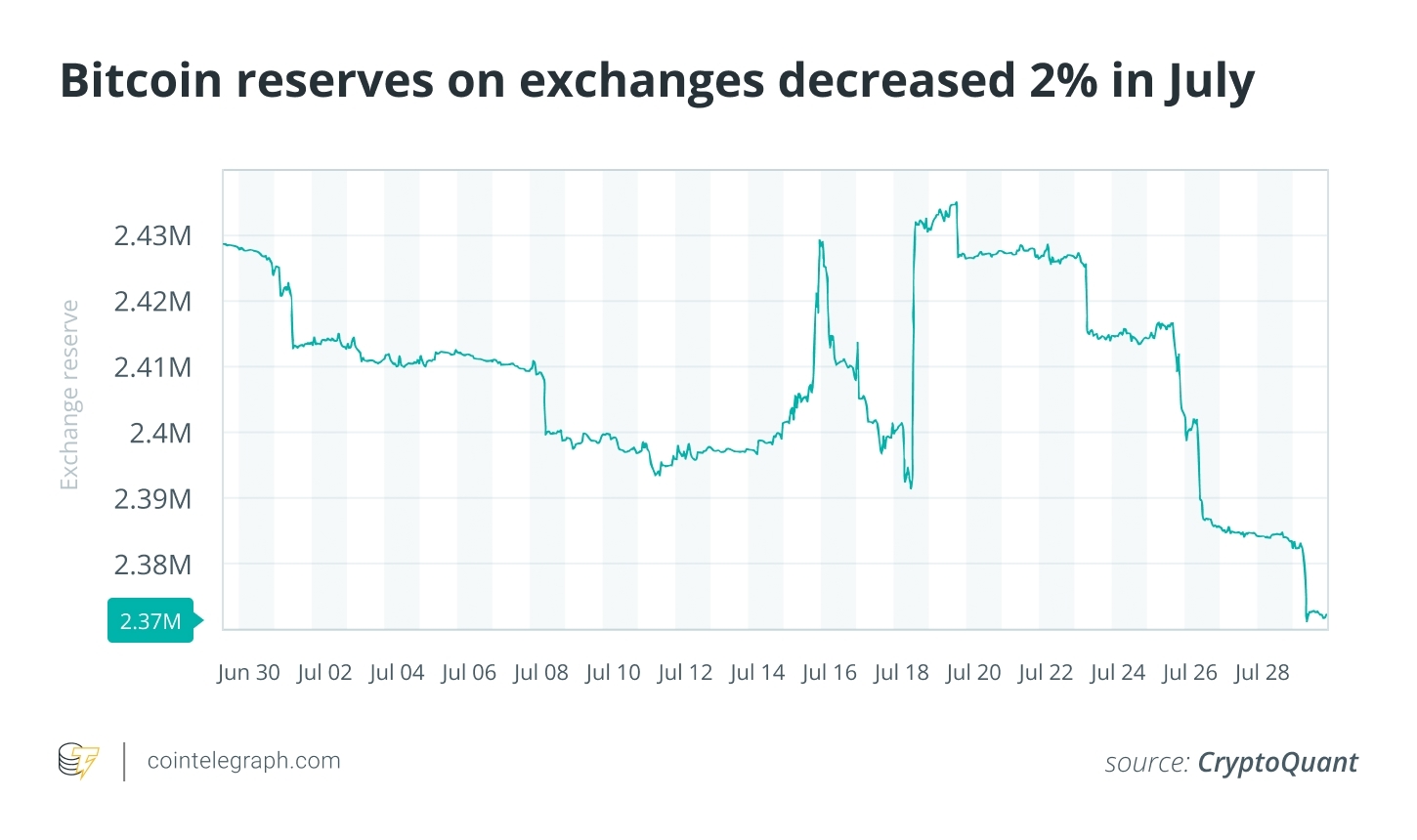
As July concludes, cryptocurrency analysts are expressing optimism, noting a 2% decrease in Bitcoin reserves held on crypto exchanges throughout the month.
This decline is viewed as a positive indicator. Reduced exchange holdings often suggest that investors are withdrawing their BTC, anticipating future price increases. While a 2% decrease in a single month might seem insignificant, it contributes to a larger trend of declining exchange reserves that began in January.
In the United States, the House of Representatives approved three crypto-related bills in July. One of these, the GENIUS Act, which focuses on regulating stablecoins, was enacted into law by the President. With clear guidelines now in place for stablecoins, and the CLARITY Act providing a broader regulatory structure currently under Senate consideration, many experts anticipate significant expansion within the stablecoin market.
The value of tokenized real-world assets (RWAs) continues its upward trajectory, demonstrating a 2.6% increase in total on-chain value. While companies are increasingly adopting tokenized stocks, some legal challenges may arise as adoption expands.
Here’s a numerical summary of key developments in July.
Stablecoin Market Experiences $4 Billion Boost Following GENIUS Act
On July 18th, the GENIUS Act was signed into law, establishing a regulatory framework for the stablecoin sector.
While the legislation didn’t address key industry concerns such as allowing stablecoin issuers to offer interest-bearing accounts – a point emphasized by figures like Coinbase CEO Brian Armstrong – it’s generally regarded as a significant advancement for the crypto industry.
The stablecoin supply saw an increase of nearly $4 billion in July, pushing the total market capitalization of stablecoins to over $250 billion.
Stablecoin usage has also intensified. Monthly active addresses surged by more than 20% in July, reaching over 38 million, reflecting growing adoption. The total transaction value of stablecoins exceeded $7 trillion in the first quarter of 2025.
[pic]
Sygnum’s Chief Investment Officer, Fabian Dori, previously told Cointelegraph that the GENIUS Act provides “confidence to organizations and issuers to develop original, innovative ‘killer apps’ that don’t just serve their customers’ current needs but create demand for entirely new services, including payments.”
Bitcoin Exchange Reserves Maintain Downward Trend
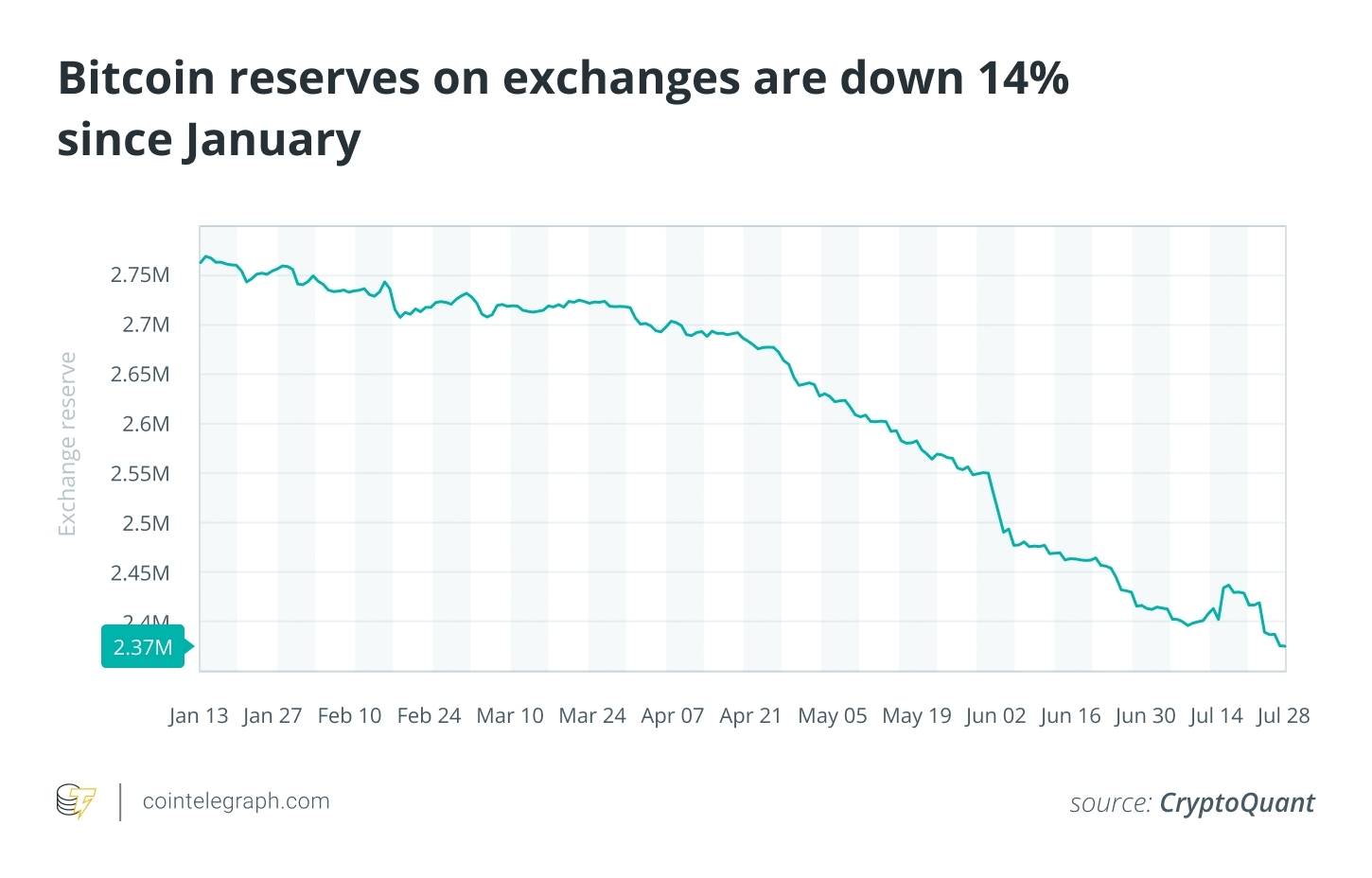
The quantity of Bitcoin held on exchanges is declining. July witnessed a 2% decrease in Bitcoin exchange reserves, continuing a trend observed since the beginning of 2025.
Since January, Bitcoin reserves on exchanges have fallen by 14%.
July also marked the first occasion since 2018 where less than 15% of the total Bitcoin supply was available on exchanges. This scarcity on exchanges and over-the-counter (OTC) desks has led some analysts to suggest a potential Bitcoin “supply shock” in the near future, as strong buyer demand encounters reduced availability.
Bitcoin analysis account Crypto Chief highlighted the considerable divergence between Bitcoin’s price, which recently reached record highs, and the low supply of BTC on OTC desks and exchanges: “The Bitcoin balance available OTC is in freefall. We have never seen such a divergence between balance and price! You are witnessing a supply problem play out.”
Reduced supply on exchanges implies a shift towards long-term holding. According to Bybit CEO Ben Zhou, this could indicate investors anticipating a price rally or further market volatility.
Related: Bitcoin in limbo: Key BTC price levels to watch ahead of FOMC
During a July press conference, he stated, “Over the past few months, the centralized exchange holdings of Bitcoin reserves have shown a downward trend. Typically, this indicates less market trading and a perception of price fluctuation. This could signify a lack of overall confidence.”
Tokenized RWAs Exceed $25 Billion
The cumulative value of tokenized RWAs has surpassed $25 billion, reflecting roughly a 2.5% increase during July.
A report from Binance asserted, “As regulatory frameworks become clearer, the sector is positioned for continued expansion and greater engagement from major industry participants.”
The RWA market has grown by 260% this year alone, primarily fueled by tokenized private credit and U.S. Treasury debt.
In July, the value of tokenized stocks increased by 15%, reaching over $400 million.
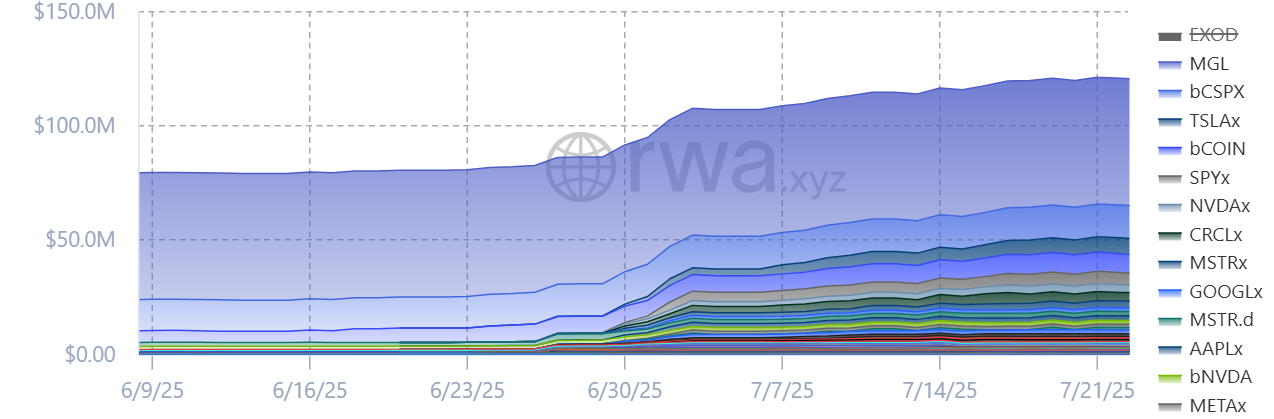
The trading application Robinhood announced at the start of the month its intention to offer RWA trading. At the time of publication, tokenized stock addresses were up nearly 700% on the month.
Related: Post-GENIUS Act, a surge in RWA tokenization is anticipated — Aptos executive
Tokenized stocks may provide an attractive method for businesses to secure capital, however, legal uncertainties remain, particularly concerning private organizations like OpenAI offering “equity” through tokens without granting ownership rights to the public.
Regulators across various jurisdictions have expressed concerns regarding adequate investor protection for tokenized stock holders.
Crypto Legislation Passes in Three US States; Arizona Governor Vetoes Crypto Reserve Bill
While the GENIUS Act and Congress’ crypto focus dominated headlines in July, individual states have also been actively developing their regulatory frameworks for digital currencies. Missouri, New Hampshire and Oregon all enacted crypto-related legislation.
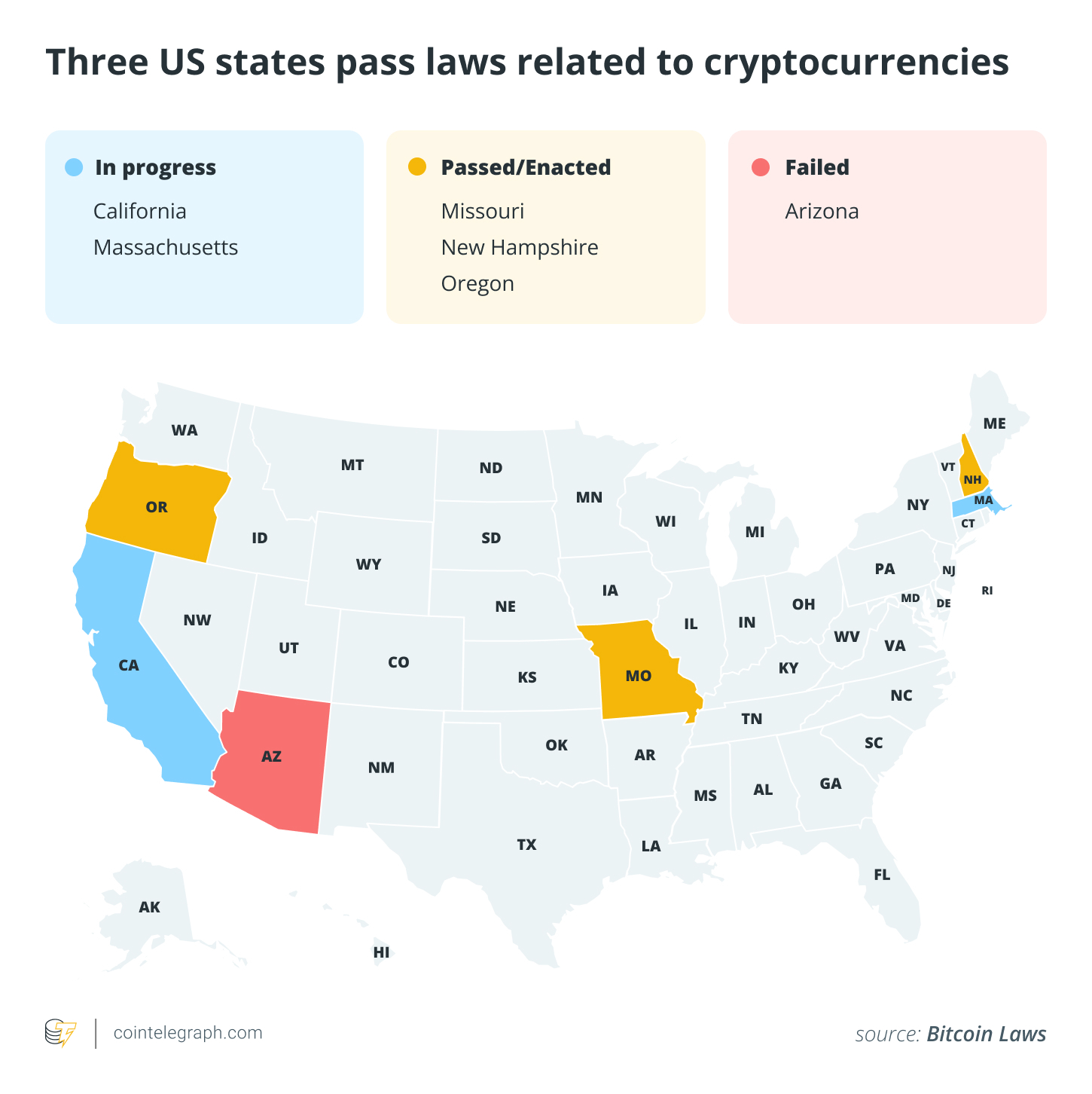
Missouri implemented regulations for crypto ATMs and passed a law treating gold and silver, as well as metal-backed electronic currencies, as legal tender.
New Hampshire established a committee tasked with “studying and formulating a potential regulatory framework for stable tokens and tokenized real-world assets (RWAs),” which is scheduled to present its findings by November 1st.
Oregon updated its laws regarding abandoned property to encompass crypto, “classifying them as abandoned after three years and mandating holders to remit them, or liquidate them on behalf of the State Treasurer upon instruction.”
In Arizona, Governor Katie Hobbs vetoed House Bill 2324, which aimed to create a state reserve from cryptocurrency seized by law enforcement. Hobbs cited concerns that the bill “disincentivizes local enforcement from working with the state on digital asset forfeiture by removing seized assets from local jurisdictions.”
Regulatory Approval Granted to Crypto Firms Across Seven Nations
Globally, governments are enacting licensing frameworks to oversee the cryptocurrency industry.
In July, seven nations established legal structures or issued licenses to cryptocurrency companies.

The Hong Kong Monetary Authority finalized stablecoin regulations and initiated a public registry for licensed issuers.
In Europe, Bybit, OKX and CoinShares all secured licenses under the Markets in Crypto-Assets (MiCA) regulatory framework. Bybit officially launched operations in Austria, while OKX and CoinShares established operations in France.
Ripple announced its pursuit of a license under MiCA and its intent to expand into Europe via Luxembourg. AllUnity, a stablecoin project from DWS and Deutsche Bank, received authorization from German financial regulators, who issued an E-Money Institution (EMI) license allowing it to issue a euro-denominated stablecoin.
The crypto exchange Bitstamp will be able to serve customers in Singapore after receiving approval from the country’s Monetary Authority.
In the United States, both Ripple and Circle are seeking banking licenses. Obtaining a license would enable these firms to provide custodial services and function nationally under the supervision of the Office of the Comptroller of the Currency, bypassing the need to apply separately with individual state regulators.
Magazine: Crypto traders ‘fool themselves’ with price predictions: An Interview with Peter Brandt