
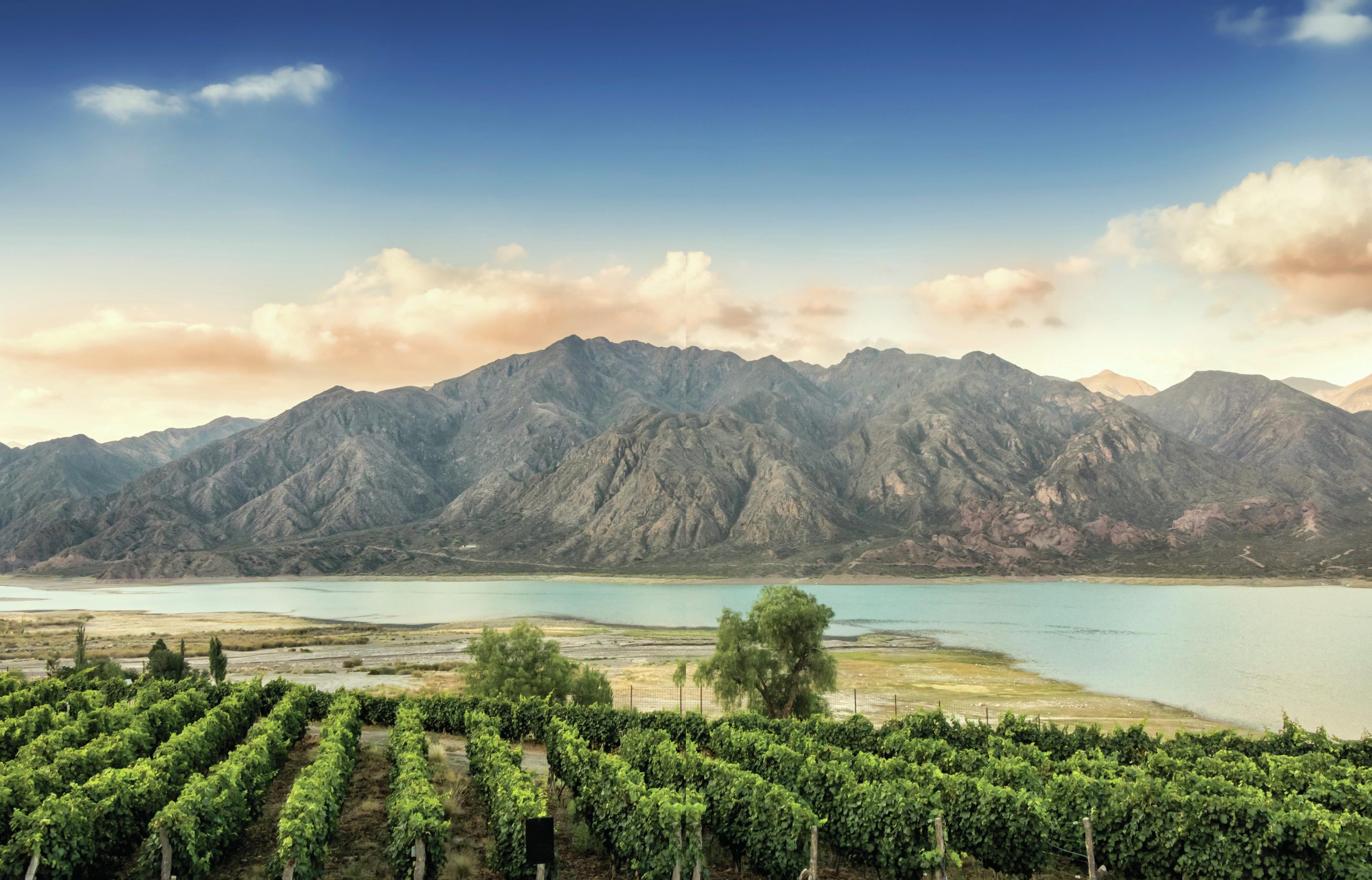
As the saying goes, difficult times often spark creativity, and that’s precisely what’s been happening in the vineyards and wineries of Argentina, according to a report by Amanda Barnes.
Argentina’s economy has historically been characterized by instability, including persistent inflation and trade restrictions. Yet, Argentine winemakers have navigated these challenges with remarkable ingenuity, forging a unique path toward technological innovation that’s driven more by resourcefulness than readily available resources.
Since the early 2000s, the global wine sector has seen a surge in advanced technology across all aspects of wine production, from grape cultivation to business management. However, Argentina largely missed out on this wave. Trade barriers, currency controls, and a politically influenced system made acquiring international equipment a complex and expensive endeavor.
In many instances, local businesses had to balance imports by exporting equivalent or larger amounts of goods. This, combined with ongoing inflation, economic downturns, and the impact of the pandemic, created significant hurdles for the country’s technological advancement in winemaking.
“Beyond limited access to imported equipment, we have also faced educational limitations due to resource scarcity,” explains Rodrigo Serrano, the lead winemaker at Domaine Bousquet. “Finding and training skilled labor in both the vineyards and wineries is a major challenge. Regardless of future advancements in mechanization, passionate and knowledgeable people will always be vital to our success.”
Homegrown Solutions
Despite the limitations, a wave of local innovation was sparked. For example, Martin Kaiser, the head viticulturist at Doña Paula, was inspired by pruning machines he observed during trips to Australia, but importing them to Argentina was not an option. Instead, he collaborated with his team and local engineers to develop their own solution. “It can effectively prune about one and a half hectares each day,” Kaiser states, while highlighting that he continues to optimize the machine’s functionality. “It’s a great way to cut down vineyard expenses.”
The Doña Paula team also engineered a vaporizing device to manage ant infestations, a prevalent issue in Mendoza’s vineyards. This device serves as an alternative to agrochemicals and complies with organic farming standards. Kaiser explains, “Sometimes, the technology we need simply doesn’t exist, and other times, we just can’t get it here, so we invent it ourselves.”
Cryptocurrency Frontrunner
Interestingly, Argentina has taken a leading position in one particular technological domain: blockchain and cryptocurrency. Partly fueled by the instability of the Argentine peso, the country has become a major adopter of cryptocurrency and a regional powerhouse for blockchain development. Back in 2018, Costaflores Organic Vineyard, located in Mendoza, became the first winery globally to introduce a crypto asset linked to its wine. Each bottle from that specific vintage was linked to an MTB token, creating a transparent and tradable asset.
Founder Mike Tango Bravo also pioneered the use of blockchain to boost operational transparency by launching OpenVino. This open-source platform meticulously tracks every aspect of the winemaking process, from monitoring temperatures in fermentation tanks and vineyard sensors to detailing payroll and sales activities, and records it all on the blockchain.
Since its inception, the project has been examined by academic institutions. Several components are currently being tested by Argentina’s National Viticulture Institute and other wineries across the nation.
Several winemakers have launched direct sales platforms that embrace digital wallets and payments using stablecoins. This strategy not only circumvents the volatile peso but also provides wineries with greater control over their profit margins.

Opening Up Markets
A turning point came in December 2023, with the election of President Javier Milei, which signaled a major economic shift. The newly elected President quickly removed trade restrictions and embraced international trade to open the Argentina economy.
For winemakers, this shift presented a long-awaited prospect.
“While importing new technology was previously limited because of the economic difficulties in Argentina, the situation has noticeably improved in recent times,” notes Hervé Joyaux Fabre, the owner and chief winemaker at Viñalba in Mendoza. Fabre, originally from Bordeaux, moved to Argentina in the early 1990s and says that the current environment has improved their “access to innovative equipment and technology from international sources.”
Fabre has moved quickly to replace older tools with contemporary technologies in the vineyard. “We’re switching out older tractors for newer, more efficient models,” he explains, while highlighting his latest acquisition, which has swapped wheels for wings. “We regularly deploy drones to monitor the health of our vines; aerial imagery allows us to quickly respond if plots need more water or fertilizers.”
Aerial Assessments
Meanwhile, at Doña Paula, Kaiser leverages aerial imagery combined with artificial intelligence (AI) to precisely predict vineyard water requirements. He explains, “Using historical data and future predictions, our tool adjusts irrigation based on soil type and water retention for each plot. This method is far more efficient and safeguards our scarce water resources.”
Guillermina van Houten from Catena Zapata describes the company’s multilayered approach to vineyard analysis through the integration of multiple sources. “We bring together different data from drones, satellite images, field observations, and detailed soil surveys using Geographic Information System (GIS) technology to map out vineyard parcels precisely,” she explains.
She goes on to add that this gives the winemaking team a deeper insight into the details of each plot: “This approach enables us to grasp the complexities of the terroir and how they influence the performance of the vines. As a result, we can harvest each plot separately and carry out microvinifications to assess quality and pinpoint exceptional wines.”
Bag-in-Box Innovation
In terms of equipment, Domaine Bousquet was ahead of the curve and imported the first optical sorter in Argentina—even before trade restrictions were eased. Now, due to the simpler importing process, the winery is looking into its next substantial technological investment: an advanced bag-in-box (BiB) system.
Serrano comments, “We’re thrilled with the sustainability aspects of bag-in-box technology, and our BiB sales have been very encouraging in Europe,” while stating that bag-in-box wines rely heavily on reliable technology. “We researched the top-of-the-line machines, and last year, we visited Italy to explore the latest technologies. We’re currently constructing a new section of the winery to house the latest bag-in-box technology so we can begin packaging some of our premium wines in this format.”
Another winery that had the foresight to invest in optical sorting machines early on is Achaval Ferrer. Here, head winemaker Gustavo Rearte is also exploring new technologies for use during fermentation. “Automated pumps and peristaltic pumping systems allow us to continue treating the must gently during fermentation,” he explains. “Our barrel rooms and tanks use auto-controlled temperature regulation as well.”

A change in direction: Argentina pivoted when Javier Milei was elected President
AI-Powered Marketing
Achaval Ferrer is also using AI for marketing.
Rearte mentions that “Marketing is one area where AI has really made an impact. We’ve used AI to design more effective labels, ensuring our messaging resonates better with our intended audience and aligns with our brand vision.” Similarly, Bousquet has used AI for design, content development, and sales performance analytics.
At Trivento, a technology-integrated strategy is firmly in place. Victoria Acosta, PR & communications manager explains, “We have QR codes in our production facilities that identify and track barrels, vats, and tanks. Plus, our team has created a mobile app to help monitor operations.” She adds, “We use augmented reality to bring up virtual information and confirm on-site data such as condition, material, type, capacity, structure, function, toasting level, and the year of acquisition, among other information. This allows us to streamline operations, real-time inventory control, wine movements, and work orders.”
Looking ahead, Trivento intends to integrate blockchain technology for greater traceability and is in the process of introducing new QR codes on its labels, enabling users to create personal tasting profiles for wines. These profiles will soon be supplemented by an AI sommelier service.
When Tech Complements Terroir
In spite of the attention on drones, sensors, and applications, the primary investment today centers on understanding terroir. Across Argentina, wineries are actively studying the soil, climate, and geology of both existing and newly planted vineyards to clearly define what sets their vineyards and wines apart.
Laura Catena, the owner of Catena Zapata and founder of the Catena Institute of Wine, asserts, “Today’s most crucial technology lies in exploring terroir, soil, climate, and plant genetics. At the Catena Institute, we can carry out the kind of in-depth terroir studies that are challenging to do in other countries because of their high costs.”
The Catena Institute’s most recent genetic research involves both a wide-ranging massal selection preservation effort and the 1,001 Vines Project, which records hundreds of cuttings from old vineyards, some of which are a century old.
Argentina’s massal selections represent 90% of its vineyards, compared to an average of just 5% in France, and they constitute one of Argentina’s greatest viticultural assets while also being one of the most at risk.
“In Argentina, we are fortunate to have kept this genetic diversity mainly because the clonal technological revolution didn’t find its way to Argentina in the 1950s, due to political factors”, Catena explains. “Today, I think it was a blessing that we remained isolated, because all that genetic diversity was preserved and, today, we can continue to preserve it.
“In France, this type of work is typically done by the government, but at Catena we decided to take on the project ourselves, because the government is either moving too slowly to do it – or not doing it at all.”
This producer-led attitude also includes initiatives that foster biodiversity and sustainability, which have become increasingly important for producers across the nation. “Some of our key projects include biodiversity studies on arthropods and ants, planting floral cover to aid beneficial insects, and carbon balance assessments,” says Lucía Romero, global export manager at Grupo Avinea, which is preparing to launch Viña Artesana with a collection of wines named after the flora present in the vineyard. “All data is openly shared via the Matriz Viva platform, encouraging transparency and industry cooperation.”
Innovation Derived from Adversity
Whether driven by resource constraints or a deep sense of resilience, Argentina’s ingenuity has become a signature strength of its wine industry. From spearheading blockchain-secured wine traceability to creating locally made vineyard equipment, Argentine winemakers have continually found inventive ways to bypass standard developmental paths. Beyond their adaptability, Argentina’s culture of cooperation is what sets it apart. From terroir and biodiversity research at the Catena Institute and Matriz Viva to open-source platforms like OpenVino, a willingness to share knowledge has accelerated sector-wide development.
In fact, this spirit of transparency, both technological and human, may become Argentina’s distinct advantage in the global wine industry, where consumers increasingly demand transparency, authenticity, and innovation.
While upcoming elections might introduce renewed economic policy uncertainties and affect open trade, one element remains clear: Argentine winemakers have proven that when access is restricted, they innovate, and when opportunity arises, they seize it.