


The recent weakening of the U.S. dollar has sparked renewed interest in the concept of “hyperbitcoinization” among Bitcoin supporters. However, evidence suggesting that the dollar’s decline automatically translates to Bitcoin’s success is scarce. Instead, a collapse of the dollar might lead to widespread instability.
The Dollar’s Demise: Lessons Learned from Currency Failures
Fernando Nikolic, a former Blockstream VP with firsthand experience of Argentina’s economic struggles,
advises against Bitcoin enthusiasts cheering for the collapse of fiat currencies:
“Bitcoiners celebrating the dollar’s downfall don’t fully grasp the implications… It doesn’t lead to liberation, but rather to hardship, like seniors struggling to afford necessities as their savings diminish… The dollar’s collapse doesn’t guarantee Bitcoin’s rise.”
In scenarios of true currency failure, fundamental resources like essential supplies (not digital assets) become the most valuable. Many Americans who foresee a quick shift to a Bitcoin-centric economy lack understanding of the severe consequences of societal breakdown.
Nikolic stresses that the real outcome is much more turbulent than imagined, and the consequences of a collapsing dollar would not be desirable.
Economic Indicators Highlight Strains on the U.S. Fiat System
The American
housing market
is becoming increasingly unaffordable. In 2025, median home prices reached historic highs, requiring double the income compared to 2019 to purchase a typical single-family house.
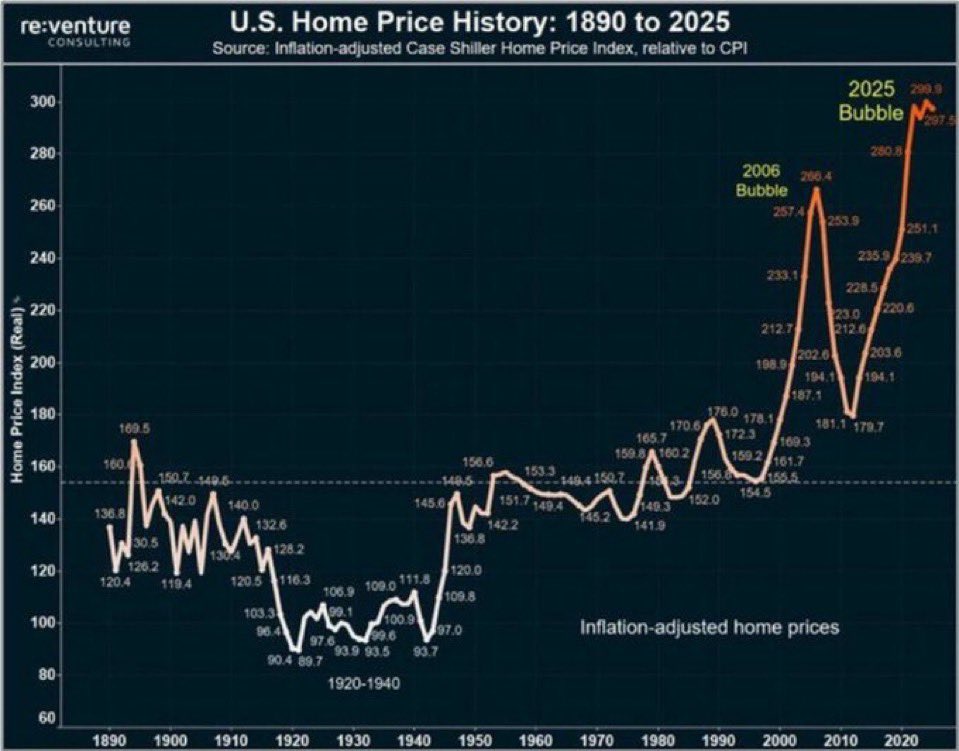
The ratio of home prices to income is at a record high, making home ownership less accessible than ever, with a significant number of renters allocating 30% to 50% of their earnings to housing expenses.
The discrepancy between wages and escalating housing costs hinders potential buyers, fueling societal tensions.
Adding to the economic pressures,
U.S. unemployment
increased to 4.3% in August 2025, reaching its highest point since late 2021, while broader measures of underemployment stood at 8.1%. These numbers reveal a labor market struggling to keep up with inflation and stagnant real wages.
Against a backdrop of rising joblessness and increasing home values, the U.S. national debt exceeded $37 trillion in August 2025, surpassing twice the size of the nation’s overall economic output.
Borrowing expenses are on the rise, with interest payments now surpassing defense spending. Projections from the Congressional Budget Office indicate that this debt level was reached five years earlier than predicted, largely due to pandemic-related borrowing and expanded social programs.
A debt increase of $1 trillion every five months is unsustainable, potentially pushing interest rates higher and crowding out investments.
Bitcoin’s Triumph is Not Guaranteed by Fiat’s Failure
The dollar index experienced a decline of over 10% against major currencies this year, representing the most significant drop since 1973. The decline is attributed to uncertain economic policies, protectionist measures, and extensive tax reductions.
As the dollar depreciates, import costs increase, diminishing the purchasing power of average Americans, exacerbating inflation, and putting pressure on household budgets. The devaluation further stresses the housing sector, employment, and debt, increasing the overall fragility of the economic system.
Collectively, these metrics paint a grim picture of the underlying health of the American economy, often regarded as a global benchmark. If one of the world’s strongest currencies is under duress, what does this suggest for the broader fiat system?
While many Bitcoin advocates proclaim, “Bitcoin solves this,” the notion of hyperbitcoinization (a mass adoption of Bitcoin following fiat currency failure) is a risky delusion. It disregards historical and social realities. During currency collapses, trust erodes, and the focus shifts to basic survival needs rather than abstract concepts.
Nikolic’s insight, stemming from Argentina’s fiat collapse, exposes the naivety of “liberation” hopes: collapse signifies poverty, instability, and suffering.
Economic chaos disproportionately affects the vulnerable, as social safety nets and established market norms break down. Bitcoin can serve as an alternative to inflationary fiat, but the dollar’s collapse will likely result in disaster and hardship for many, rather than freedom.