


A staggering $7.5 trillion is currently held in U.S. money market funds, reaching an unprecedented peak. This massive stockpile of capital is being carefully monitored by traders of risk-based assets. The reason? Anticipated interest rate reductions by the Federal Reserve could trigger a shift, potentially directing this substantial reserve toward higher-risk investments, including technology stocks and Bitcoin.
Money Market Funds: A Reservoir of Potential Investment
In a matter of days, money market fund holdings have increased by almost $100 billion. Initially reported by Bar Chart at $7.4 trillion on September 9th, the figure was revised upwards to $7.5 trillion by September 13th.
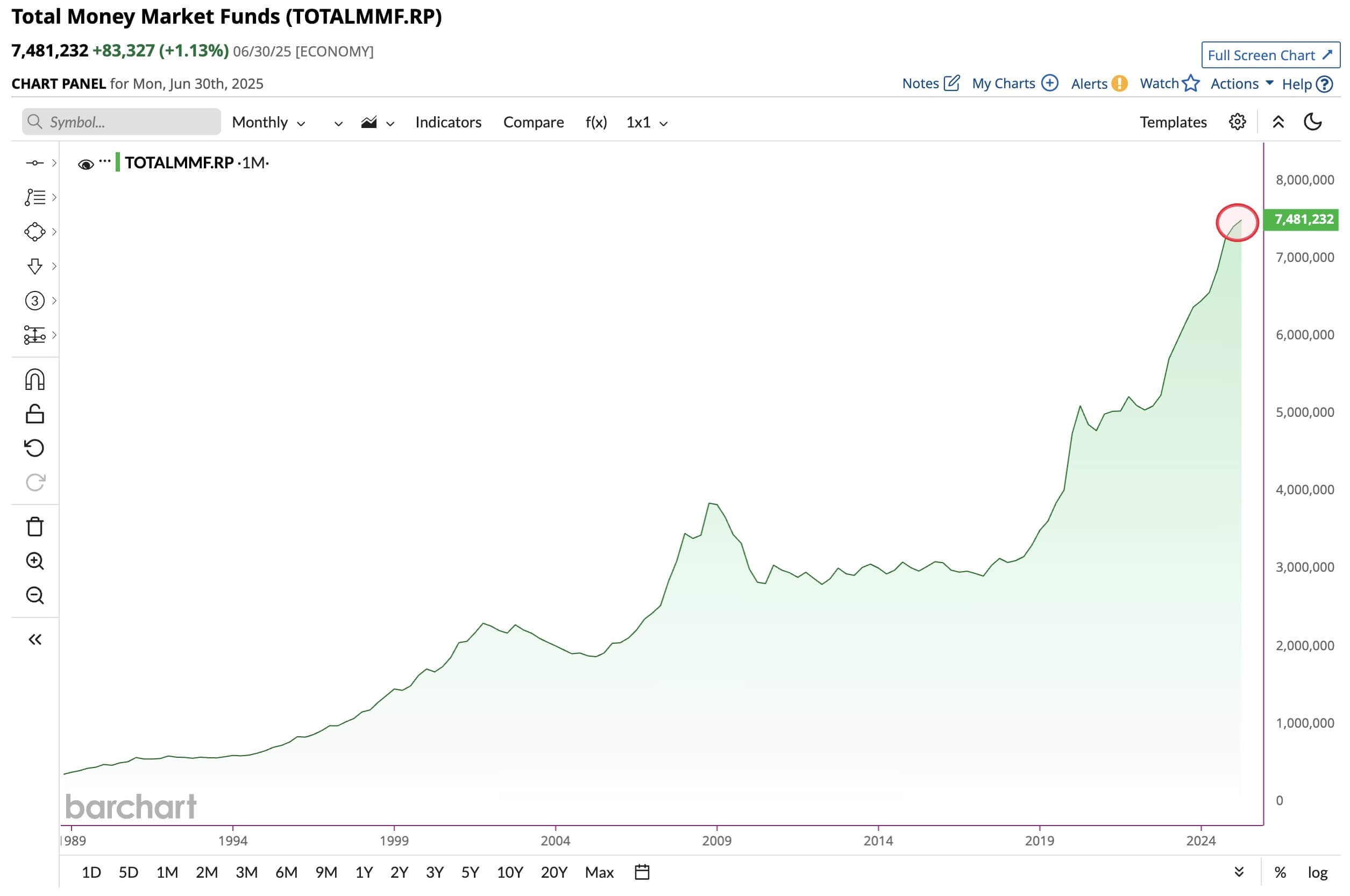
Regardless of the specific number, this substantial pool of liquid assets represents a significant potential shift in investment strategy.
Historically, such high levels of cash reserves often indicate a strong underlying demand for riskier investments. This appetite grows as interest rates decline, making the returns from safer havens less appealing. Once the Federal Reserve implements rate cuts, investors are expected to seek out opportunities with higher yields and increased risk profiles, such as Bitcoin and rapidly growing stocks.
The Federal Reserve’s anticipated interest rate cut is a prominent subject of discussion. Many cryptocurrency traders and institutional analysts foresee an influx of new capital into the markets following the rate reduction. This could potentially trigger new bull market phases for volatile assets. Lower interest rates generally translate to readily available capital, looser financial regulations, and reduced incentive to maintain investments in money market funds.
Dissenting Opinions: The Case Against Rate Cuts
Not all experts agree with this course of action, as previously reported by CryptoSlate. Prominent critics, including economist Peter Schiff, view the potential rate cut as a “major error,” expressing concerns that it could reignite inflation and threaten the dollar’s status as a global reserve currency.
Schiff contends that continuously easing monetary policy is creating precarious economic bubbles and compromising long-term financial stability. He cites the recent surge in gold prices as an early warning sign of policy misjudgment.
The current magnitude of money market fund holdings is unprecedented, prompting increased scrutiny of the U.S.’s overall financial health. A concerning 23 cents of every tax dollar is now allocated solely to covering interest payments on U.S. federal debt. This alarming figure has raised concerns among both investors and policymakers.
The S&P 500 index has reached record highs even as unemployment rates rise and the national debt continues to escalate. This apparent disconnect has led some analysts to question the divergence between Wall Street performance and the real economy’s condition. Historically, stock market corrections often follow weakening employment figures and indications of a sluggish economic climate.
$7.5 Trillion: A Figure to Watch Closely
With a potential interest rate cut looming, historically high money market liquidity, and growing fiscal challenges, all eyes are on how this substantial reserve of capital will be deployed. Should investors reallocate even a small fraction of this $7.5 trillion toward riskier assets, cryptocurrency markets could experience significant growth.
Continued monitoring of these key indicators is crucial. Each adjustment to interest rates, inflation report, and fiscal policy announcement is reshaping the investment risk landscape. For Bitcoin and other risk-based assets, the potential for both opportunity and volatility has never been more pronounced.