
The Game Master, or DM, in a tabletop role-playing game fills numerous roles. They’re often storytellers, interpreting the game’s narrative. They also act as referees, upholding the established rules. Most frequently, they juggle multiple responsibilities, striving to maintain order while fueled by caffeine. Their task is to guide the game against the chaos that can easily arise.
Perhaps the most delicate role is that of a people manager. A game, such as Dungeons & Dragons, revolves around its players. While props and set pieces add to the atmosphere, they are secondary to the group dynamic. The DM carries the responsibility of ensuring player satisfaction during gameplay.
Potential conflicts often can be avoided through careful group formation. Define your ideal gaming experience and seek players who share your vision. For a narrative-driven campaign, it’s wise to avoid players prone to disruptive actions. However, even the best-assembled groups may encounter conflict. Guiding a lengthy D&D campaign requires a subtle touch and greater awareness than one might assume.
I learned this lesson through experience. Following an eighteen-month-long journey through the icy landscapes of “Rime of the Frostmaiden”, my group was eager to continue playing. We decided on a brief follow-up adventure, ignoring the pitfalls of sequels. Battling DM burnout, I chose a simpler dungeon crawl: “The Lost Caverns of Tsojcanth,” updated for the 5th edition rules. However, the characters were level 11, above the adventure’s intended level 9. I devised a plan to address this, but the solution proved problematic.
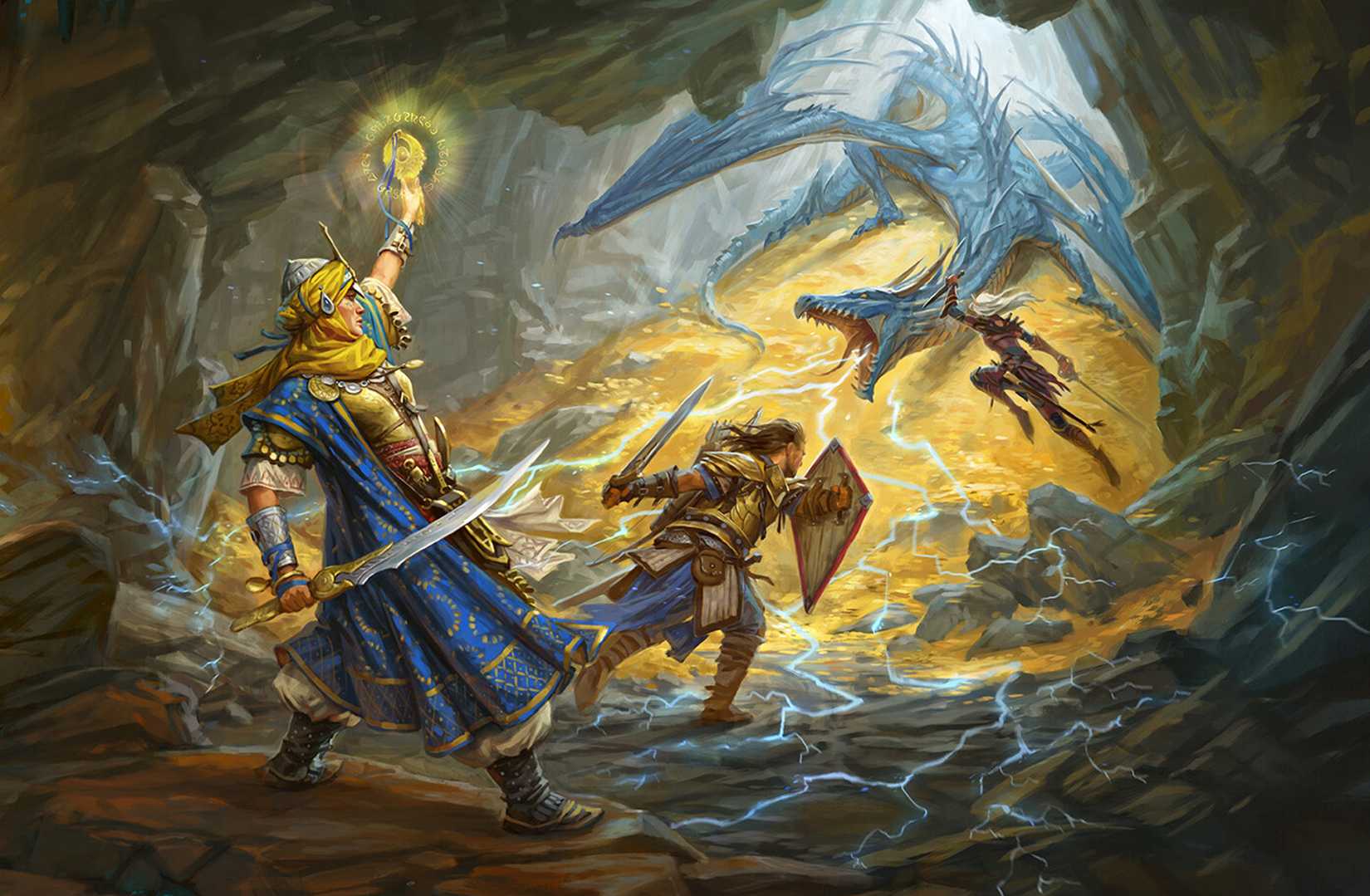
“The Lost Caverns” begins with players navigating a wilderness area containing several encounters, including a blue dragon and a reclusive archmage. To increase the challenge, I strengthened the dragon and had it pursue the party to the archmage’s dwelling. The archmage then exchanged the party’s most powerful magic items, including a Staff of Power wielded by the Warlock/Bard, with the dragon for their safety. This proved to be a mistake as I inadvertently limited the player’s control of their characters.
Players value their characters’ possessions. The party had earned these treasures over a long campaign where magical rewards were scarce. I assumed that they would be understanding, given the adventure’s short duration, but this proved incorrect. The owner of the Staff of Power expressed disappointment and resentment. I was hesitant to alter the storyline, leading to conflict and almost causing the player to leave the game. Although the heroes eventually recovered their belongings, I learned an important lesson about player agency.
DMs can remove items if they disrupt game balance, but player agency is paramount. Players should retain control over their character’s actions and decisions.
While DMs wield considerable influence, D&D is, ultimately, a collaborative storytelling endeavor. Elaborate worlds are meaningless without player engagement. DMs possess a unique perspective, but the most compelling narratives emerge organically through player choices. Avoid heavy-handed interventions that diminish player agency.
The most effective solution is open communication. Discuss significant decisions with your players individually or as a group. Solicit their opinions, especially when changes negatively impact their characters. Transparency can improve the gaming experience significantly. A mildly surprised player is preferable to a disgruntled one.