
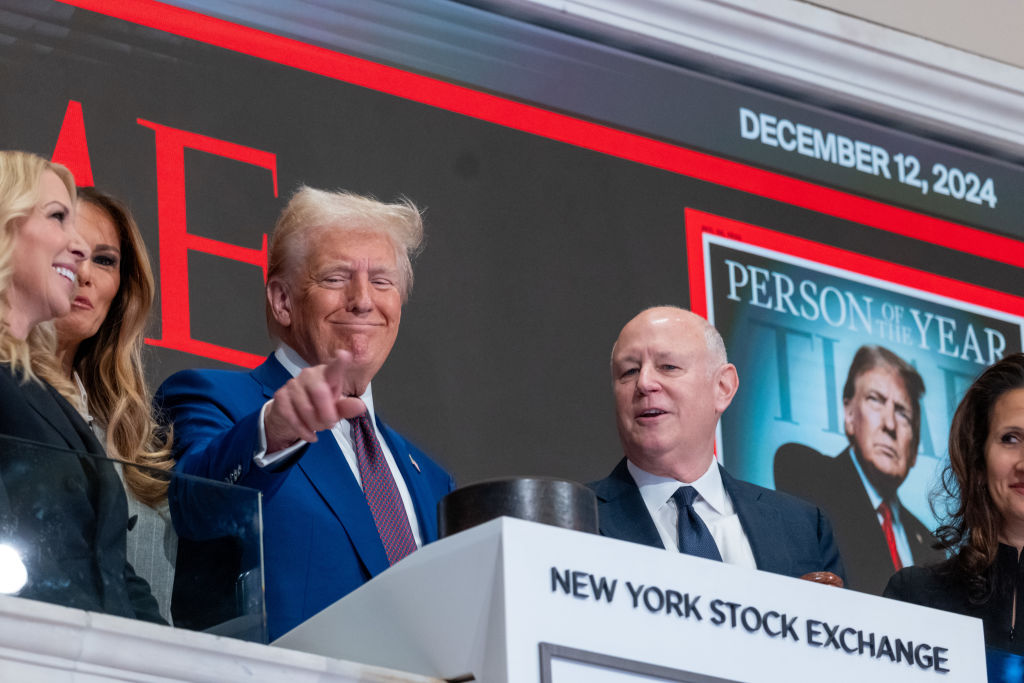
Following President Donald Trump’s second inauguration on January 20th, market observers are closely analyzing how his promised policies might influence stock performance.
Stocks experienced a significant upswing immediately after Trump’s November victory. According to George Smith, portfolio strategist at LPL Financial, the election outcome “provided much-needed certainty on the political front.” He noted, “The elimination of election-related unknowns, along with optimism for a business-friendly environment under the new leadership, improved investor morale and fueled the market’s upward movement.”
However, Adam Turnquist, chief technical strategist for LPL, points out that the rally has cooled off at the start of the year. He suggests that a complex economic landscape may presage continued technical challenges for the market.
Sign up for Kiplinger’s Free E-Newsletters
Gain a competitive edge with expert advice on investment strategies, tax planning, retirement preparation, personal finance management, and more – delivered directly to your inbox.
Gain a competitive edge with expert advice – delivered directly to your inbox.
Despite the ambiguities surrounding Trump’s proposed trade taxes and ongoing global instability, Turnquist remains cautiously optimistic. “There are numerous reasons for a positive outlook,” he says. “The overall economy remains resilient, corporate earnings are projected to experience robust growth again this year (extending beyond just the largest companies), and the continued excitement surrounding artificial intelligence (AI) provides a further boost to market sentiment.”
Turnquist also anticipates that the Trump government will prioritize “pro-growth initiatives, reduced regulations, and possible tax reductions.” However, he acknowledges that these policies could potentially accelerate inflation and increase the national debt.
This analysis explores the potential effects of the second Trump term on the stock market and what it could mean for your investments.
Increased Interest Expected in Cryptocurrency
The value of Bitcoin and other digital currencies saw significant increases during 2024, partly due to Trump’s changing stance on crypto. During his first term, Trump expressed skepticism, notably stating in a July 2019 social media post that cryptocurrency values were “highly unpredictable and based on very little.”
However, by 2024, Trump’s viewpoint had shifted, expressing intentions to establish the U.S. as a global hub for crypto. World Liberty Financial, a cryptocurrency venture with Trump family ties, introduced its own digital token in October. Leading up to his inauguration, Trump and Melania Trump introduced their own meme coins.
Bitcoin’s price subsequently rose, reaching $107,000. Analysts anticipate further growth in 2025.
Matt Mena, a crypto research strategist at 21Shares, commented that speculation regarding the Trump administration’s potential creation of a national Bitcoin reserve, with analysts estimating a 60% likelihood of its implementation, could contribute to a surge in cryptocurrency value.”
He also noted that anticipation of a supportive administration towards cryptocurrencies and a Congress favorably disposed to technology is boosting the optimistic cryptocurrency forecast. Mena stated, “Analysts project values reaching $150,000, driven by a combination of favorable policies and increased investment from larger institutions.”
New ETFs May See Increased Investor Attention
The shift towards crypto spurred by Trump’s change of heart could potentially funnel greater investment into the growing exchange-traded fund (ETF) sector.
ETF asset values saw a 28% rise in 2024 to reach $10.36 trillion, fueled by market gains and a record $1.12 trillion in new investment. Aniket Ullal, Head of ETF Research & Analytics at CFRA, stated, “Cyclical, growth-focused areas such as cryptocurrency and the ‘Magnificent 7‘ companies led the best-performing ETF segments based on total returns during 2024.”
FactSet’s Director of Global Fund Analytics Elisabeth Kashner and Senior ETF Analyst of Global Fund Analytics Lois Gregson, reported that $41 billion in net new investment flowed into bitcoin and crypto ETFs, “demonstrating growing investor enthusiasm.”
Kashner and Gregson also suggest that the growing interest in cryptocurrency partially fueled by Trump’s change in sentiment towards digital assets “indicates a likely increase in the introduction of ETFs based on current trends, such as those that combine Bitcoin with hedging tactics, varied asset class portfolios, and other alternative investments, driven by a fear of missing out.”
Potential Stock Market Rally Slowdown Due to Trade Taxes
A key concern driving recent stock sell-offs is investor worry that the trade taxes suggested by Trump will push inflation higher.
Kiplinger contributor James K. Glassman notes in his article “How to Hedge Against Tariffs” that “Most economists believe the impact will likely include a stronger dollar, greater inflation and interest rates, reduced economic growth in countries that export to the U.S., and retaliatory measures by some of those nations.”
Glassman further suggests that “the consequences will probably weaken the profitability of American companies with significant international sales.”
Initial expectations were that the new administration would immediately impose trade taxes of up to 20% on all imports and a 60% penalty tax on imports from China. However, more recent reports indicate that the Trump team will levy 25% tariffs on Mexico and Canada starting February 1.
LPL Financial’s George Smith suggests that if inflation accelerates, the stock market may need to adjust expectations to “a potentially slower and less aggressive Federal Reserve interest rate reduction strategy than markets are currently predicting.”
Volatility Possible Due to Ambiguity Around Corporate Tax Rates
Monica Guerra, Investment Strategist at Morgan Stanley, writes, “While the full spectrum of possible policy actions and their specific details remain unclear, President Trump has clearly indicated his preference for reduced taxes, cuts to federal spending, and greater deregulation.”
Regarding tax policy, the Trump administration and Republican-controlled Congress are expected to extend most expiring provisions of the 2017 Tax Cuts and Jobs Act (TCJA). Guerra indicates that this has implications for individual investors, notably regarding income tax brackets and estate and gift tax exclusions.
She notes that uncertainty surrounding reductions in corporate tax rates has the potential to trigger a stock market sell-off. While Trump has proposed reducing the flat corporate tax rate from 21% to 15%, “financial concerns and the need to balance revenue may compel lawmakers to maintain the 21% corporate tax rate.”
Guerra adds that “unchanged corporate income taxes, or the consideration of alternative corporate tax increases to offset deficit spending, may disappoint financial markets.”
In Conclusion
It is inherently impossible to predict with absolute certainty the precise actions the Trump administration will take, and their subsequent impacts on the stock market.
With the 10-year Treasury yield rising significantly since Trump’s election, the bond market could limit the extent of action the administration can take without destabilizing the stock market.
Larry Adam, chief investment officer at Raymond James, states, “With uncertainty arising from the new administration’s policy initiatives and equity markets priced at their maximum value, there is minimal tolerance for any setbacks in economic performance or earnings – especially if the Federal Reserve cannot further reduce interest rates in response to unexpected inflation.”
He adds that this uncertainty will likely translate into increased market volatility in 2025.
For investors, this suggests adhering to long-term investment strategies. Jason Pride, Chief of Investment Strategy and Research, and Mike Reynolds, Vice President of Investment Strategy at Glenmede, assert that “an effective, goal-oriented investment plan acknowledges that unforeseen market shifts are inevitable and empowers investors with the resources and confidence to navigate periods of volatility.”