
New York
For years, the cryptocurrency sector has invested substantial resources to advocate for regulations that would better integrate digital currencies with conventional finance. Following President Donald Trump’s unexpected shift on cryptocurrency in 2024, backers were optimistic that regulatory uncertainties would finally come to an end.
However, that hope took a hit on Tuesday when Republican senators could not advance their flagship legislation for the industry during a crucial procedural vote. The underlying issue? Trump’s own crypto interests.
The president reportedly made over $1 billion from various cryptocurrency ventures he and his family launched just prior to his inauguration last year.
Some Democrats, including Senator Elizabeth Warren, expressed concerns that the legislation known as the Clarity Act did not sufficiently restrict public officials from engaging in crypto trading, among other issues.
“This crypto legislation essentially says, ‘Go ahead, Mr. President.’ … That’s inherently incorrect,” Warren remarked in a CNN interview on Tuesday. “We require robust crypto regulation, which should include a ban on anyone involved in creating crypto policies from buying, selling, or trading cryptocurrencies.”
Some Republicans, along with a few Democrats, defended the bill, arguing that dissenters shifted the standards after a year of talks. Supporters had offered a modified version of the ethics provisions, approved by the White House, just days earlier.
Senate Majority Leader John Thune stated on Tuesday, post-vote, “I don’t believe you can ever appease the Democrats sufficiently.”
Senator Ruben Gallego, a significant negotiator for the bill, accused Republicans of abruptly halting negotiations this week to push for a vote. He claimed, “They were never genuinely committed to a bipartisan approach.”
“It requires 60 votes to pass a bill; rather than spending time bending over backward to satisfy President Trump, Republicans should have collaborated more closely with Senate Democrats to develop a bill with strong ethical guidelines,” he added.
The inability to advance the crypto legislation marks yet another disappointment for the industry during Trump’s second term, in a series of setbacks.
In recent years, the White House has embraced the crypto sector, appointing pro-crypto officials to financial regulatory roles and advocating for a proposed “strategic bitcoin reserve” to stabilize the cryptocurrency’s value.
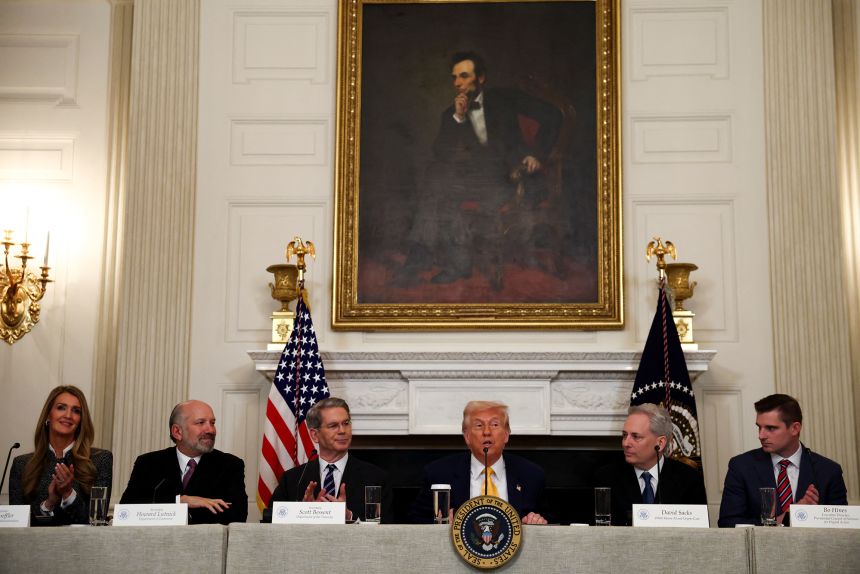
Shortly after reclaiming the Oval Office, Trump hosted a summit for industry leaders at the White House, organized an extravagant event for his memecoin investors, and publicly supported industry-driven legislative initiatives like the Clarity Act and the Genius Act focused on stablecoins. Concurrently, the SEC has ceased several enforcement actions against crypto entities and investors associated with the Trump family.
Yet, this has not succeeded in reviving bitcoin, a leading indicator in the industry, from its downturn. Following record highs, spurred by Trump’s promise to clarify regulations, the cryptocurrency has lost most of its previous gains over the past year.
Bitcoin dropped by 4% upon news of the Clarity Act, trading around $75,700. Meanwhile, Coinbase, a leading exchange, saw a 10% decline, and Circle, a stablecoin provider, fell by 11% amidst a wider market sell-off.
While some industry leaders expressed discontent over the voting outcome, numerous market players maintained an optimistic stance, asserting that this setback wouldn’t dismantle the $2.5 trillion sector that has stood strong for 16 years.
“Major banks and asset management firms are already devising digital asset infrastructure. This commitment won’t wane due to one vote,” stated David Mercer, CEO of trading platform LMAX Group. “Despite this setback, our focus remains on investing, building, and engaging positively with U.S. lawmakers, as we believe clarity in regulations is only a matter of time.”
CNN’s Matt Egan and Morgan Rimmer contributed to this article.