
Within the crypto world, “gas fees” are charges needed to finalize
actions or run smart contracts on blockchain platforms such as Ethereum,
Polygon, and Binance Smart Chain (BSC). This compensation is given to
network validators for the computing power they use to verify transactions
and maintain the network’s safety.
In this article, we’ll break down what gas fees are, why they’re
important, how to use them, the math behind them, and how they affect the
blockchain world. We’ll also show you the best tools to keep an eye on gas
prices and ways to lower those transaction costs.
Understanding Crypto Gas Fees
Source: Chainmyne
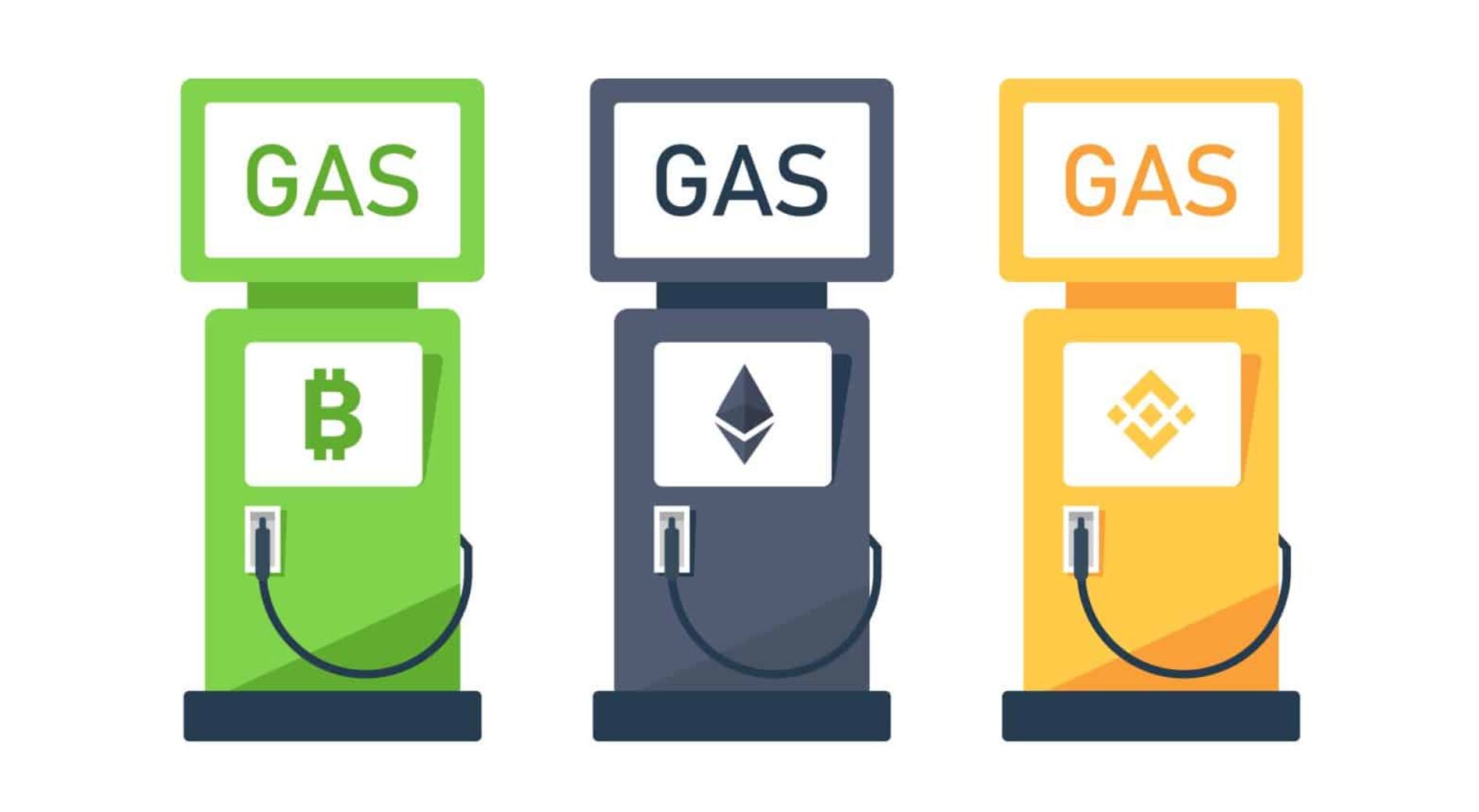
Blockchain transactions are often touted as free or more affordable than
traditional banking. However, these transactions always come with a cost.
From Bitcoin and Ethereum to Solana and Cardano, all blockchains charge
fees for actions on their networks.
Basic transactions include paying for goods or sending crypto to friends.
More complex examples are running smart contracts, engaging with
dApps, and creating new tokens.
Gas Fees vs. Transaction Fees: What’s the Difference?
Ethereum pioneered the use of “gas fees” to describe transaction costs on
blockchains.
Blockchains like
Ethereum,
Polygon, Arbitrum, and BSC, call these costs
gas fees. Bitcoin uses “mining fees,” while Solana and
Cardano refer to them as “network fees” or “transaction fees.”
So, costs on Ethereum and similar networks are gas fees,
while charges on other blockchains are mining or transaction
fees.
Transaction or gas costs differ among blockchains because each network has
different capabilities. Solana, for instance, can handle 65,000
transactions per second (TPS). Ethereum is slower, with an average
block time of about 12 seconds.
Also, these fees change frequently, depending on the transaction’s size and
complexity, as well as network demand. Key factors include the consensus
mechanism, operation type, network capacity, validator availability, and
demand for block space.
Why Crypto Networks Charge Gas Fees?
Verifying transactions requires computing power and resources like
powerful computers and electricity, all of which cost money and are paid
for by validators.
In networks like Ethereum, using proof-of-stake, validators must stake at
least 32 Ether (ETH) to participate in verifying transactions. The more
they stake, the greater their chances of being chosen to create new
blocks.
Without validators, networks are open to attacks where scammers could
steal assets or change records.
Therefore, validators are crucial and need to be paid to keep them
motivated to verify transactions and keep the network secure.
Blockchains charge gas fees to encourage validators and protect against
attacks by making it too expensive for malicious actors to control the
network.
How Do Gas Fees Work on Blockchain Networks?
Gas is a unit measuring the computing power needed for transactions on
blockchains. All on-chain actions, like using dApps, running smart
contracts, or deploying NFTs, require a gas fee.
Gas also motivates validators to provide resources, confirm transactions,
stake tokens, add blocks, and manage network security.
Furthermore, gas fees prevent spam attacks. Without them, malicious actors
could flood the network with transactions, causing it to crash.
Who Pays Gas Fees?
Users pay gas fees when they send transactions for verification, as well as
when they compete for block space to record those transactions.
Simple transactions, like online payments, use less energy and cost less.
Complex actions like launching
decentralized finance (DeFi) protocols
or creating NFTs use more gas and cost more.
Who Receives Gas Fees?
A decentralized network of computers, especially validator nodes, receives
a portion of the gas fees as a reward. Since these validators use energy
to confirm transactions, they need to be compensated.
In
proof-of-work (PoW)
blockchains like Ethereum Classic and Bitcoin, miners are paid gas fees to
solve complex math problems. In proof-of-stake (PoS) chains, validators who
stake their crypto to secure the network receive the gas fee.
Ethereum Gas Fees Explained
Gas is essential to Ethereum and covers the cost of transactions.
Ethereum gas fees
are priced in fractions of Ether (ETH), the network’s cryptocurrency, and
measured in Gwei (10-9 ETH). Validators are paid a portion of these fees
for staking ETH and verifying transactions.
Because Ethereum is the top platform for smart contract-enabled
non-fungible tokens (NFTs)
and dApps, it draws many users, leading to congestion and high demand. As a
result, Ethereum gas fees are high, even after the switch from PoW to
PoS.
How Gas Works on the Ethereum Virtual Machine?
The Ethereum system lets individuals, businesses, and developers explore
new uses for crypto and blockchains. It’s often called the Ethereum
Virtual Machine (EVM) because you can build and deploy applications on
it.
The EVM is like a cloud app running securely across all Ethereum nodes,
allowing other blockchain applications to operate within it. Crypto
assets, coins, NFTs, and dApps developed on EVM-compatible networks need
gas fees because the Ethereum blockchain is part of the EVM.
For example, the Pepe meme coin and Cryptopunks NFT collection were made
on Ethereum. AAVE, the crypto of the Aave protocol, is also Ethereum-based.
So, buying, selling, trading, or transferring AAVE, PEPE, or Cryptopunks
requires gas fees for using the Ethereum blockchain.
Gas Fee Denominations Explained: Gwei, Wei, and Ether
-
Wei:
The smallest unit of gas fees, named after Wei Dai, a computer scientist
known for his work in cryptography and crypto. -
Gwei:
Short for “gigawei,” it measures gas fees on platforms like Ethereum,
BNB Chain, and Polygon. “Giga” means a billion, so gwei is billions of
tiny fractions. One gwei equals 0.000000001 or 10-9 ETH. -
Ether:
Ether or ETH
is the main cryptocurrency of the Ethereum blockchain. As of June 2025, it’s
second only to Bitcoin in market value. One ETH equals 109 Gwei.
When Are ETH Gas Fees Lowest?
ETH gas fees are usually lower when there’s less activity on the Ethereum
blockchain. They often drop after midnight or in the early morning. Gas
prices also tend to be lower on weekends or holidays because of reduced
trading.
However, Ethereum gas fees can change quickly. Even during quiet times,
transactions might be slow due to limited network capacity.
Why Are Ethereum Gas Fees So High?
Ethereum gas fees were relatively low before 2020. But as adoption surged—driven
by DeFi, NFTs, and play-to-earn games—network congestion increased, causing fees
to spike, often exceeding $20–$30 per transaction.
Before the London Hard Fork in 2021, gas fees were fixed,
regardless of transaction complexity or network load. The upgrade introduced
a two-part model:
-
Base fee: Adjusts dynamically and is burned to reduce ETH
supply. -
Priority fee: An optional tip to incentivize validators for
faster processing.
In late 2021, Ethereum transitioned to Proof of Stake via
The Merge, reducing energy use by over 99%. Still, it didn’t
fully address gas fees spikes during peak activity.
Major fee spikes were triggered by:
-
ICO Boom (2017–2018): Massive influx of users overwhelmed
network capacity. -
DeFi Summer (2020–2022): Complex transactions like lending and
liquidity provision increased demand. -
NFT Craze (2021): Heavy activity on NFT marketplaces like
OpenSea clogged the network, pushing fees over $100.
While Ethereum continues evolving, scalability upgrades like sharding and
Layer 2 solutions are expected to reduce gas fees in the future.
How Are Gas Fees Calculated?
Source: Obiex
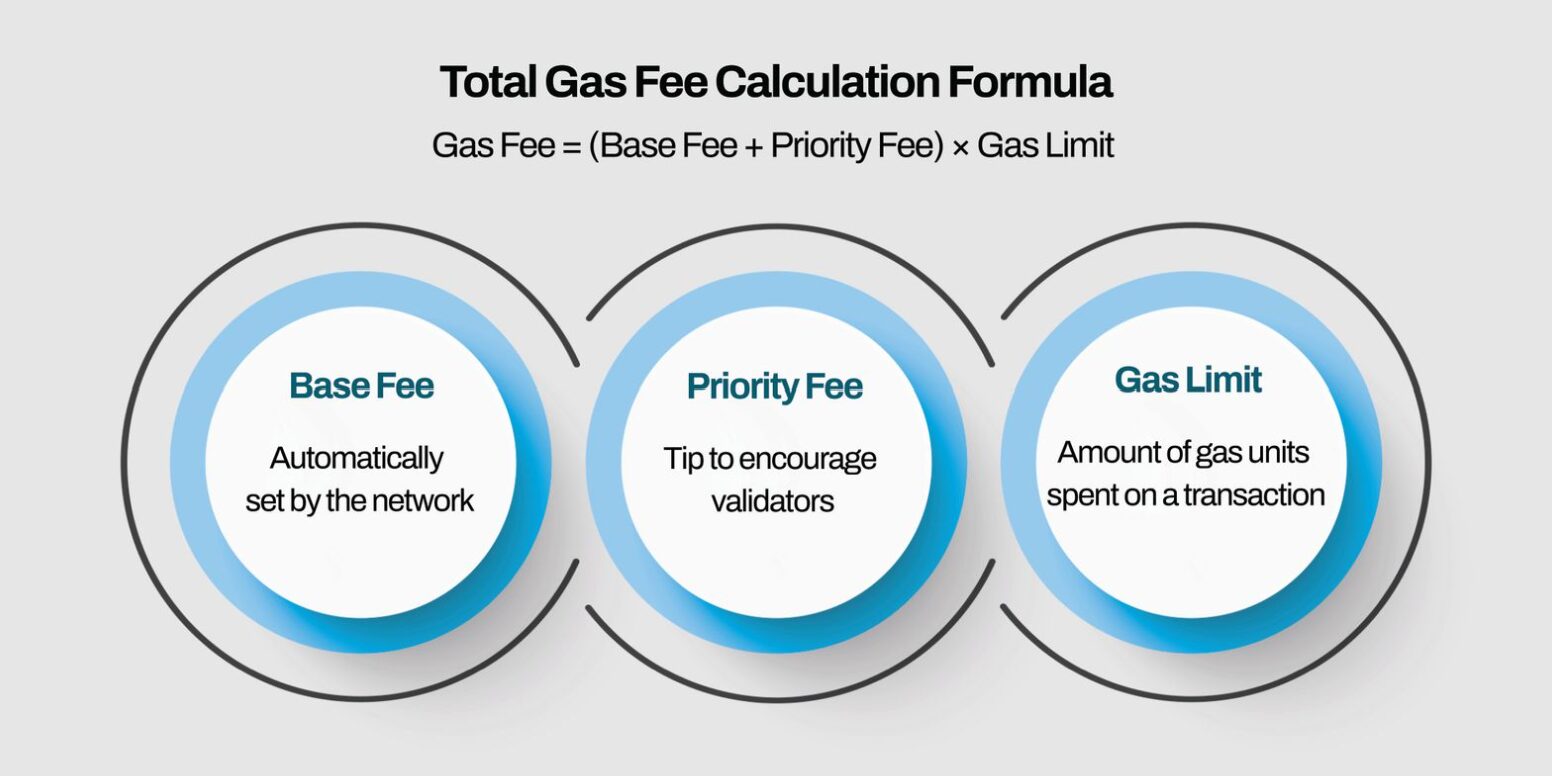
Gas fees were originally based on gas price per unit and gas limits. In
August 2021, Ethereum changed the formula to include base fees, total gas
units needed, and priority charges. Base fees are set by the network for a
transaction.
For example, imagine sending 5 ETH and estimating it needs 3 gas units.
The base charge is 15 gwei, and you tip 5 gwei. Gas fees are calculated as:
Units of gas required X (Base fee + priority fee). With these numbers, the
gas cost is 60 gwei [3 X (15 + 5)] or 0.00000006 ETH. So, you’d send
5.00000006 Ether.
What is a Gas Limit?
The gas limit is the highest price a user will pay for verifying
transactions or running token contracts. Measured in gas units, it limits
the maximum value a transaction can take from a user and prevents high fees
from contract bugs.
Gas limits define the most computational effort users will put into
transactions. If the limit is too low, the transaction will fail. This
restricts resource and energy use.
Total transaction costs = Gas limits X (Base fee + Priority fee).
For instance, if the base charge is 50 gwei and you tip 10 gwei for faster
processing, with a gas limit of 20,000, your transaction fee will be
120,000 [20,000 X (50 + 10)] gwei.
How to Use Gas in Ethereum Transactions?
Every action on Ethereum requires gas, and users pay for it with Ether
(ETH), the blockchain’s cryptocurrency.
Ethereum transactions involve three steps:
-
Setting a gas limit:
Users set the maximum computational effort they’ll spend before
processing. Complex transactions need higher limits. If limits are too
low, transactions fail. -
Choosing the gas price:
Based on network demand, users can set lower prices to save money or pay
higher rates to prioritize their transactions. -
Confirming and sending:
Once validators process transactions, the gas fees are deducted from user
wallets.
Wallets like Metamask and
Trust Wallet
offer live gas predictions and fee adjustments for convenience. The Ethereum
network also updates to improve transaction speeds. For instance, Ethereum
Improvement Proposal (EIP) 1559 uses automatic base fee adjustments based
on network congestion.
How to Set Gas Prices?
You decide how much gas to pay. While you can’t change base charges set by
the network, you can tip validators to speed up your transactions. Higher
priority fees make it more likely your transaction will be validated
quickly.
Ethereum wallets like Metamask let you adjust gas settings. You can set gas
limits and the maximum amount (Base + priority charges) you’ll pay for EVM
actions.
To set gas speeds, Metamask offers these options:
- Low – Pay less gas and wait longer for your transaction to process.
- Market – Set the gas to reflect the current market rates.
-
Aggressive – Pay more to get your transactions processed in the shortest
possible time.
Metamask also lets you customize other settings for a personalized
experience across blockchains, saving your preferred configurations.
Generally, setting very low gas prices or limits isn’t recommended, as
validators may ignore or drop your transaction, and you’ll lose the gas
spent. If you can’t set prices, use the dynamic estimates your wallet
suggests based on network load.
Ethereum vs. Bitcoin Gas Fees
| Bitcoin gas fees | Ethereum gas fees |
|
Bitcoin (BTC) is the largest cryptocurrency in market capitalization (over $2,141 billion as of June 16, 2025) |
Ethereum (ETH) is the second-largest cryptocurrency in market capitalization (over $318 billion as of June 16, 2025) |
| Uses the proof-of-work (PoW) consensus mechanism. | Uses the proof-of-stake (PoS) consensus system. |
| Transaction costs are called network or mining fees. | Transaction costs are called gas fees. |
|
Under PoW, mining adds new blocks to blockchains by solving complex math equations. |
Under PoS, validators verify and approve transactions based on the ETH they stake to secure the network. |
|
Mining fees are high due to specialized software, hardware, and electricity needed to solve the puzzles. |
Despite Ethereum reducing energy use by 99.95% after switching to PoS, it charges high gas fees due to network traffic, smart contract capabilities, and transaction verification requests. |
|
Those who solve the puzzles first get a percentage of the mining fees as a reward. |
Staking more ETH increases chances of being chosen as a validator, who then receives a portion of the gas fee for verifying transactions, securing the network, and covering resource costs. |
How to Reduce Gas Fees?
Each blockchain varies in speed, efficiency, affordability, popularity,
scalability, energy use, and security. Some congest quickly due to high
demand, while others process thousands of transactions per second (TPS) at
lower costs.
If you trade crypto regularly, choose an energy-efficient blockchain with
higher TPS and lower fees, like
Solana.
Also, monitor gas prices using tools like
Etherscan
before making transactions on blockchains like Ethereum. As gas fees rise
during peak times, trading in off-peak hours, such as early mornings or
holidays, helps minimize costs.
Consider layer-2 (L2) solutions like Arbitrum, Polygon, Starknet, and Base
to avoid high gas charges. These networks charge a fraction of Ethereum’s
gas fees because they process off-chain, reducing computational demands and
making transactions up to 99% cheaper. Invest in crypto indices, which
automatically rebalance, to lower transaction fees.
Best Tools to Track and Estimate Gas Fees
-
Blocknative gas estimator:
Provides real-time updates on all gas fee components. Monitor gas prices
for 40+ blockchains and analyze transaction cost trends. Download its
Chrome extension or use dashboard widgets for visualizations of pending
transactions. -
Crypto Wallets:
Many
blockchain wallets, such as Metamask or Trust Wallet, have built-in calculators to
auto-calculate gas fees in real time. -
Etherscan:
A blockchain explorer and analytics platform for Ethereum to monitor live
gas prices, view wallet balances, track transactions, and access on-chain
data. Useful for forecasting gas fees and verifying network
activity.
Conclusion
Gas fees incentivize validators to validate transactions or stake tokens,
ensuring network security, transparency, efficiency, and sustainability.
Gas is a vital component for smooth blockchain operation, especially on
Ethereum.
If you trade across blockchains, high gas charges can lower profits. Choose
low-cost blockchains or layer 2 solutions, transact during off-peak hours,
and predict gas price movements with tools like Etherscan to cut costs.
High gas fees can benefit you if you stake your crypto to support a
network. Staking more increases your chance of being a validator, earning
more as validators get a share of user transaction fees.
FAQs
How do I avoid gas fees on crypto?
Gas fees vary based on blockchain demand at transaction time. More
congestion raises gas charges. While you can’t entirely avoid gas fees,
trade during off-peak hours to minimize costs.
Tracking tools like Etherscan show daily gas prices to help you find the
best time to transact. Use L2 chains or dApps for transactions instead of
the Ethereum mainnet to reduce gas expenses.
What is the gas limit in Ethereum?
Gas limit is the maximum price for validating transactions on Ethereum.
Recently, Ethereum increased limits to
approximately 32 million units
for the first time since 2021.
Are gas fees refundable if the transaction fails?
Gas fees can’t be refunded because of blockchain architecture. Validators
on Ethereum receive these fees, so they’re non-refundable whether the
transaction succeeds or not.
Do all crypto transactions require gas?
No, only transactions on Ethereum and EVM-compatible chains need gas.
Blockchains like Bitcoin, Solana, and Polkadot also charge fees but follow
different structures.
How much does gas cost to ETH?
Gwei is a subunit of ETH; 1 gwei equals 0.000000001 or 10-9 ETH. If the
gas fee is 2,500,000 gwei, you’ll pay 0.0025 ETH.
Are gas prices predictable?