
Who is the leading buyer of gold, the world’s foremost safe haven asset?
Could it be China? Japan? Or perhaps another nation from the Gulf?
Surprisingly, the top purchaser of gold last year was a little-known cryptocurrency company named Tether.
Based in El Salvador, Tether operates USDT, the largest stablecoin in the world, which is a cryptocurrency backed by real currency assets.
This stablecoin acts as a bridge between volatile cryptocurrencies and the traditional financial system, functioning similarly to offshore dollars.
Last year, according to data from the European Central Bank, Tether acquired more gold than any other entity.
Its holdings are kept secure in a former nuclear bunker in Switzerland, akin to something from a James Bond film, as stated by Tether’s CEO.
Tether also claims to possess US government debt amounting to approximately $135 billion (£101 billion), surpassing the holdings of South Korea.
With a workforce of just 200, Tether is a powerful player, exhibiting traits similar to those of a private central bank.
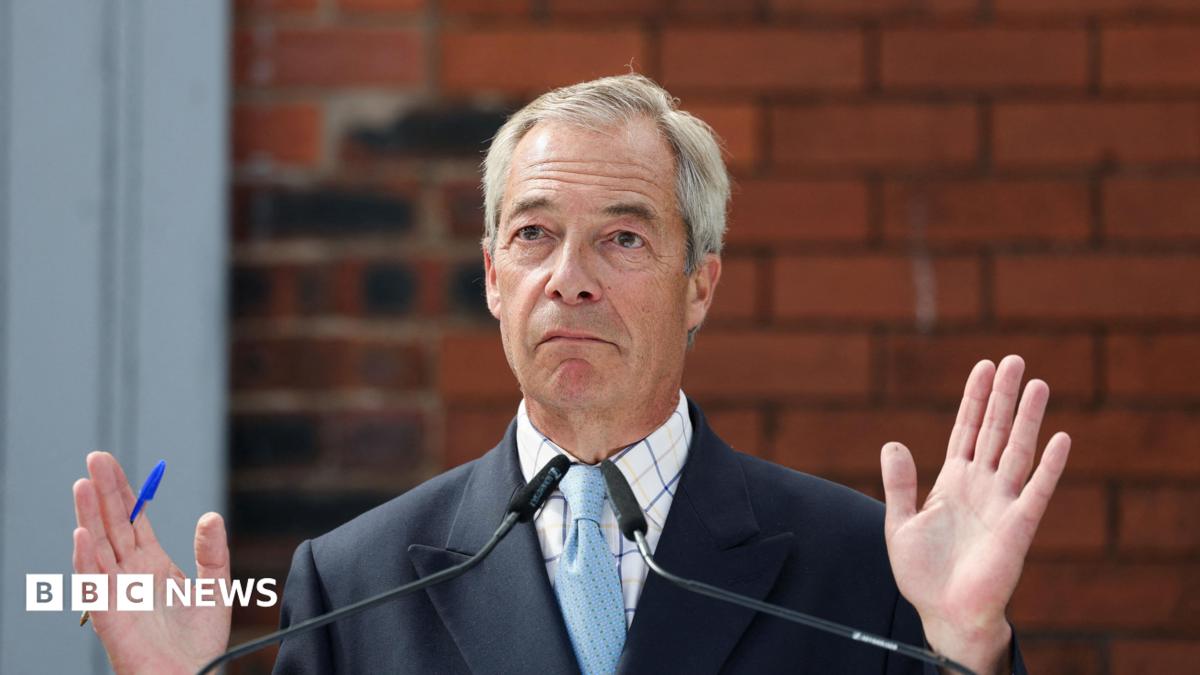
Furthermore, it is indirectly linked to funding discussions surrounding Nigel Farage’s Reform party.
One of Tether’s notable investors is Christopher Harborne.
In August, Harborne made headlines by donating £9 million to Farage’s Reform party, marking the largest donation in British political history. He followed this with additional contributions of £3 million in October and another £3 million in January, all of which were officially disclosed.
Moreover, Harborne had previously given £5 million personally to Farage, a gift which led to parliamentary investigations, before Farage stepped down from his position as an MP.
Both individuals have stated that these donations came with no strings attached, neither with respect to the personal gift nor the political contributions to the party.
Recently, Andrew Bailey, the Governor of the Bank of England, confirmed that Farage had discussed cryptocurrency regulations and central bank digital currencies with him in September.
Bailey noted that while Farage expressed strong views, these discussions did not alter the Bank’s policy, and he was adept at recognizing “lobbying” efforts.
Farage was particularly concerned about reports suggesting that the Bank of England might impose limits on personal holdings of potential sterling stablecoins ranging from £10,000 to £20,000.
The industry has been actively campaigning against such measures.
It’s important to note that while Farage did not mention Tether directly during his conversation with the governor, he did speak about the regulation of stablecoins more broadly.
This situation raises important questions about the specifics of their discussion and the potential implications for Tether and its stakeholders from any changes in Bank of England policies.
Farage has previously indicated a willingness to support the expansion of cryptocurrencies.
During a September appearance on LBC, he remarked, “Tether is on the verge of being valued at $500 billion.” He emphasized the importance of London becoming a global hub for cryptocurrency trading under responsible regulation.
Regarding the broader discussion, Farage’s team asserts that “his comments to Andrew Bailey align with his longstanding belief that the UK should become a leading center for regulated cryptocurrency innovation and investment.”
In fact, last May, when Reform was leading in opinion polls, the only draft legislation it had presented was the Cryptoassets and Digital Finance Bill.
This bill briefly mentioned stablecoins but did not address the Bank’s existing guidelines on personal holding limits.
I reviewed and downloaded the document.
Since then, it seems to have vanished from the Reform party’s website and is no longer accessible online.