
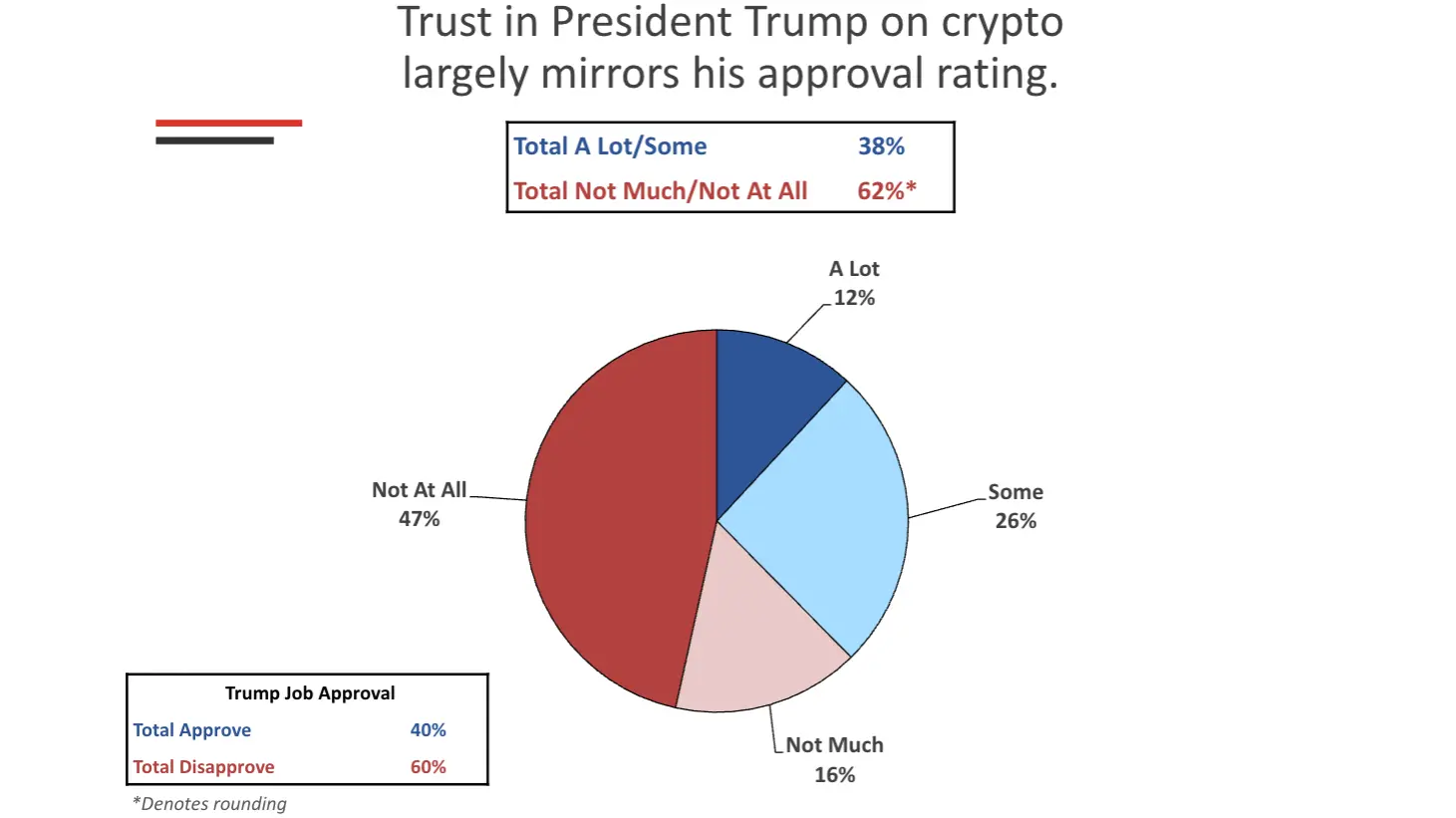
A recent survey commissioned by CoinDesk reveals that a significant number of American voters are hesitant about President Donald Trump’s oversight of the cryptocurrency sector, with 62% expressing distrust in his administration’s approach to this emerging industry.
Following the previous administration’s strict regulation of cryptocurrencies, Trump’s aspiration to position the U.S. as the “crypto capital of the world” has rekindled optimism among industry stakeholders. The president’s administration has taken measures to establish a more welcoming regulatory framework, appointing a notable crypto advocate, issuing executive orders to outline an industry agenda, selecting supportive regulators, and pushing legislation aimed at creating the first major comprehensive U.S. crypto law.
However, the poll indicates a decline in Trump’s overall political favorability. His approval rating has dipped to 40%, showing that his wider appeal among American voters has diminished.
This article is part of a CoinDesk series exploring voter perspectives leading up to the 2026 midterm elections.
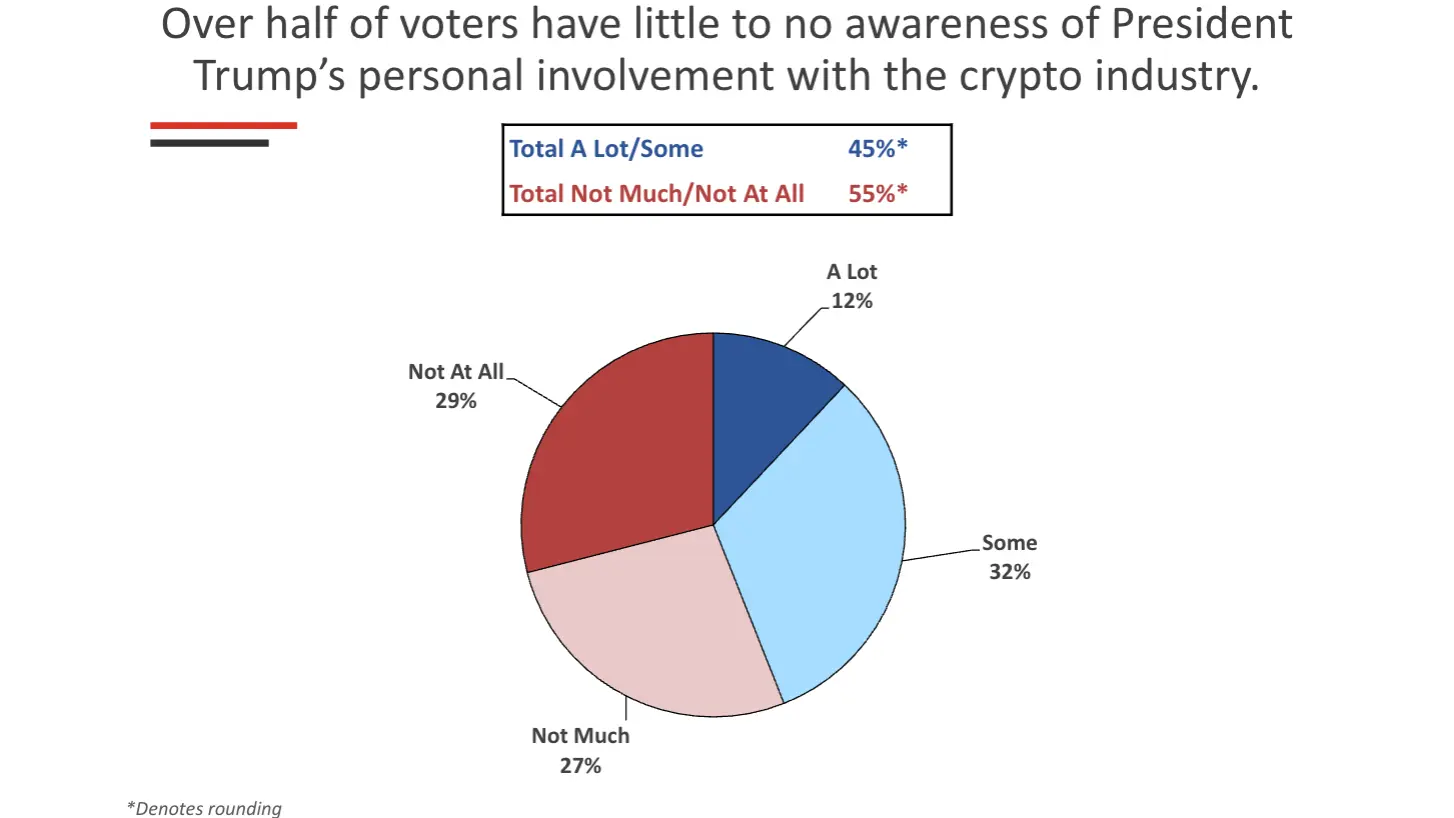
A notable 45% of those surveyed recognize that Trump and his family hold significant personal investments in the crypto sphere, including interests in World Liberty Financial and other digital assets. The poll also found that 73% of respondents disapprove of senior government officials engaging in personal business transactions within the cryptocurrency sector, though they did not specify any individuals.
While the Republican voters show greater tolerance towards such connections, a notable 59% of them also find these personal ties unacceptable.
Yet, many voters remain unaware of the full extent of Trump’s financial engagements in crypto, as only 17% know about his and his sons’ involvement in establishing World Liberty. This firm has attracted particular scrutiny due to various potential conflicts of interest.
The online survey conducted last week balanced respondents between those who voted for Trump and those who supported Democrat Kamala Harris in the last presidential election. This balance suggests a notable shift in perception among some of Trump’s voters regarding his capability to manage crypto regulation.
While the White House has not commented on the survey, a spokesperson for World Liberty acknowledged the findings, emphasizing that Trump’s commitment to making the U.S. the foremost hub for cryptocurrency is fully backed by the company.
“The president has consistently worked to ensure that one of the century’s most significant technological advancements is nurtured within the U.S.,” stated the World Liberty spokesperson.
Beyond opinions on Trump and the engagement of government officials in crypto, the survey of 1,000 registered voters conducted by Public Opinion Strategies explored public attitudes towards cryptocurrencies and their expectations for the upcoming elections. The results indicated a pervasive sense of distrust—or at best, uncertainty—surrounding cryptocurrencies and their integration into economic and political frameworks. The survey carries a “credibility interval” of approximately 3.5%, highlighting the statistical variance inherent in the results.
The relationship between the cryptocurrency sector and the president is nuanced; industry leaders appreciate his regulatory appointments and policies but must navigate the complications arising from his own financial interests, which pose challenges when advocating for crypto legislation. The crypto community aims to secure new legislation that clearly defines U.S. oversight of the sector, but Trump’s political rivals argue that such legislation serves to advance his personal interests. The ongoing initiative, known as the Digital Asset Market Clarity Act, has received significant backing from Trump’s administration; however, his connections to the crypto space may impede progress.
The Clarity Act has already passed in the U.S. House of Representatives and is awaiting further deliberation in the Senate. A key point of contention among lawmakers is a Democratic request to prevent senior officials from engaging in personal cryptocurrency businesses, reflecting the sentiments expressed in CoinDesk’s poll. This provision appears aimed directly at Trump, and bipartisan negotiations on the bill’s language have been protracted over several months.
Previously, officials from the White House indicated that they would oppose any legislation that targets the president or his family. It remains uncertain how the final version will achieve a balance between ensuring Trump isn’t impacted while also satisfying Democratic demands to eliminate potential government conflicts of interest.
To secure the necessary support for Senate approval, the bill will require substantial backing from Democratic senators, typically needing 60 votes.
Last weekend, President Trump addressed an event attended by several hundred key investors of his self-branded memecoin $TRUMP. In his remarks, he asserted that the U.S. is a frontrunner in the crypto arena and emphasized the mainstream acceptance of cryptocurrencies.
Contrary to Trump’s assertions, the CoinDesk survey indicates that the cryptocurrency industry remains a niche market for most Americans. Many voters do not view the president as a trustworthy figure in securing their interests within the sector.
Data from this survey will be made public by CoinDesk on Tuesday during Consensus Miami.