

A significant shift in crypto asset custody may be on the horizon for Wall Street. The SEC is advocating for more advantageous regulations pertaining to digital currencies, financial institutions, advisors, and brokers. Simplifying custody processes could eliminate a major obstacle to institutional investment in Bitcoin.
Contents
Changes in SEC Crypto Custody: Updates from August 2026
Why the SEC Has Reopened the Discussion on Crypto Custody
The SEC is looking to establish regulations that align more closely with digital assets and blockchain settlement rather than traditional custodianship and securities.
New Custody Proposal Under Review at the White House
As of August 2026, the new custody initiative is now part of the White House regulatory review process, paving the way for a potentially formal proposal from the SEC on crypto custody.
Contrasting the 2026 Initiative with the Gensler-Era Regulations
The prior approach included stringent regulations that limited options for crypto custody. The 2026 initiative offers a more flexible framework that reflects today’s institutional demands.
Understanding Crypto Custody and Its Importance to the SEC
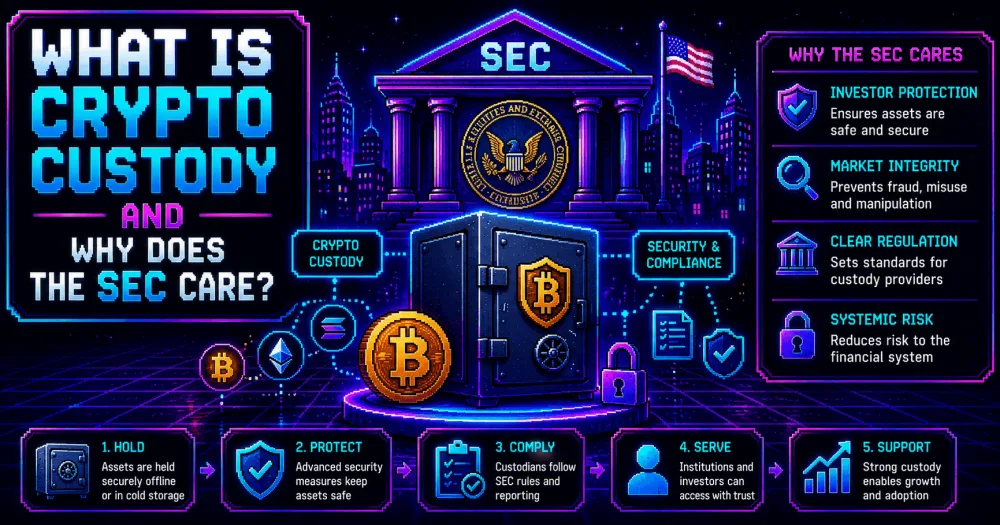
The Process of Crypto Custody for Institutional Investors
Institutional investors usually engage specialized third-party custodians instead of managing private keys on their own. These custodians protect assets, facilitate transactions, and assist with compliance reporting.
Who Holds the Private Keys?
Private keys are critical for transferring Bitcoin and other digital currencies. Custodians ensure the security of these keys using methods like cold storage, multi-signature, or multi-party computation.
Distinguishing Between Qualified Custodians and Crypto-Native Custody Providers
Qualified custodians generally include banks and brokerage firms. In contrast, crypto-native custody providers tend to have more specialized knowledge and technology pertaining to custody services.
Why Custody Regulations Are Essential for Investor Safety
Custody regulations play a pivotal role in preventing loss, theft, or potential insolvency. Proper segregation of client assets also protects against the collapse of any specific custodian.
Transitioning from SAB 121 to SAB 122: Alleviating Major Crypto Custody Challenges
The Impact of SAB 121 on Bitcoin Custody Costs for Banks
SAB 121 imposed extensive accounting challenges on banks and entities holding crypto assets, resulting in significant balance sheet costs and capital requirements for custodians.
SAB 122: A Step Towards Re-Engaging Traditional Financial Institutions
SAB 122 revised the previous approach established by SAB 121, removing crucial barriers that previously hindered banks and traditional finance from engaging in crypto custody.
Are Banks on the Verge of Becoming Significant Bitcoin Custodians?
As banks already service institutional clients and have established compliance infrastructures, more accommodating SEC rules could make Bitcoin custodianship economically viable for them.
The SEC’s Updated Crypto Custody Regulations May Welcome Wall Street
The Necessity of Regulated Crypto Custody for Asset Managers
Asset managers require secure assets, comprehensive audits, regulatory accountability, and thorough reporting. Regulated custody is crucial to gain internal approvals for significant investment ventures.
How Streamlined Custody Could Enhance Institutional Bitcoin Adoption
Reducing custody complexities may mitigate investment committee fears. A broader array of Bitcoin custodians might also lessen concentration risk and lead to reduced fees.
Related: Senate Crypto Legislation Faces Pushback: The Battle Over the CLARITY Act
The Collaborative Role of Banks, Broker-Dealers, and Asset Managers
Banks can secure assets, brokers can connect custody with trading, and managers can create institutional-grade products. Together, they can establish a robust infrastructure for the institutional market.
Will More Institutions Transition Bitcoin from Exchanges to Long-Term Custody Options?
Institutional investors often prefer segregated custody over perpetual exchange exposure, and a wider range of options will stimulate more Bitcoin allocations into institutional custody.
Understanding SEC Rule 15c3-3 and Its Implications for Crypto Custody
How the Customer Protection Rule Relates to Crypto Asset Securities
Rule 15c3-3 demands the safeguarding of customer securities. Consequently, crypto asset securities are subject to similar protective obligations.
Understanding the Distinction Between Crypto Asset Securities and Bitcoin
Typically, Bitcoin is not governed by securities-specific custody rules, whereas crypto asset securities face additional regulatory scrutiny.
The Changes Brought by the SEC’s 2025 Guidance for Broker-Dealers
The SEC offered enhanced practical guidelines regarding the management of crypto asset securities, marking a shift from the previous model intended for special-purpose broker-dealers.
H3: Outstanding Regulatory Issues for Crypto Broker-Dealers
Wallet management, insolvency protocols, record-keeping, and integration of diverse crypto business lines remain significant concerns. Future SEC custody regulations should address these challenges.
| Area | Previous Condition | Projected Changes | Expected Effects on Bitcoin |
|---|---|---|---|
| SEC Crypto Custody Regulations | Ambiguous and restrictive custody framework | Wider and more adaptable rules | Enhanced access for institutions |
| SAB 121 / SAB 122 | Significant accounting burden for banks | Reduced balance-sheet pressure | Increased likelihood of banks offering Bitcoin custody |
| Qualified Custodians | Limited viable options | Increased competition from banks and crypto-native firms | Lower costs and decreased concentration risk |
| Bitcoin ETF Custody | High reliance on specialized crypto custodians | Traditional banks could become involved | Improved ETF infrastructure |
| Rule 15c3-3 for Crypto | Complicated regulations for crypto asset securities | Clarified broker-dealer custody standards | Better market access for institutions |
| Institutional Bitcoin Custody | Operational and regulatory hurdles | More regulated custody choices | Facilitated larger Bitcoin investments |
| Tokenized Securities | Insufficient institutional support | Custody rules could aid tokenized assets | Wider adoption of digital assets |
| Main Concern | Regulatory unpredictability | Possible changes or legal challenges to the rules | The bullish impact remains uncertain |
Why the SEC’s Enhanced Approach May Favor Crypto

Shifting Away from the Special Purpose Broker-Dealer Model
The previous special-purpose model restricted both crypto securities and broader adoption. A more adaptable framework could facilitate greater institutional participation.
Challenges of the Old Framework
Compliance expenses hindered the commercial feasibility of the special purpose model. Many brokers found it unyielding and unprofitable.
A Modernized Approach for Qualified Custodians
A contemporary approach to qualified custodians could introduce various custody options. Different banks, brokers, and crypto-centric firms could vie for institutional clients.
The Balance Between Self-Custody, Third-Party Custody, and Institutional Security
Although self-custody offers greater control, institutional investors might prefer third-party solutions. Hybrid models could serve as an alternative for these investors.
How Bitcoin ETFs Have Altered the Custody Landscape
The Necessity for Institutional-Grade Custody in Spot Bitcoin ETFs
Spot Bitcoin ETFs involve substantial Bitcoin holdings on behalf of investors, necessitating enhanced security, verification, and transaction management.
ETF Inflows Creating Increased Demand for Bitcoin Custody Services
Each significant ETF influx translates to a higher demand for institutional custody of Bitcoin. The growing asset size will likely drive the necessity for custodial services.
From Coinbase to Traditional Banks: The Future of Institutional Bitcoin Control
While crypto-native companies currently lead in institutional custody, traditional banks have the potential to disrupt the market with established relationships and distribution networks.
Could Reducing Custody Barriers Spark a New Wave of ETF Demand?
Lowering the barriers to competition may lead to reduced fees and enhanced ETF economics. Established banking connections and simpler approvals could also encourage quicker adoption.
The Trillion-Dollar Potential Within Crypto Custody
Estimating the Institutional Capital Available for Crypto
With trillions of dollars in global institutional capital, even modest Bitcoin investments could signify substantial demand.
Read more: Delay in Congress’ Crypto Bill: CLARITY Act Vote Postponed to September as 2026 Prospects Dwindle
Custody as a Bottleneck for Trillions in Asset Investments
Large institutional players must adhere to fiduciary and compliance liabilities. Existing custody infrastructure weaknesses can form barriers to such investments.
Tokenized Securities Expanding the Market Beyond Bitcoin
Custody frameworks are equally essential for tokenized bonds, funds, and equities. This emerging demand broadens the institutional custody landscape beyond Bitcoin.
The Interplay of Crypto, ETFs, and Traditional Securities
Bitcoin ETFs signify a convergence between cryptocurrencies and traditional finance. Tokenization could further promote closer integration with established capital markets.
Comparing SEC Crypto Custody and the Clarity Act: Their Impacts on Bitcoin
The Advantage of Regulatory Clarity
Regulatory certainty is sought after by institutions as it mitigates risk and reduces operational costs. Clear guidelines also foster capital attraction and enable product development.
Consequences of Congressional Delays in Comprehensive Crypto Legislation
Agencies can operate under existing regulations while waiting for legislative advancements. Thus, decisions made by the SEC and CFTC can shape the market landscape even prior to congressional intervention.
The Influence of SEC and CFTC Regulations Prior to Congressional Action
Both regulatory agencies hold rulemaking power that can affect custody, trading, and disclosure practices. Market businesses often adapt to these regulatory changes before any congressional resolution.
Will Fragmented Regulation Hinder Institutional Engagement?
Conflicting requirements from the SEC, CFTC, financial institutions, and state regulations may elevate costs and create ambiguity concerning compliance methods.
Identifying Stakeholders Who Stand to Gain from SEC’s Crypto Custody Reforms
Coinbase and Other Crypto-Centric Custodians
Crypto-native custodians may see a rise in institutional demand but will also contend with increased competition from traditional banks and other stakeholders.
Traditional Banks and Established Custody Leaders
Banks already manage vast traditional asset holdings. More lenient crypto regulations could enable them to diversify into Bitcoin and other digital assets.
Entities Issuing Bitcoin ETFs and Asset Management Firms
A broader range of custody options can diminish concentration risks and strengthen their negotiating leverage. Asset managers may also discover enhanced flexibility in launching new products.
Institutional Investors and Family Offices
Both institutional capital and family offices are likely to benefit from safer, more reliable custody alternatives for their Bitcoin holdings.
Platforms for Tokenization and Digital Securities Markets
For institutions, secure custody is necessary alongside issuance, trading, and settlement processes. Improved custody guidelines could foster the wider adoption of digital securities.
Could Enhanced Crypto Custody Lead to a Bitcoin Surge?
The Flywheel Effect of Institutional Adoption
An increase in custody options can attract additional capital, prompting product innovation and thereby boosting Bitcoin demand.
H3: More Custody Solutions → Increased Capital Flow → Greater Bitcoin Demand
Diverse custody providers can lessen institutional worries regarding counterparty risk. Reduced friction may also facilitate larger Bitcoin investments and stimulate product innovation.
Understanding Regulatory Risks as a Hidden Factor in Bitcoin Valuation
Many institutions refrain from investing in Bitcoin due to uncertainties regarding regulatory risks. Mitigated concerns can enhance the asset’s appeal to investment committees.
Conditions for Initiating a New Institutional Wave
The SEC must establish effective custody regulations; banks require favorable economics, and sustained ETF interest is critical. A stable market environment can bolster these conditions.
The Risks: Why SEC Custody Reforms Don’t Ensure Positive Outcomes
Custody Reforms Won’t Automatically Generate Bitcoin Demand
Enhancements in infrastructure don’t compel institutions to buy Bitcoin; they must also consider factors like valuation, liquidity, and market stability.
Persistent Cybersecurity and Private-Key Vulnerabilities
Risks such as hacking, insider theft, and software malfunctions can still lead to potential losses. Regulations can’t eliminate these technical and human risks.
Potential Bank Capital Requirements as an Adoption Barrier
SEC reforms won’t eradicate every challenge faced by banks. Capital requirements and other conditions could still influence their willingness to manage Bitcoin custody.
Future Regulatory Changes May be Revisited
Subsequent administrations and legal challenges may change existing crypto regulations. Institutions will continue to seek stable, reliable rules over time.
The Ongoing Significance of Congressional Action
Legislation can clarify regulatory mandates and reduce overlapping rules, providing more stable frameworks than agency-only regulations.
SEC Crypto Custody Outlook: Key Points for Investors
White House and OIRA Regulatory Review
The White House’s review marks a critical juncture in custody regulations. Changes can be suggested before the SEC introduces any finalized rules.
The SEC’s Formal Rule Proposal
The specific text from the SEC will be vital in determining custodian qualifications and associated safeguards.
Community Feedback and Industry Reactions
Banks, advisors, crypto companies, and investors will meticulously scrutinize the proposal. Their input will influence the final custody structure.
Final Custody Regulations and Their Implementation Timeline
The completed rules may diverge significantly from initial proposals. Firms will also require time to modify and adopt new processes.
The Next Driving Force Behind Institutional Bitcoin Interest
New banking custody arrangements, continued ETF inflows, and reduced institutional friction may converge to support a fresh Bitcoin boom.
FAQ
What Is SEC Crypto Custody?
SEC crypto custody pertains to the regulatory guidelines for the safekeeping of crypto assets. This framework emphasizes the segregation, management, and responsibility aspects of asset custody under SEC oversight.
What Are the SEC Crypto Custody Regulations?
The SEC’s crypto custody regulations consist of guidelines for advisors, brokers, and qualified custodians regarding custody practices. These rules could significantly affect access to the institutional Bitcoin market.
What Modifications Did SAB 122 Introduce?
The primary change associated with SEC custody rules due to SAB 122 was the removal of the burdensome accounting rules from SAB 121, creating a more favorable environment for banks regarding custody.
Does Rule 15c3-3 Apply to Bitcoin?
Experts assert that Rule 15c3-3 does not pertain to Bitcoin, as it specifically addresses custody arrangements of securities held by broker-dealers, making it inapplicable to these crypto assets.
Could SEC Crypto Custody Reforms Influence Bitcoin Prices Positively?
While there is no guaranteed correlation, the custody changes create a more inviting atmosphere for institutional participation in Bitcoin. However, the law alone cannot guarantee price increases.