
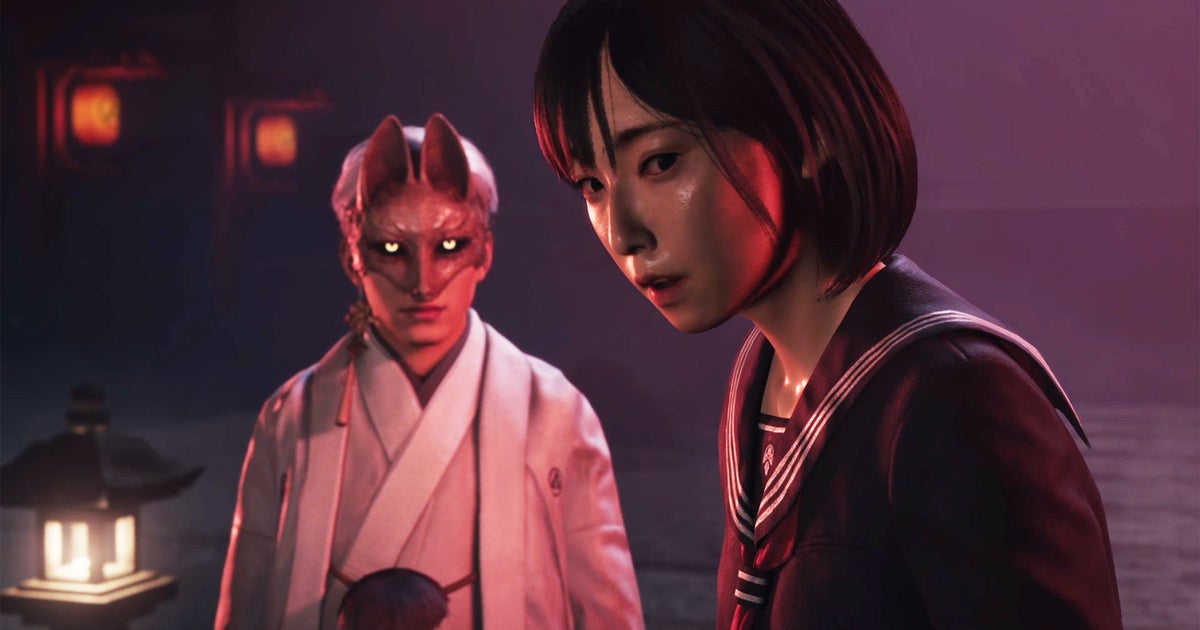
Could there be more to the Silent Hill universe? After some releases, doubts may have crept in. The recent teaser, The Short Message, missed the mark, and the Silent Hill 2 remake felt unnecessary to some. Yet, a completely *new*, substantial entry promises a resurgence. Silent Hill f might just silence the critics.
The game boldly introduces 1960s Japan, allowing it to delve into thought-provoking subjects beyond the typical themes of guilt and loss. Specifically, it touches upon gender dynamics. This was initially a concern, but after playing, those concerns have been eased. The game’s commentary is valuable and invites contemplation, even with a few reservations. It’s a surprising twist for those skeptical about the Silent Hill revival.
Silent Hill f introduces us to Shimizu Hinako, a teenage girl who escapes a fight with her father, a raging alcoholic, to meet up with her friends, including her close male companion, Shu (his gender is relevant). As the familiar fog descends, one of her friends transforms into flowers, a terrifying monster appears, and the remaining group is drawn into a bizarre, altered version of their town. It’s the Silent Hill formula, but in a new setting.
The game surprisingly captures the essence of a “Silent Hill” experience. Hinako is quickly thrown into chaos with minimal background information, confronting suppressed trauma. Much like Silent Hill 2, where James’s reasons for being in town are initially unclear, Silent Hill f effectively builds suspense around Hinako’s identity and predicament.
The true accomplishment lies in evoking genuine terror. The monsters in SHf are repulsive and menacing. Their unpredictable movements make them difficult to evade, and the larger ones exude an oppressive sense of danger. The melee combat system, influenced by Souls-like games, adds an intriguing element, though it may be polarizing.
While others might have reservations based on previous versions, the combat feels polished. Missed attacks feel like genuine player errors, and weapon impacts are satisfyingly weighty. The game strikes a balance between player power and enemy challenge, creating an engaging action-horror experience.
The game has heightened action intensity. A stamina gauge regulates weapon use and dodging. Perfect dodges restore stamina and slow time. Combined with a parry-like mechanic for counterattacks, the combat is generally enjoyable but not quintessentially “Silent Hill.”
This isn’t a radical shift like Resident Evil 4. Hinako doesn’t perform acrobatic maneuvers or parry chainsaws. The combat is often enjoyable. However, it might feel somewhat out of place in the Silent Hill universe, especially considering Hinako’s lack of formal combat training. One could argue that Hinako is a teenage girl with lots of anger, who deserves an outlet for it.
Hinako’s anger is explored in Silent Hill f with both obvious and subtle layers, examining Hinako herself and the reasons for her father’s behavior. Silent Hill f ultimately revolves around gender expectations, rather than dodging monsters.
There are two other crucial aspects of Hinako’s story. She has an older sister, Junko, who lost her youthful spark after marriage, becoming the favorite daughter. Hinako is considered “masculine” by her circle. She’s not interested in traditionally feminine things, preferring to play Space Wars with Shu.
While the modern era has made progress in gender expression, the 1960s were significantly more rigid. Silent Hill f addresses these constraints. Hinako faces pressure to conform and marry, like her sister, which she resists. Shu is just a friend.
These expectations follow her even into the mystical realm, a place deeply rooted in tradition with torii gates, lanterns, Zen gardens, and Shinto temples. While the game’s depiction of Japan can border on stereotypical, it serves a purpose. Hinako’s trials mirror the pressure to conform, which may resonate with gender non-conforming individuals.
I won’t reveal story details, as Silent Hill thrives on personal interpretation. Ryukishi07’s narrative approach is best experienced firsthand. The game explores self-discovery amid societal pressures. Even Hinako’s mother, who one would expect to be supportive, adds a layer of complexity. It’s a powerful and unique experience for Silent Hill.
My feelings about Silent Hill f are complex. I initially resisted it due to franchise fatigue. Yet, it has captivated my thoughts, confronting me with complex emotions and realizations. Its intrigue outweighs any simple good/bad assessment.
Silent Hill still has something to offer. The game’s compelling nature sparks a desire to discuss it extensively. I’m eager to share the experience with fellow Silent Hill enthusiasts and newcomers alike.
Art that stimulates dialogue is invaluable. Silent Hill f has challenged my assumptions. While its combat, setting, or themes may not resonate with everyone, it ignites exciting conversations, proving that Silent Hill can still surprise and engage.