
In brief
- A judge, Pamela Chen, has given PleasrDAO the go-ahead to pursue their claim that trade secrets were violated, noting that the album’s intrinsic worth hinges on its exclusivity.
- However, she dismissed related claims involving forfeiture, interference, and financial gain obtained unjustly, citing legal precedence.
- Previously, in January, Shkreli had contended that the members of the Wu-Tang Clan needed to be formally included as parties involved in the legal proceedings.
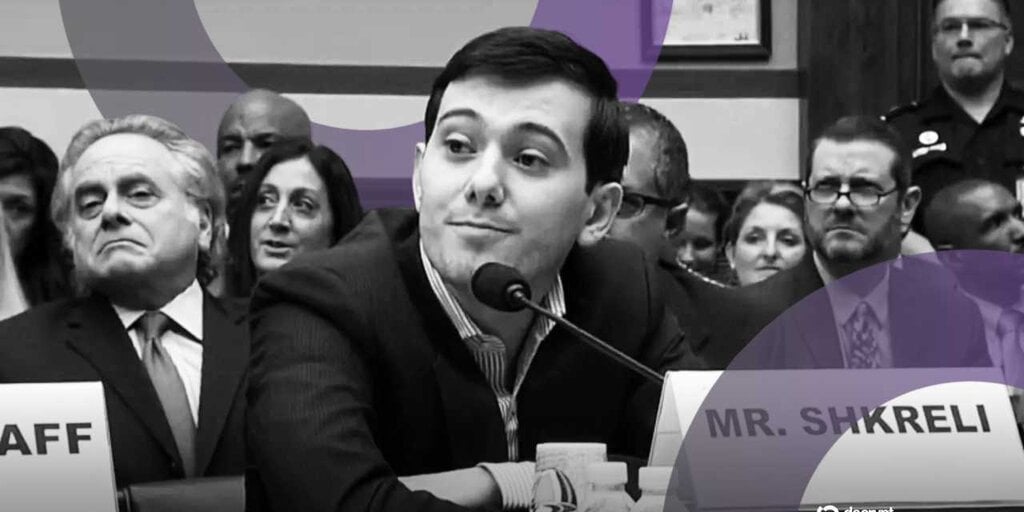
“Pharma Bro” Martin Shkreli faces a lawsuit over allegations he illegally copied and distributed “Once Upon a Time in Shaolin,” the singular album by the Wu-Tang Clan. A New York federal judge’s recent decision offers some ground to the digital art collective, PleasrDAO, who currently own the unique musical piece.
District Judge Pamela Chen has determined that PleasrDAO can proceed with claims against the former pharmaceuticals exec, focusing on the misappropriation of trade secrets and recovering property. Her 32-page ruling dismissed other allegations citing potential issues regarding copyright law and its implications in the case.
The core of PleasrDAO’s legal action is that Shkreli maintained unauthorized digital copies of the album even after its forfeiture in 2018. This forfeiture was intended to cover part of a $7.36 million penalty stemming from his securities fraud conviction. Furthermore, it’s alleged he played tracks from the album for online audiences and even offered copies to individuals on social media.
PleasrDAO secured a temporary restraining order in June of the previous year. This order explicitly prohibited Shkreli from any usage, sharing, or online streaming of the album’s contents.
Judge Chen’s recent statement emphasizes that Shkreli “unlawfully retained and distributed copies” of the musical work. This ruling now opens the door for PleasrDAO to pursue financial compensation, recover any profits Shkreli may have gained, and demand the return of any remaining copies of the album in Shkreli’s possession.
Ishita Sharma, a managing partner at Fathom Legal, shared with Decrypt that the court’s decision is “remarkable” due to its consideration of an unreleased hip-hop album as a potential trade secret. She noted that this protection is generally applied to things like recipes or internal company expertise.
Sharma suggested the ruling implies that cultural assets defined by “secrecy and exclusivity” are eligible for trade-secret protection, while also clarifying claims that might overlap with copyright protections. She also reminded DAOs that they are operating within “uncharted, but very real legal territory.”
Wu-Tang Clan created the 31-track album over a period between 2007 and 2013, viewing it as “a protest against what they perceived as the diminishing value of music in the digital age.” They produced only a single physical copy, alongside a 174-page manuscript containing lyrics and production notes, bound in leather.
The original purchase agreement made in 2015 gave Shkreli 50% of the copyrights, but placed the album under usage restrictions for a period of 88 years.
After Shkreli’s conviction, the court demanded he surrender the album, preventing him from “taking any action that would have the effect of diminishing, damaging and/or dissipating” the asset, and restricting him from actions that could “affect the availability, marketability or value” of the album.
The U.S. Marshals Service sold the album in July 2021 for a sum exceeding $2 million. PleasrDAO then acquired the physical album, obtaining exclusive rights to its playback. In January 2024, they further solidified their ownership by purchasing the album’s copyrights for approximately $750,000.
PleasrDAO initiated their lawsuit in June 2024, claiming Shkreli admitted to copying the album and playing it for his followers during livestream events. The lawsuit alleges that Shkreli responded with “LOL I have the mp3s you moron” when a PleasrDAO member posted a photo of the album on X.
Shkreli submitted a request for the case’s dismissal in January. He argued that Wu-Tang members Robert “RZA” Diggs and producer Tarik “Cilvaringz” Azzougarh should be required to join the proceedings because they “maintain a property interest in the copyrights.”
Daily Debrief Newsletter
Start every day with the top news stories right now, plus original features, a podcast, videos and more.