
Sure! Here’s a rewritten version of the article:
WASHINGTON (AP) — This week’s artificial intelligence and cryptocurrency sectors made substantial expenditures with frequent failures during the Illinois primaries, marking a challenging moment for tech companies eager to influence the midterm elections and assert their foothold in U.S. politics.
These companies inundated the Democratic primaries in the state with millions, promoting candidates they believed would adopt a lenient stance on regulations concerning technologies that are fundamentally altering employment and financial management.
Through super PACs capable of limitless spending, they launched television ads and distributed campaign materials that seldom mentioned their industries directly. Instead, the focus was predominantly on pledges to oppose President Donald Trump’s administration and advocate for progressive policies, mirroring tactics used by groups like the American Israel Public Affairs Committee.
However, this subtle approach did not prevent the involvement of the AI and cryptocurrency industries from becoming a focal point in Illinois’ lively primaries, where an uncommon number of open seats stirred competitive contests.
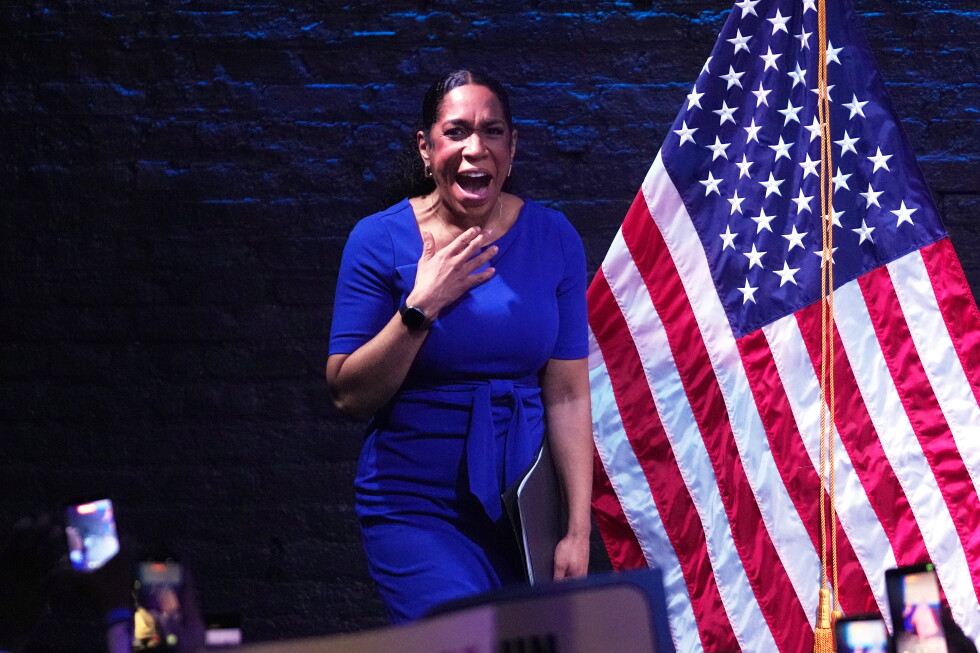
The crypto-supported political action committee Fairshake invested over $10 million against Illinois Lt. Gov. Juliana Stratton, who ultimately secured the Democratic nomination to take over for Sen. Dick Durbin, D-Ill.
Fairshake, along with Protect Progress, another crypto-affiliated entity, spent millions backing Stratton’s main challengers, U.S. Reps. Raja Krishnamoorthi and Robin Kelly, according to filings with the Federal Election Commission.
In the Illinois U.S. House primaries, expenditures by tech-backed organizations yielded varied outcomes.
State Rep. La Shawn Ford, who has endorsed state legislation regulating the AI and cryptocurrency sectors, won the Democratic primary to replace U.S. Rep. Danny Davis. Fairshake dedicated nearly $2.5 million to oppose Ford, who faced at least four other political groups either backing his opponents or campaigning against him.
Simultaneously, Cook County Commissioner Donna Miller triumphed in the Democratic primary to succeed Kelly after Fairshake spent over $800,000 against state Sen. Robert Peters, yet another progressive advocating regulatory measures for the cryptocurrency sector.
This race also experienced conflicting investments from AI-backers.
The AI-supported Think Big PAC contributed over $1 million to elevate Jesse Jackson Jr.’s candidacy, a former congressman who pleaded guilty in a 2013 fraud case. However, Jobs and Democracy PAC, another AI-backed organization, also allocated approximately $1 million in negative ads against Jackson during the campaign.
Think Big operates under Leading the Future, a political entity funded by prominent Silicon Valley figures, including venture capitalist Marc Andreessen. Andreessen is against federal regulations on AI and has been a vocal supporter of the Republican president’s AI strategies.
Conversely, Jobs and Democracy PAC is financed by the AI firm Anthropic, which advocates for some safety regulations as AI technology evolves. Both PACs actively opposed progressive candidates advocating stricter regulations on technology and higher taxes on affluent Americans.
A silver lining for the AI sector arose when former congresswoman Melissa Bean secured her nomination to reclaim her previous seat following a competitive primary. Bean received roughly $1 million in support from AI-affiliated groups.
“She understands the need for the U.S. to establish a cohesive national framework for AI regulation that fosters job creation, helps us maintain a competitive edge over China, and safeguards the wellbeing of children, users, and communities,” remarked Josh Vlasto, a political strategist for Leading the Future. “We were pleased to support her campaign and look forward to collaborating with leaders prioritizing innovation over pessimism.”
The late influx of funds into the Illinois contests amounted to nearly $20 million across various races, signaling both industries’ political aspirations and intensifying the stakes in already heated primaries.
“Corporate funds are being utilized to portray corporate-aligned candidates as bold progressives,” noted Adam Green, co-founder of the Progressive Change Campaign Committee, a political organization dedicated to electing anti-corporate progressives.
“The critical question for the Democratic Party is whether we choose representatives who genuinely believe in these principles or opt for candidates who merely pay lip service to these values without executing them in policy,” Green stated.
Both campaign finance analysts and everyday voters are grappling with the implications of technology firms’ political influence.
“Their involvement is relatively new, leading to underdeveloped public perceptions about them,” explained Brian Gaines, a political science professor at the University of Illinois Urbana-Champaign. “It’s often unclear who is truly progressive and who is moderate concerning AI and cryptocurrency policies.”
“There’s a general apprehension towards technology,” Gaines commented, “but consensus is still lacking.”
___
Maya Sweedler contributed to this report.
___
Keep up with the AP’s reporting on the 2026 elections at https://apnews.com/hub/elections.