
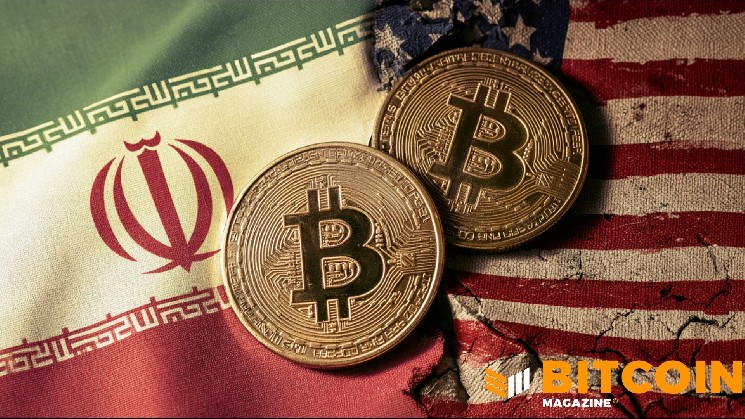
On Tuesday, Bitcoin experienced a decline as investors adopted a “risk-off” stance amidst escalating tensions between the United States and Iran.
The leading cryptocurrency had initially disregarded President Donald Trump’s threats toward Iran and the initial military actions.
However, events intensified on Tuesday, leading to a drop in Bitcoin’s value. It was recently down over 2% for the day, trading at approximately $77,363 after peaking at nearly $81,282 last Friday.
The U.S. military actions on Tuesday were a reaction to Iran’s attempts to lay mines in the Strait of Hormuz, accompanied by an assault on a U.S. military installation in Jordan, as per President Trump’s statements.
According to U.S. Central Command, Iran also conducted assaults on commercial vessels.
At 12 p.m. ET today, U.S. forces commenced strikes targeting the Islamic Revolutionary Guard Corps (IRGC) in Iran. These actions follow recent attempts by the IRGC against commercial shipping in the Strait of Hormuz as well as actions against American troops stationed in the area.
— U.S. Central Command (@CENTCOM) September 1, 2026
The post indicated, “The strikes follow recent attempted attacks by the Islamic Revolutionary Guard Corps against commercial shipping in the Strait of Hormuz and against American service members in the region.”
In reaction, Iranian media reported that Iran launched a “decisive operation” targeting U.S. military bases, which led to a spike in oil prices.
This year, Bitcoin’s valuation has been particularly responsive to geopolitical developments, especially following skirmishes between Israel and Iran. Typically, the cryptocurrency faces downward pressure during wartime news, only to recover when Trump suggests the possibility of a ceasefire.
While Bitcoin’s current price movements have been moderate, it has exhibited greater volatility in recent months, particularly since mid-August.
Historically, an increase in oil prices tends to negatively affect Bitcoin: pricier energy contributes to inflation, which usually results in the U.S. central bank delaying interest rate cuts, limiting the liquidity Bitcoin relies on for growth.
Last week, the chair of the Federal Reserve, Kevin Warsh, delivered his inaugural major address, emphasizing that inflation in the U.S. economy remains unacceptably high.
Traders are now shifting their expectations, no longer anticipating an interest rate cut this year, but instead predicting a potential increase. Bitcoin has generally thrived in environments with lower interest rates.
Nonetheless, the coin saw one of its best months in August after the U.S. Treasury announced a plan to double its liquidity-support buyback operations in response to rising borrowing costs.
This announcement weakened the dollar but had a favorable impact on non-yielding assets like Bitcoin and gold.
This article, titled “Bitcoin Slides as US-Iran Tensions Escalate,” was originally published on Bitcoin Magazine and authored by Mathew Di Salvo.