
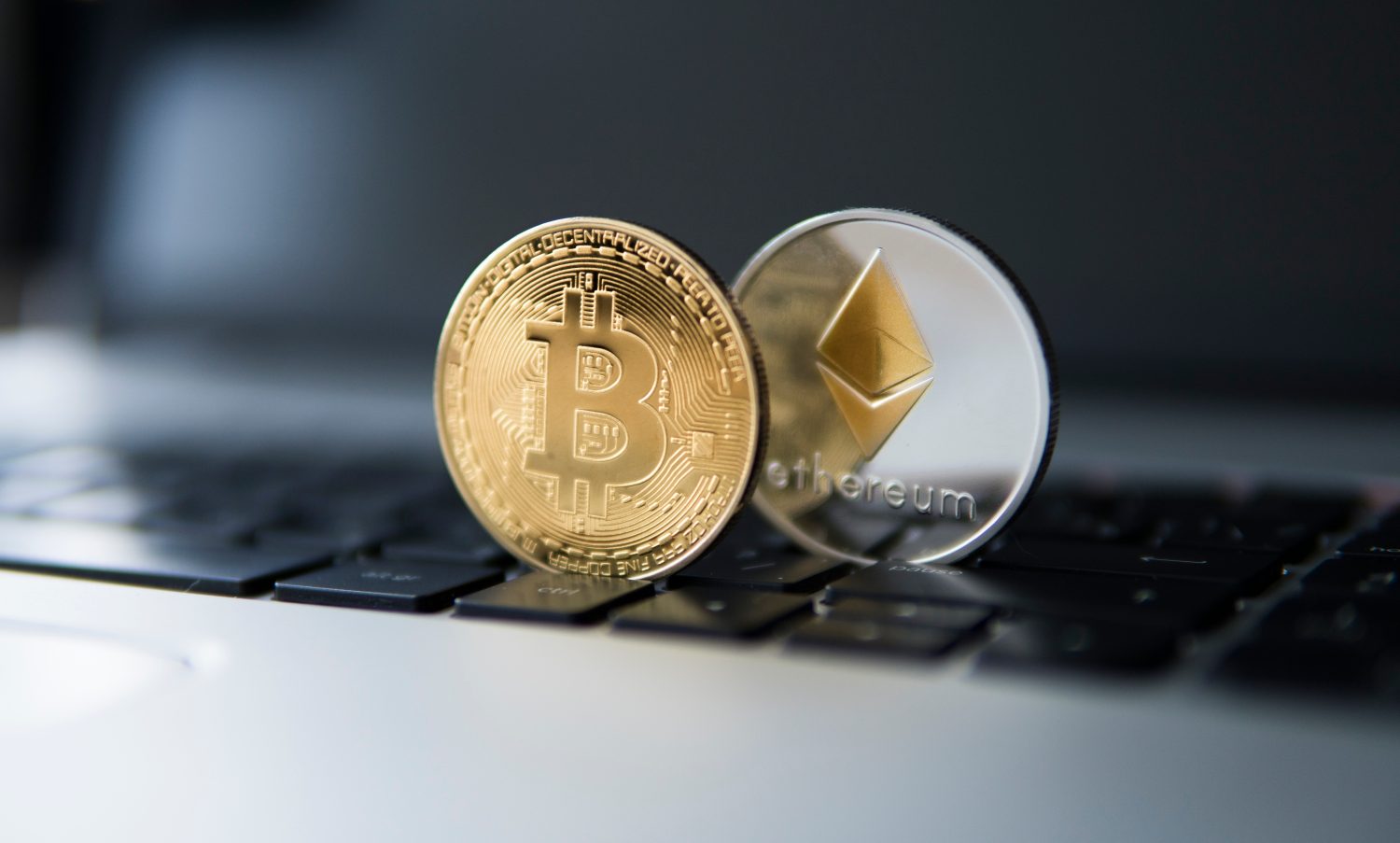
Russia has just opened the door for its citizens to invest in Bitcoin and Ethereum legally, but major players like Coinbase and Strategy remain indifferent. Amid sanctions, issues with brokerage platforms, and significant ETF withdrawals in the US, one particular statistic may hold less significance than the media reports imply.
This article may include links from our sponsors and affiliates, and Flywheel Publishing could receive compensation for actions taken through these links.
The central bank of Russia has made it possible for retail investors to enter the cryptocurrency market. Starting on November 17, individuals classified as non-professional investors will be allowed to purchase Bitcoin (CRYPTO:BTC), Ethereum (CRYPTO:ETH), and Tether (CRYPTO:USDT) stablecoins. However, any purchases made through a single intermediary will be limited to 300,000 rubles per year, which is around $3,662 based on the exchange rate from November 8.
Shares of US-listed crypto companies showed minimal response. Coinbase (NASDAQ:COIN | COIN Price Prediction) saw a dip of 1.5%, closing at $134.76 on November 6, while Strategy Inc. (NASDAQ:MSTR) dropped 0.3% to $128.93. The current prices stand at $75,662 for Bitcoin and $2,226 for Ethereum. But will such a limited cap have any significant effect on either cryptocurrency’s pricing?
Regulations Set by Russia, Market Dynamics Controlled by Brokers
The newly published regulation specifies the three cryptocurrencies available for purchase, the implementation date, and individual limits per intermediary. Importantly, all investors are required to pass a knowledge assessment prior to investing, while qualified investors face no restrictions on purchase amounts.
Despite the clarity of these rules, the method by which retail investors will access the market remains ambiguous. In October, Sberbank, Russia’s largest bank, was granted authorization to offer cryptocurrency exchange services. Furthermore, on November 2, the Moscow Exchange revealed plans to commence trading in Bitcoin, Ethereum, and USDT starting December 1, initially through pilot trades. However, the total number of brokers to be licensed at the launch remains undisclosed, as do forecasts for demand.
As the 300,000-ruble limit applies per intermediary, an investor who maintains accounts with multiple brokers could potentially exceed this threshold. This suggests a larger theoretical cap on purchasing. Nonetheless, the knowledge assessment, potential delays in the licensing process, and limitations on transferring coins to private wallets could substantially curb actual demand.
Limited Reaction from Coinbase and Strategy Stocks
Coinbase Unable to Serve Russian Investors
Due to OFAC sanctions, Coinbase cannot provide services to Russian users, meaning the exchange will not gain any direct revenue from these new regulations. Any potential Russian purchases may only uplift the prices of cryptocurrencies, benefiting Coinbase indirectly through increased trading and subscription revenues. However, relative to Coinbase’s third-quarter earnings of $1.22 billion, any potential revenue boost would likely be minimal. For more on this topic, check out our Coinbase stock outlook.
Strategy’s Value Linked to Bitcoin, Not Russian Investors
Strategy currently holds approximately 848,517 BTC, but does not cater to retail clients. Executive Chairman Michael Saylor indicated to analysts on February 5 that cryptocurrencies are transitioning from an asset class accessible to few, to one with widespread competition for access. While Russia’s new framework supports this perspective, the stock of Strategy closely follows Bitcoin’s market value. Given that the cap is implemented within a sanctioned region, this regulation is not expected to significantly impact Bitcoin’s overall market value.
Past Milestones Did Not Drive Prices
Recently, US spot Bitcoin ETFs experienced $1.28 billion in net outflows in the week ending November 6. To counter that outflow, it would take about 350,000 Russian buyers, each purchasing the full annual limit.
Historical events also support this view. Following El Salvador’s decision to adopt Bitcoin as legal tender on September 7, 2021, Bitcoin’s value plummeted that same day. The launch of spot Bitcoin and Ethereum ETFs in Hong Kong in April 2024 similarly failed to trigger lasting price increases.
Additionally, Russia announced plans to prohibit peer-to-peer cryptocurrency trading starting July 1, 2027. This suggests that some of the newly regulated purchases may simply involve existing Russian traders transitioning from informal channels ahead of this ban, rather than attracting new investors.
Will the 300,000-Ruble Limit Impact Bitcoin and Ethereum Prices?
Current evidence indicates that the 300,000-ruble cap is unlikely to significantly influence Bitcoin’s price, and Ethereum appears even less likely to benefit. Bitcoin is currently trading below its 20-day average of $79,362 and has fallen below its 30-day low of $75,775, indicating that selling activity by US fund holders is a much more significant factor than any potential purchases from Russia.
Ethereum also trades beneath its 30-day low of $2,236, and capped Russian investors may lean towards Bitcoin, the more recognized cryptocurrency. If Bitcoin does not rise above its $79,362 20-day average before the Moscow Exchange’s December 1 launch, it suggests that the new regulations had a negligible effect on its market price. For Ethereum, a critical benchmark is its $2,156 200-day average, which is roughly 3% lower than its current price. To see a detailed outlook for Ethereum, check our Ethereum year-end analysis.
If you have any inquiries or corrections, please contact [email protected] for assistance.