
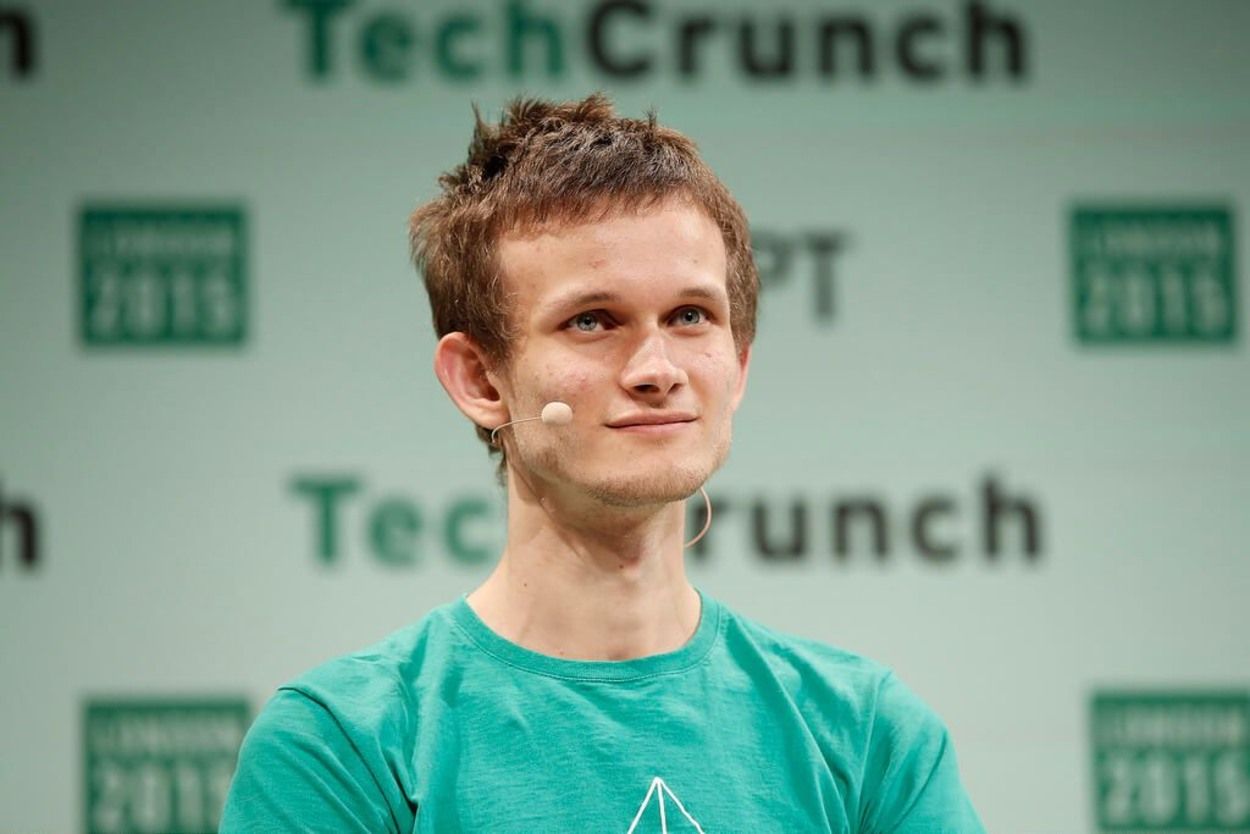
For quite some time, the looming threat to Bitcoin’s cryptography was linked to quantum computing, expected to emerge around the 2030s. However, this week, Ethereum co-founder Vitalik Buterin pointed out that a more immediate risk could arise from an unexpected source: artificial intelligence. Buterin suggested that AI could accelerate 50 years of mathematical advancements into just two years, and some of this progress could potentially compromise the security of your wallet.
Charles Hoskinson, founder of $Cardano, responded to Buterin’s claims, branding them as numerology. This exchange has sparked a significant debate over cryptocurrency security, drawing attention from major figures in the sector.
What is “Bunker Mode” in Cryptocurrency?
The discussion was ignited by Justin Drake, a researcher at the Ethereum Foundation. Following OpenAI’s release of numerous mathematical results earlier this week, Drake cautioned that AI-enhanced mathematics could pose a threat to ECDSA, the elliptic curve signature scheme currently safeguarding Bitcoin and Ethereum wallets, even before quantum computing catches up. His recommendation: adopt “bunker mode” by transitioning funds to new addresses with public keys that have not been previously exposed on the blockchain.
Buterin supported Drake’s warning but advised users against hasty withdrawals of their assets. His larger focus was on the industry’s approach to quantum threats. Many post-quantum solutions are underpinned by lattice-based cryptography, including the ML-KEM and ML-DSA standards that NIST is expected to finalize in 2024. Buterin expressed concern that the next two years of advancements in AI mathematics could jeopardize the security assurances of lattice techniques, prompting Ethereum’s strategy to shift toward hash-based signatures and proofs.
Why Did Hoskinson Label Buterin’s Warning as Numerology?
On Thursday, Hoskinson provided a detailed and critical response. He argued that Buterin hasn’t pointed to any credible threats against lattice-based cryptography. He noted that the historical scenario Buterin references—where the general number field sieve diminished RSA security in the 1990s—was driven by specific arithmetic structures in integer factorization. According to Hoskinson, no similar threat has been demonstrated against lattices, despite decades of cryptanalysis, and NIST has already accounted for all known improvements in lattice reduction and sieving.
Furthermore, Hoskinson challenged Buterin’s rationale suggesting that merely increasing key sizes could offer protection against AI. He argued this notion was akin to numerology, emphasizing that security parameters should be based on measurable advancements in attack methods, not arbitrary multipliers. Additionally, he redirected the argument towards Ethereum, pointing out that various hash functions have been compromised over time, including MD5 and SHA-1, while Poseidon—a hash being investigated by Ethereum for zero-knowledge proofs—could also fall prey to AI-driven algebraic strategies. If AI poses a threat to lattice structures, he questioned why hashing methods would be immune.
A personal undertone was evident in Hoskinson’s reply, as he accused Buterin of being too entrenched in Ethereum’s research direction to reconsider its path and reminded readers of Ethereum’s previous shifts in focus, from Plasma to early Casper designs, which later required reevaluation.

Is Bitcoin Currently Secure from AI and Quantum Computing?
As of now, yes. No participant in this discourse asserts that ECDSA or SHA-256 is compromised, nor has any AI technology demonstrated a viable attack. The contention is centered on where to allocate resources for security in the forthcoming decade. Buterin advocates for a dual hedge against both quantum and AI threats via a focus on hash-based structures. Conversely, Hoskinson cautions that alarming developers away from lattice solutions could hinder the deployment of quantum defenses already in progress for web traffic and messaging, prolonging vulnerability.
Missteps in either direction carry substantial repercussions. While hash-based signatures can authorize transactions, lattice systems also enable encryption and secure key exchange, essential for privacy and communication systems that hashes alone cannot fulfill.
What Steps Should Cryptocurrency Holders Take Regarding the Bunker Mode Discussion?
It’s less critical than one might think, yet more than inaction. A universally endorsed practical measure from both sides is to maintain secure practices: do not reuse addresses, as any address linked to a transaction has its public key exposed on-chain, which is crucial for any potential assaults. Utilizing hardware wallets, ensuring robust backups, and self-custody are vital practices. The CryptoTicker shop offers a selection of trusted hardware wallets for those wanting to enhance security.
Beyond these steps, it’s advisable to follow researchers rather than social media influencers. If AI-boosted mathematics leads to a true breakthrough in lattice reduction, it will emerge in peer-reviewed cryptanalysis long before manifesting in compromised wallets. Until that point, this remains a strategic discussion about future directions rather than an incentive to divest. The prices of Bitcoin and Ethereum have shown minimal fluctuation.