

Summary
- Wall Street analysts claim that 5% Treasury yields are no longer a concern for record-high stock prices.
- Bitcoin has experienced a 46% decline over the past year, while gold has increased by approximately 33%.
- There is currently $9 trillion held in cash, providing a safety net for stocks that Bitcoin lacks.
The loudest critics on Wall Street have softened their stance on 5% Treasury yields. Chris Hyzy, Chief Investment Officer of Bank of America Private Bank, indicates that this yield level is no longer a significant threat to stock valuations like it once was.
The pressing question now is whether Bitcoin can also withstand the pressures that higher Treasury yields exert on riskier assets. While stock markets appear unaffected by rising interest rates, Bitcoin (BTC) has struggled in 2026 to attract the same level of investment.
Reasons 5% Doesn’t Worry Stocks Anymore
In an appearance on CNBC’s Closing Bell, Hyzy mentioned that $9 trillion is currently sitting in money market funds and savings accounts. Investors earning two to three percentage points above inflation feel less compelled to take on riskier investments.
“Five is not the detriment that it once represented,” Hyzy stated, highlighting the substantial amount of cash available in the market.
Sonali Basak, Chief Investment Strategist at iCapital, concurred that the shift towards safer investments is benefitting financially strong companies.
Companies with high leverage and tight margins are likely to face greater challenges. According to Josh Brown of Ritholtz Wealth Management, stock increases are primarily driven by earnings momentum rather than fear of missing out.
Bitcoin Still Unresponsive
When it comes to assets that offer no yield, the scenario changes completely. This year, the yield on 30-year Treasuries has exceeded 5.3%, even reaching a peak of 5.27% on August 14, the highest since 2007. Major artificial intelligence firms are now vying with the government for the same pool of lenders.
During this time, Bitcoin has plummeted 46%, whereas gold has appreciated by around 33%. Analysis from BeInCrypto indicates that bond yields no longer help Bitcoin as they once did for gold.
Bitcoin has been trading below $65,000 for an extended duration. Image Source: BeInCrypto
Nevertheless, there is still potential for a bull market. Increasing yields signal a widening fiscal deficit, which initially attracted investors to Bitcoin as a hedge against inflation due to its capped supply.
This year, corporate bonds from Alphabet and Meta were offered at yields ranging from 6.4% to over 7.5%. That creates a threshold that Bitcoin’s value has not surpassed since global yields reached similar levels.
At this point, the scarcity narrative is being overshadowed by the appeal of yield. Bitcoin is currently maintaining a position above $64,000 following its recent surge, but it has yet to attract much of the $9 trillion in cash reserves.
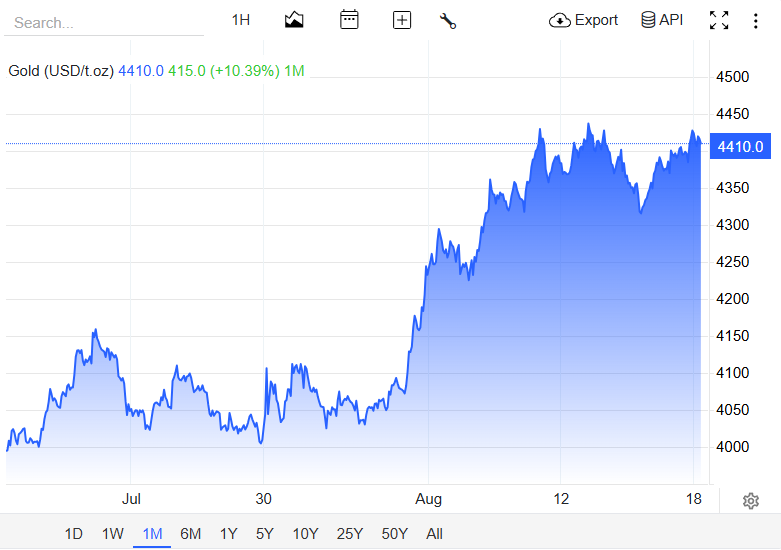 Gold has recently seen an upward trend. Image Source: Trading Economics
The upcoming minutes from Wednesday’s Federal Open Market Committee (FOMC) meeting may alter the current outlook. A dovish surprise could test whether stocks can continue to rise solely on earnings, and it will reveal if Bitcoin can finally behave as the hedge its proponents claim it to be.