
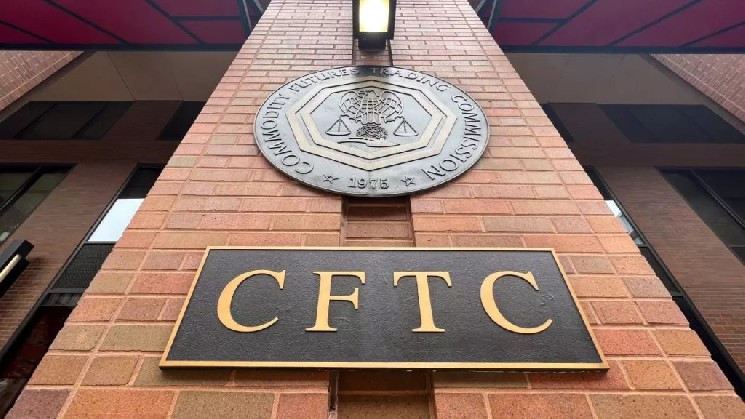
The Commodity Futures Trading Commission (CFTC) has pointed to the collapsed FTX exchange as an illustrative case. The agency revealed that FTX’s founders, based in the Bahamas, misappropriated around $8 billion of customer funds, leading to legal actions from both the CFTC and SEC following the company’s downfall.
Furthermore, the CFTC highlighted that entities such as FTX, BlockFi, and Voyager Digital primarily operate in the United States by obtaining state-specific money transfer licenses. These licenses, however, are intended for payment services and differ significantly across various states.
As per the CFTC, federal market rules encompass broader criteria aimed at preventing manipulation and misconduct, ensuring clear and organized transactions, avoiding conflicts of interest, and safeguarding client funds.
The agency affirmed that, despite the bankruptcy of multiple FTX-affiliated companies, the assets of clients held by the CFTC-recognized subsidiary remained distinct and protected.
Related News BREAKING: Positive Developments for Bitcoin and Altcoins as Market Rallies, Reports the U.S. Department of the Treasury
This regulatory push follows the recent setback in the U.S. Senate concerning the cryptocurrency regulation bill, known as the Clarity Act, which did not progress this month. The CFTC, alongside CTX and CAM regulations, is set to establish a nationwide framework for the cryptocurrency sector using its existing authority, rather than awaiting new congressional legislation.
These regulations are seen as an extension of a previous statement made by the CFTC and SEC this year, which clarified that a significant number of crypto assets, including Bitcoin and Ethereum, are not classified as securities and fall under CFTC regulations.
With the introduction of CTX and CAM regulations, new standards will be enacted that CFTC-registered exchanges must follow when listing such crypto assets.
Unlike the Clarity Act, the new regulations will not require that these crypto assets be traded exclusively on CFTC-registered platforms. The CFTC recognizes it cannot enforce such a requirement without new authorization from Congress.
Instead, the forthcoming system will provide crypto exchanges seeking to operate in the U.S. the flexibility to work under a unified federal regulatory framework. CFTC-recognized platforms will be permitted to offer individual investors margin, leveraged, or finance-backed crypto trading, in contrast to state-licensed spot exchanges.
The CFTC also critiqued the “come and register” invitations extended to crypto companies during the leadership of former SEC Chairman Gary Gensler. The agency argued that companies were expected to categorize the crypto assets on their platforms as securities in order to register with the SEC, thus adhering to outdated regulations that do not align with the unique nature of the crypto market.
The CFTC emphasized that its new strategy aims to devise a distinctive regulatory framework that recognizes the unique attributes of crypto assets as compared to traditional commodities.
The agency acknowledged that the CTX and CAM regulations mark the inception of a wider regulatory effort for the cryptocurrency market, while also admitting that regulations enacted in isolation cannot ultimately substitute for a comprehensive law concerning the crypto market to be established by Congress.
*This is not investment advice.