
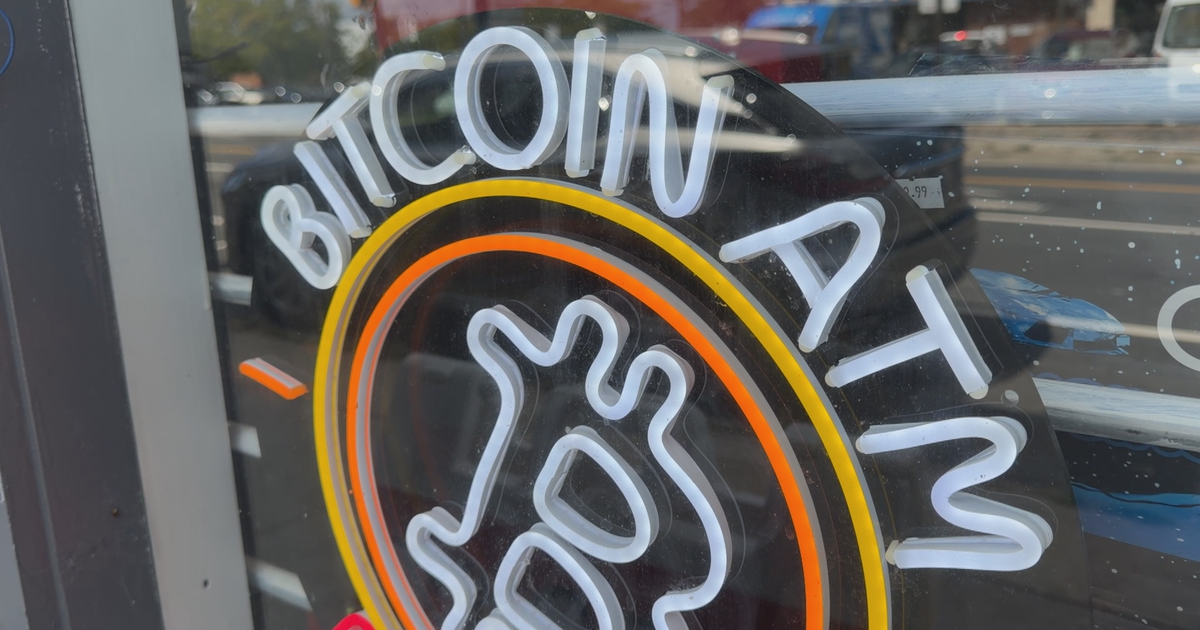
In just moments, her financial stability disappeared behind a screen at a gas station.
A Johnston County woman believed she was making a legitimate payment to law enforcement, depositing thousands into a cryptocurrency ATM. However, the scammers posing as local authorities demanded an extra $4,000, which she couldn’t provide.
It was then that the call disconnected, and she realized her life savings had been wiped out.
“I’ve scheduled a session with a counselor because this has impacted me both financially and mentally,” she remarked.
This individual, wishing to remain anonymous while sharing her experience with WRAL, represents countless victims nationwide who have fallen prey to scams involving cryptocurrency kiosks. Public records from Harnett County reveal that one man recently lost over $30,000—described as nearly all of his savings—through a cryptocurrency machine.
These kiosks, which may look like standard ATMs at first glance, allow users to convert cash into cryptocurrency. The transactions occur almost instantaneously and are often hard to trace or reverse.
Increasing Cryptocurrency Fraud and the Role of Kiosks
The incidence of internet crimes connected to cryptocurrency kiosks is on the rise, mirroring a broader trend in cryptocurrency-related fraud.
In 2023, the FBI began publicly releasing data regarding cryptocurrency kiosks. That year saw 5,500 complaints linked to these kiosks, resulting in losses exceeding $189 million. By 2025, those numbers climbed to 13,460 complaints and $389 million in losses for victims, according to FBI reports.
“Fraud losses tied to Bitcoin ATMs have surged nearly tenfold since 2020,” as noted in findings by the Federal Trade Commission’s (FTC) Consumer Sentinel Network.
Stricter Regulations on Crypto ATMs: What’s Next for North Carolina?
In response, many states are implementing stricter consumer protections around cryptocurrency kiosks, with some imposing outright bans.
This year, lawmakers in North Carolina passed several regulatory measures pertaining to Bitcoin ATMs by approving House Bill 920, a proposal put forth by State Representative Neal Jackson (R).
“HB920 aims to safeguard North Carolinians from fraud through enhanced regulatory oversight while allowing them to manage their finances effectively. This legislation embraces innovation while ensuring consumers are adequately protected,” Representative Jackson stated.
Key components of the bill include:
- Mandatory licenses for all kiosk operators as stipulated by the Money Transmissions Act.
- Oversight of operators by the Commissioner of Banks.
- Implementation of fraud warnings and transaction receipts for every operation.
- Mandatory compliance and consumer protection officers available at all times.
The legislation also mandates that kiosk operators refund the “full dollar amount deposited” under specific conditions, such as when a fraudulent transaction is reported within 30 days. Additionally, it proposes capping transaction amounts for new customers at $2,000 for the first 30 days and then $5,000 thereafter, in an effort to curb fraud.
North Carolina Attorney General Jeff Jackson believes the customer limit may be the bill’s most notable protection for consumers. However, with the changes set to take effect in 2027, Jackson questions whether there is any genuine need for kiosks in the state given the prevalence of fraud cases observed.
“We see no legitimate function for these devices; they primarily facilitate fraud. If individuals wish to invest in Bitcoin, they don’t need to incur a 12% fee at a gas station. Transfers can be done through banks,” he explained to WRAL.
David Tente, executive director of the ATM Industry Association, countered Attorney General Jackson’s views on the kiosks’ connection to crime.
“Only a small fraction of transactions are fraudulent,” Tente responded via email. “Many requirements in the bill are akin to what Congress is considering. However, the 30-day return requirement undermines everything else. Crypto operators are unlikely to function under such regulations.”
State Representative Tim Longest, D-Wake, previously expressed his doubts regarding the presence of kiosks in the state. Longest, a consumer protection attorney, believes the protections outlined in the bill could have been stronger.
“We should carefully assess whether these regulations are sufficient and if these machines serve any valid purpose,” he stated. “One wouldn’t put cash into a machine to withdraw stock, yet cryptocurrencies are similarly speculative assets.”
Attorney General Jackson hinted at an ongoing investigation by the Department of Justice into cryptocurrency kiosk companies.
“An investigation is currently underway,” Jackson remarked.
Company Reactions
WRAL reached out to various cryptocurrency kiosk operators in North Carolina to gather information on their plans to comply with the new state regulations.
Responses from Byte Federal, through founder and compliance officer Mark Paolillo, and CEO Paul Tarantino, along with a representative from CoinFlip, indicate that many protections are already embedded in their policies.
Here are the responses to specific inquiries published verbatim for transparency.
Question: Which changes from HB 920 will require you to modify your kiosks?
Byte Federal: Most of HB 920’s provisions align with our existing practices, such as scam warnings, blockchain analytics, live customer support, and dedicated compliance teams. Changes we plan to implement before January 1, 2027, are as follows:
- Interactive fraud screens – We will update our fraud screens to comply with North Carolina guidelines.
- A 48-hour hold on transactions for first-time customers – We support this measure, advocating for a waiting period to help prevent scams before funds leave.
- New daily transaction limits – set at $2,000 for newcomers and $5,000 for existing customers.
- Updated receipts – Our receipts will integrate any newly mandated fields.
- Changes to authentication – Our current authentication process is robust; we seek clarity on the QR guidelines to ensure compliance.
- Fee disclosure within the 12% cap – The 12% cap is unfeasible for operators maintaining best-in-class compliance and fraud prevention. Without adjustments, legitimate operators may exit the state.
- North Carolina money transmitter licensing – We currently hold this license and can meet quarterly reporting and compliance requirements easily.
CoinFlip: CoinFlip already implements many consumer protections mandated by North Carolina’s new law, like live support and scam alerts, along with technology designed to assess suspicious digital wallets. We commend Representative Jackson’s leadership and the collective push for a regulatory framework that both fortifies consumer protections and allows access to legitimate financial services. CoinFlip has maintained a North Carolina money transmitter license since May 2024 and is committed to adapting as necessary to comply with legal requirements when they become effective.
Question: Will the company reduce the number of kiosks in North Carolina?
Byte Federal: Adapting to North Carolina’s regulations is manageable for us since we already adhere to similar standards in other states. The problematic factor is the 12% fee cap, which endangers compliant operators in North Carolina. We remain hopeful that lawmakers will recognize the issues tied to this cap and adjust it accordingly.
Byte Federal operates 36 kiosks in North Carolina.
CoinFlip: CoinFlip currently runs 152 kiosks across the state and does not intend to decrease its presence in North Carolina due to the new legislation.
Question: What’s your policy on refunding victims of scams?
Byte Federal: We will fully comply with the refund terms outlined in HB 920. Under the law, victims who report a fraudulent transaction within 30 days will receive full refunds, while existing customers will have their fees refunded.
However, we contend that this refund requirement holds compliant kiosk operators to a standard not applied elsewhere in the financial system. Byte Federal adheres to the same federal standards as banks and other money transmitters, yet when traditional bank customers fall victim to scams, banks rarely issue refunds. Federal rules governing electronic transfers do not extend to wire transfers, which operate under different regulations. We believe our compliant standards should not subject us to different treatment when similar transactions through banks are not refundable.
Most importantly, we prioritize preventing scams before they occur. Once funds are sent, retrieval is impossible for us or anyone else. That’s why our program emphasizes preventative actions, like verification calls for those over 60 and other fraud screenings. We also cooperate with law enforcement on every reported fraud case and provide necessary transaction data to assist in fund recovery.
CoinFlip: Our current policy includes refunding transaction fees to verified scam victims. We focus on intercepting scams prior to transactions moving forward; this allows for a refund before funds are fully transferred. We evaluate refund requests on a case-by-case basis, with our support team available to assist customers in reporting scams and requesting refunds. When a scam is reported, we work closely with law enforcement to help trace scammers. Given that blockchain transactions generate public records, recovery may be possible in certain situations. CoinFlip also blocks suspicious transactions and permanently blacklists high-risk address, preventing future use at our kiosks. We will honor the additional refund rights established by North Carolina’s new law once it comes into effect.