
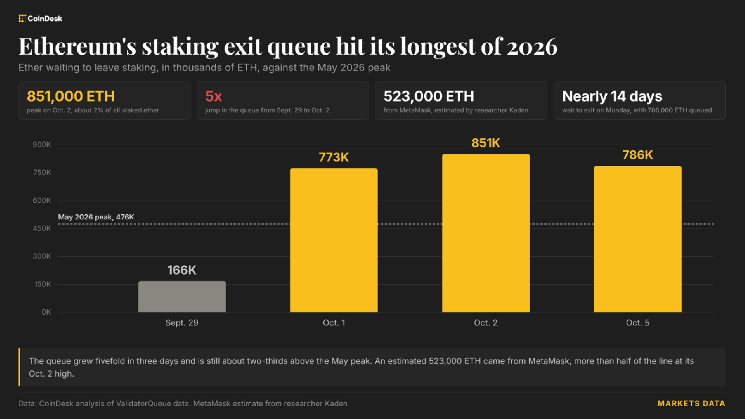
The interest in initiating staking activities has been tapering off. As of Monday, approximately 1.5 million $ETH, valued at around $4 billion, was queued for entry, reflecting an estimated waiting period of about 25 days. This is a decrease from nearly 2 million $ETH and a wait time of around 35 days noted in early September.
The primary increase in staking demand has been attributed to MetaMask. Renowned for its cryptocurrency wallet, the company also manages validators for Lido, a platform that aggregates users’ ether for staking purposes. At that time, Ethereum security analyst Kaden estimated that the protective withdrawals accounted for roughly 17,000 validators, holding approximately 523,000 $ETH, although these figures have not been verified by MetaMask.
On September 30, MetaMask reported a security issue and started to deactivate the affected validators. An update on October 1 indicated that their investigation found no signs of any impact on user wallets or funds.
This implies that the majority of the exit queue is a short-term pause for coins associated with one operator. Lido anticipates the gradual return of the ether as the affected validators conclude their exit, withdraw their balances, and recommence staking. The entire process is estimated to span about 45 days, during which the affected validators will not receive rewards while they remain inactive.
“StETH holders do not need to take any action,” Lido stated last week, referring to the token that signifies users’ stake within the service.