
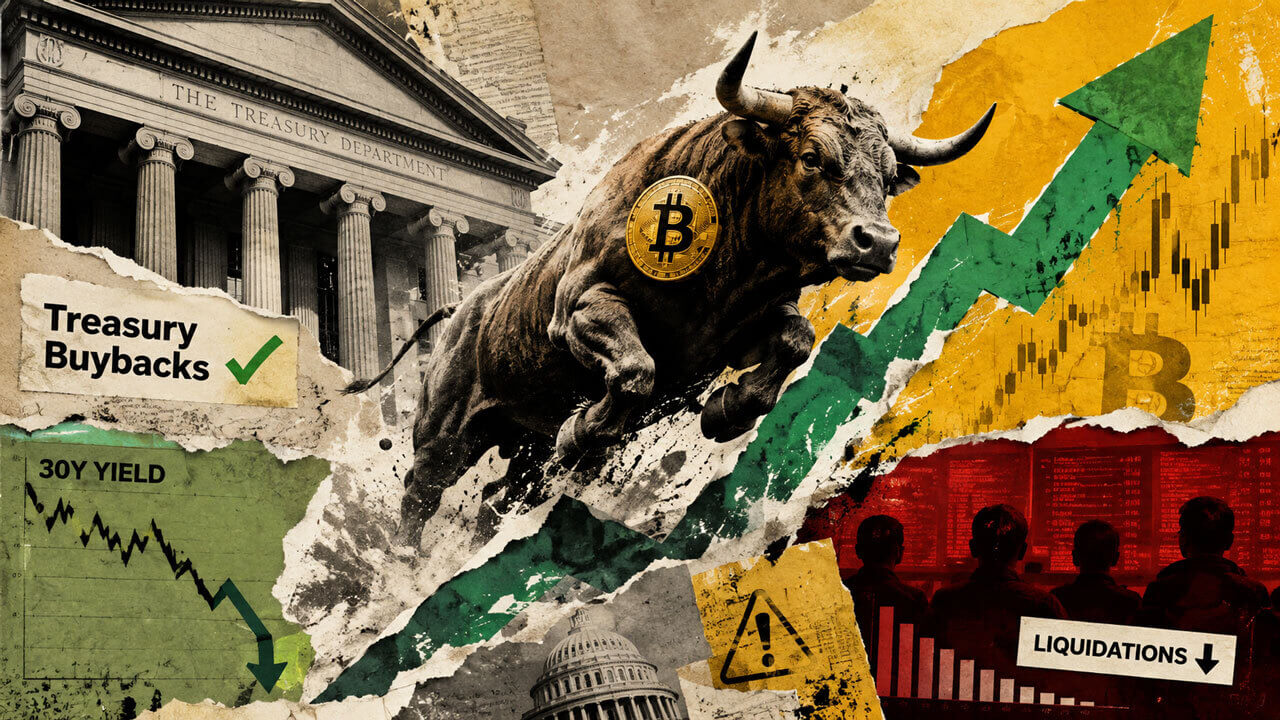
Bitcoin and Ethereum experienced significant gains on Wednesday, surpassing $69,500 and $2,000, respectively, in response to the US Treasury’s announcement of increased buybacks for long-term government debt.
On August 19, the Treasury addressed its decision to enhance the maximum size of its liquidity-support measures for both 10- to 20-year and 20- to 30-year securities, raising it from $2 billion to no less than $4 billion per operation. This adjustment will take effect on September 9 and continue until November 4.
The news brought much-needed relief to a struggling bond market weighed down by escalating borrowing costs. The yield on the 30-year Treasury bond dropped to around 5.19%, down from a Tuesday high of 5.34%, the peak since 2007, while the 10-year yield fell to 4.647%. Additionally, the difference between 2-year and 30-year yields decreased significantly.
According to data from CryptoSlate, Bitcoin surged from an intraday low of approximately $64,100 to more than $69,000, before settling around $68,000 as yields decreased and risk assets gained momentum. Ethereum climbed to a peak of $2,100, crossing the $2,000 threshold for the first time since June.
This sharp uptick caught many traders off guard, particularly those betting on further declines.
Data from CoinGlass revealed over $1.2 billion in crypto positions were liquidated within one hour, with Bitcoin and Ethereum constituting the majority of these losses. Short sellers anticipating a downturn faced losses of about $1.29 billion during this period.
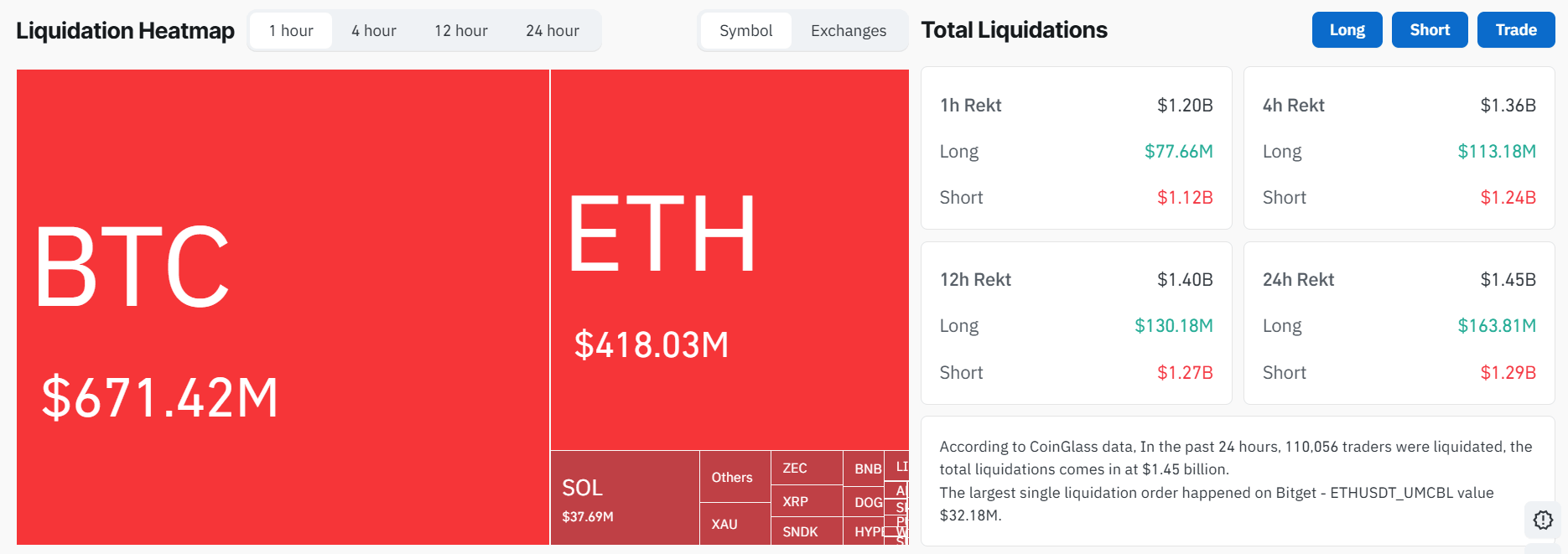
In total, over 110,000 traders faced liquidations amounting to more than $1.45 billion within the last 24 hours. The most significant liquidation involved a $32 million ETH-USD position on Bitget.
Declining Yields Provide Breathing Space for Bitcoin
The Treasury clarified that the expanded operations are aimed at enhancing liquidity support for longer-dated securities, acknowledging a stronger demand for debt than the department’s current buyback capabilities.
“This increase in buyback operation sizes highlights the Treasury’s commitment to better liquidity support in longer-dated nominal sectors where market players consistently demonstrate strong demand,” the department stated.
This decision follows a significant repricing at the longer end of the Treasury curve as investors seek higher compensation for inflation, extensive governmental borrowing, and the risks endemic to holding long-term debt. Increased corporate borrowing, particularly related to investments in artificial intelligence, has also contributed to the growing supply competing for investors’ attention.
These pressures have directly impacted Bitcoin and other risk assets.
Soaring long-term yields, especially real yields, elevate the cost of capital and enhance returns from risk-free government bonds. This situation can negatively affect long-duration assets like tech stocks and similarly exert pressure on Bitcoin by making Treasuries more attractive to investors.
The reversal witnessed on Wednesday alleviated one area of concern, allowing Bitcoin to recover above the $66,000 mark.
Andre Dragosch, head of research at Bitwise Europe, indicated that the Treasury’s move demonstrates that the financial system is beginning to show signs of stress as policymakers react to the pressure in long-term government debt.
“Bitcoin serves as an early warning signal for macroeconomic changes both on the downside and upside. Rising yields are already compelling the Treasury to step in, and BTC is recognizing this.”
However, the operations do not equate to quantitative easing. Federal Reserve asset purchases are aimed at generating reserves and enlarging the central bank’s balance sheet, while Treasury buybacks primarily focus on enhancing liquidity in existing securities without diminishing the overall debt burden.
Nonetheless, the market’s response illustrates how sensitive Bitcoin and other assets have become to alterations in long-term borrowing costs.
Matt Cole, chairman of Bitcoin treasury company Strive, suggested that these pressures might ultimately strengthen a long-term Bitcoin argument as rising debt may push policymakers towards lower real rates, increased liquidity, and currency devaluation.
Cole pointed out that federal debt and ongoing deficits leave decision-makers with tough choices: accept higher real rates and stricter financial conditions or manage the situation through policies that promote liquidity and nominal growth.
He remarked:
“There are no straightforward options. The question is merely how the adjustments will unfold.”
Cole has argued for more than ten years that the dollar is in a state of structural decline, and he noted that the recent Treasury action reinforces that perspective as policymakers respond to issues in long-term debt.
He mentioned that Bitcoin’s significant price rallies in the past have often coincided with periods of dollar weakness, but the asset has not experienced the kind of extended dollar decline he predicts could occur in the next several years.
If this viewpoint holds true, Cole believes that the next five to seven years could provide Bitcoin with more favorable macroeconomic conditions than any previous market cycle.